
18Oct
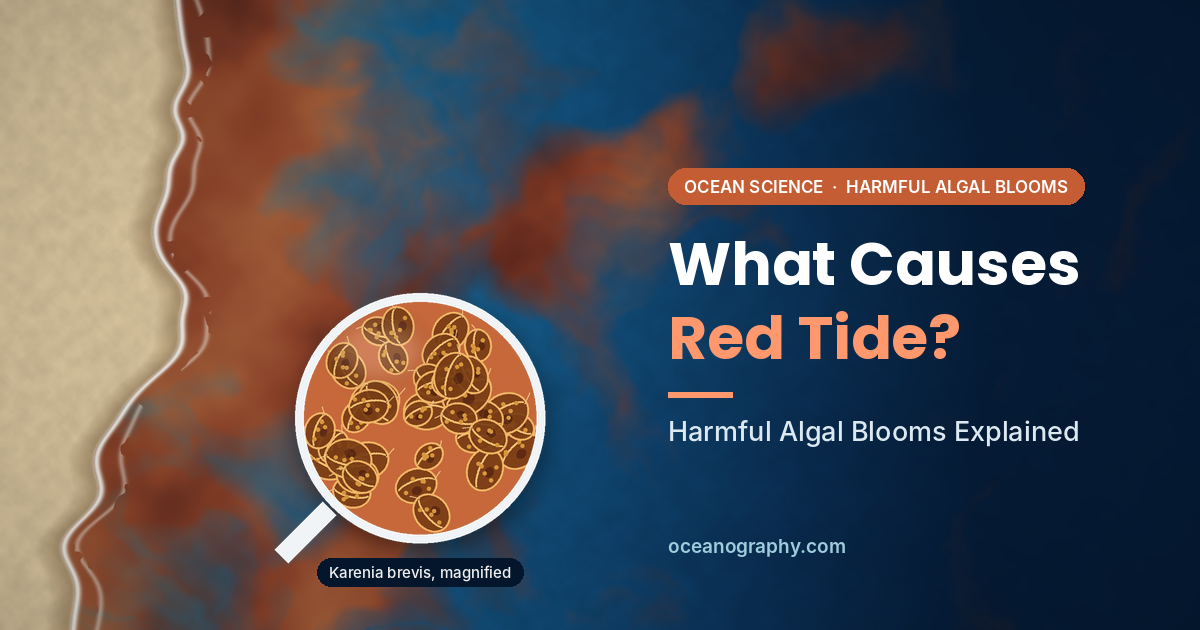
What Causes Red Tide? Harmful Algal Blooms Explained
Quick answer: What causes red tide? Red tide happens when tiny algae in the ocean grow very fast and pile up in huge numbers. Warm water, nutrients, sunlight, and calm seas help them grow. Winds and currents then push the bloom toward shore. Some of these algae make toxins that harm fish, animals, and people.
Key Takeaways

What Is Red Tide?
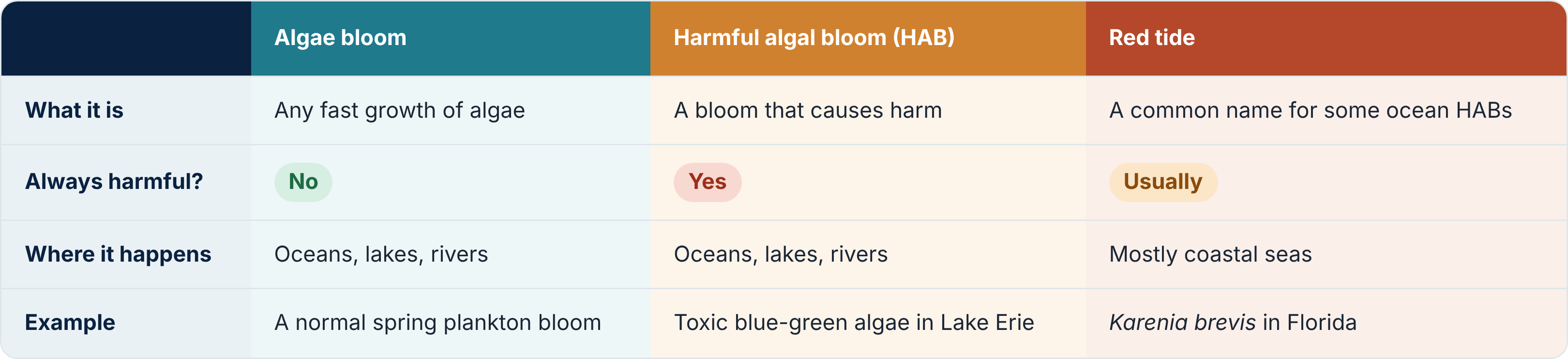
Red tide is the common name for a bloom of tiny algae that changes the color of seawater. The water can turn red, brown, or orange, or stay its normal color. A bloom happens when algae grow so fast that millions of cells fill each liter of water.
Why Is It Called Red Tide?
People named it red tide because some blooms tint the water reddish brown. But the name is a little misleading. These blooms have nothing to do with tides, and many are not red at all. That is why scientists prefer the term harmful algal blooms.
What Are Harmful Algal Blooms (HABs)?
Harmful algal blooms are blooms of algae that hurt people, animals, or nature. Most algae are harmless and very useful. Phytoplankton, tiny plant-like living things that float in the ocean, make much of the oxygen we breathe and feed the ocean food chain.
HABs cause harm in two main ways:
- Toxins: Some algae make poisons, called marine toxins, that build up in fish and shellfish.
- Low oxygen: When a huge bloom dies, bacteria break it down and use up the oxygen in the water. Fish can then run out of air.
Red Tide vs. Algae Bloom: What Is the Difference?
What Causes Red Tide? (Why Algae Grow So Fast)
Red tide comes down to one simple idea: algae get everything they need at the same time. Algae grows by splitting in two. One cell becomes two, two become four, and so on. When conditions are right, a few cells can turn into billions in a few weeks.
Think of algae like weeds in a garden that gets too much fertilizer, sun, and water. The weeds take over fast.
The Algae Behind Florida's Red Tide
In Florida, the main cause is Karenia brevis. It is a dinoflagellate, a tiny one-celled living thing that swims with two whip-like tails. Most Florida red tides start about 10 to 40 miles offshore.
Nutrients: Food for Algae
Algae need nitrogen and phosphorus to grow, just like garden plants. Nutrient pollution happens when fertilizer, sewage, and animal waste wash into the sea. When water gets too many nutrients, scientists call it eutrophication. Nature also feeds algae through coastal upwelling, when deep, nutrient-rich water rises.
Here is the honest part. Florida red tides start offshore, so pollution does not start them. But extra nutrients near the coast may help a bloom grow bigger or last longer. Researchers are still studying how much.
Warm Water and Sunlight
Warm water speeds up algae growth, so many blooms peak in late summer and fall. Algae also make their own food from sunlight, like plants on land. Scientists are studying whether ocean warming will make blooms happen more often.
Calm Seas and Currents
Calm weather lets algae float near the surface, where light is strong. Then winds and ocean currents act like delivery trucks. They carry the bloom toward the coast and can trap it in bays for weeks.
How a Red Tide Forms, Step by Step
- A small number of algae cells live quietly offshore.
- Warm water, sunlight, and nutrients line up at the same time.
- The cells split again and again, and the bloom grows.
- Winds and currents push the bloom toward shore.
- The bloom fades when the water cools, storms mix the sea, or nutrients run out.
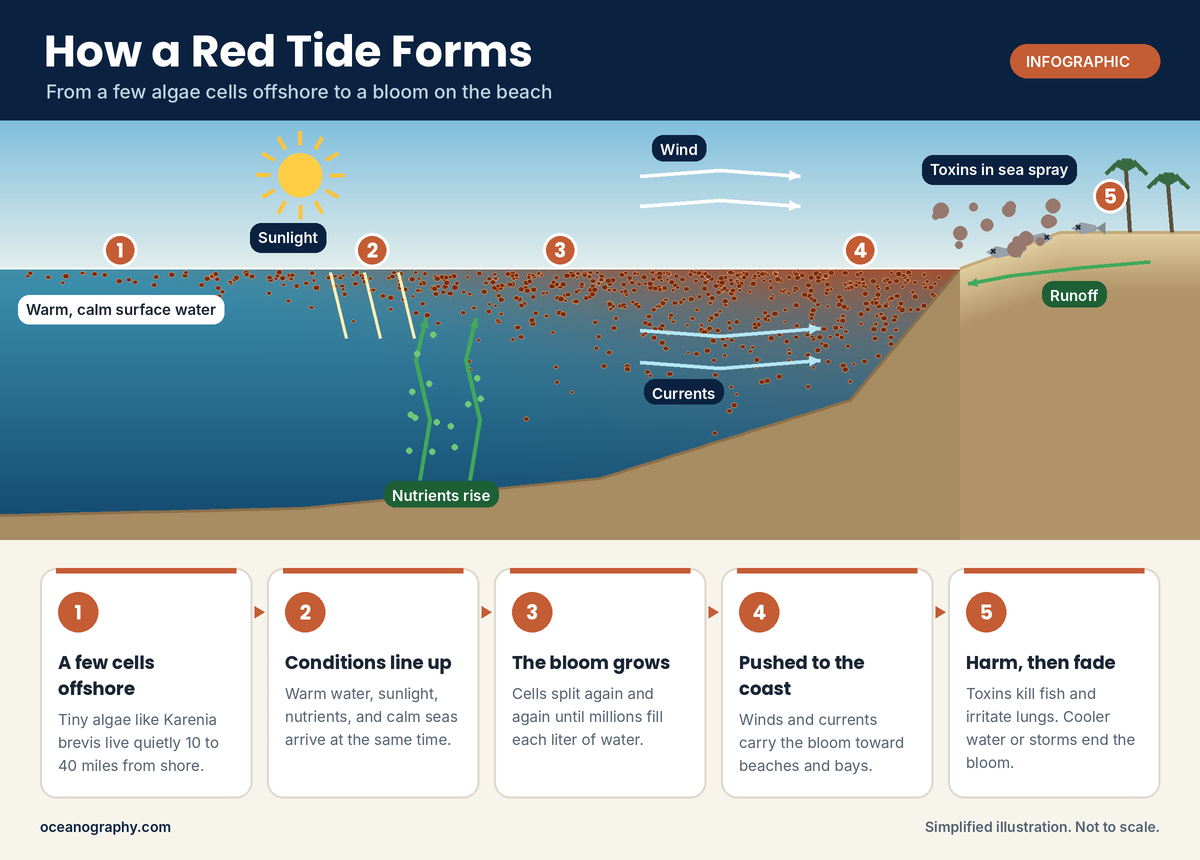
Red tide forms when several conditions line up at once, then currents carry the bloom ashore.
Is Red Tide Dangerous?
Yes, red tide can be dangerous, but the risk depends on who you are and how close you get. Karenia brevis makes brevetoxins, poisons that attack the nerves of fish and animals.
Red Tide Symptoms in Humans
When waves break, they toss tiny bits of toxin into the air. If you breathe them in, you may notice coughing, sneezing, a scratchy throat, or watery eyes.
For most healthy people, these symptoms fade soon after leaving the beach. People with asthma or other lung problems can have much worse breathing trouble.
Red Tide and Dead Fish
Fish cannot escape the toxins in the water around them, so they lose control and die. This is why fish kills, the sudden death of many fish at once, often come with red tide. Manatees, dolphins, sea turtles, and seabirds can also get sick or die.
Pets
Dogs may drink seawater, lick toxins off their fur, or eat dead fish. If your dog swims during a bloom, rinse it with fresh water right away.
Shellfish Poisoning
Clams, oysters, and mussels eat by filtering seawater, so they collect toxins during a bloom. Eating them can cause shellfish poisoning, with tingling, numbness, nausea, and dizziness. Cooking and freezing do not destroy these toxins. That is why officials test shellfish and close harvest areas during blooms.
How Scientists Monitor Algal Blooms
Knowing what causes red tide is only half the job. Scientists also track each bloom with simple and high-tech tools.
Water Sampling
Water samples are still the most trusted tool. In Florida, the Fish and Wildlife Conservation Commission (FWC) collects samples along the coast. Scientists count the algae cells under a microscope. The FWC then shares regular maps showing where the bloom is and how strong it is.
Satellites
Satellites from NASA and NOAA watch the ocean from space. They spot changes in water color that can point to a bloom. But clouds can block their view.
Sensors and Robots
Some sensors in the water take pictures of single algae cells and identify them automatically. Underwater gliders, small ocean robots that travel for weeks, measure the water as they go. These tools can warn scientists before a bloom reaches the beach.
HAB Forecasting
HAB forecasting works a lot like a weather forecast. NOAA combines samples, satellite images, and wind data to predict where a bloom will move. Its forecasts show which beaches may cause breathing problems in the coming days.
Famous Red Tide Events Around the World
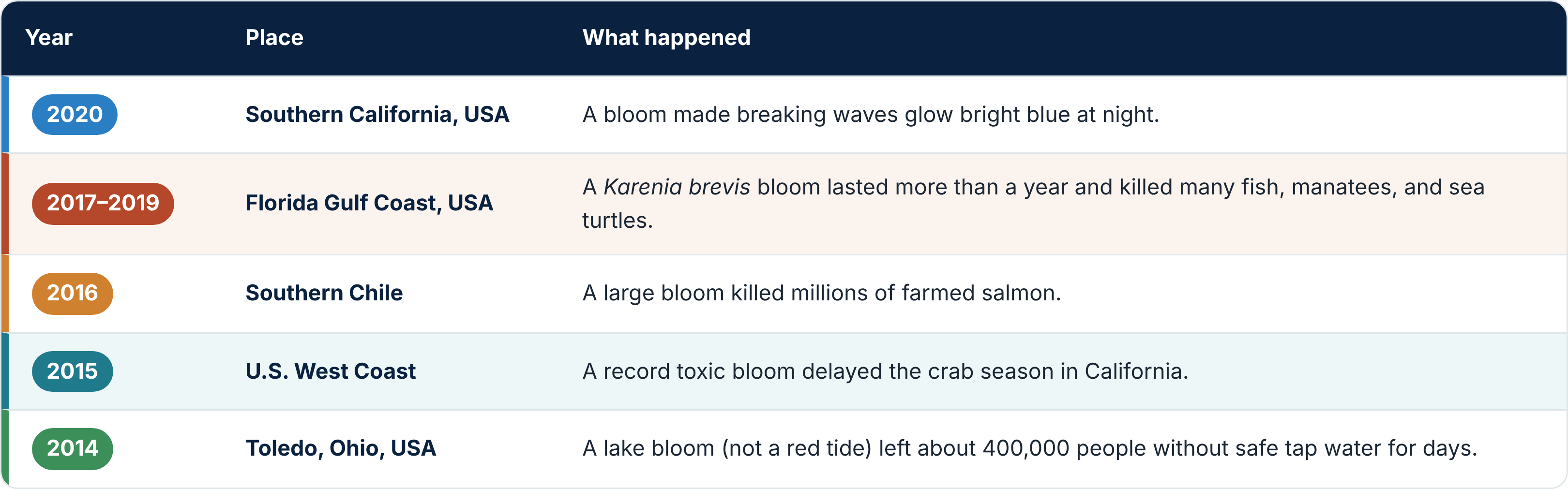
Some harmful blooms have made headlines.
How to Stay Safe During a Red Tide
You can still enjoy the coast during red tide season with a few simple steps.
- Check before you go. Look at the FWC red tide map or NOAA forecast for your beach.
- Leave if you start coughing. Move away from the water or go indoors.
- Plan ahead if you have asthma. Carry your inhaler, or skip the beach during a bloom.
- Avoid dead fish and off-color water. Do not swim there, and rinse off after any swim.
- Follow shellfish closures. Never eat clams or oysters picked from closed areas.
- Protect your pets. Keep dogs out of the water and away from dead fish.
What Causes Red Tide? The Big Picture
So, what causes red tide? Tiny algae get the perfect mix of warm water, sunlight, nutrients, and calm seas, and they grow out of control. Winds and currents then bring the bloom to shore, where its toxins can harm sea life, pets, and people.
The good news is that scientists watch these blooms closely to keep beaches and seafood safe. Learning how blooms form also shows how choices on land, like reducing ocean pollution, connect to the health of the sea.
Explore more ocean science guides on oceanography.com, from thermohaline circulation to biological oceanography.
Frequently Asked Questions
1. What causes red tide?
Answer: Red tide happens when tiny algae grow very fast and form a dense bloom. Warm water, sunlight, nutrients, and calm seas help them multiply. In Florida, the main algae is Karenia brevis. Winds and currents carry the bloom to the coast.
2. Why is it called red tide?
Answer: Some blooms turn the water reddish brown, which gave red tide its name. But these blooms are not linked to tides, and many are not red. Scientists prefer the name harmful algal blooms, or HABs.
3. Can you swim in red tide?
Answer: Most healthy people can swim during a mild red tide, but it may cause itchy skin and burning eyes. Avoid dead fish and off-color water. People with asthma should stay away. Check the FWC red tide status page before you go.
4. What are red tide symptoms in humans?
Answer: Common symptoms include coughing, sneezing, a scratchy throat, and watery eyes. Eating poisoned shellfish can cause tingling, numbness, and nausea. The CDC's harmful algal bloom guide explains more.
5. Is it safe to eat seafood during red tide?
Answer: Shellfish from stores and restaurants are generally safe, because they come from tested waters. Never eat shellfish you collect from closed areas, since cooking does not destroy the toxins. Never eat fish found dead or acting strangely.
6. How long does red tide last?
Answer: A red tide can last a few weeks or more than a year. It depends on winds, currents, and nutrients. One Florida bloom lasted from late 2017 into early 2019.
7. When is red tide season in Florida?
Answer: Red tide in Florida can happen at any time of year. However, blooms most often start in late summer or fall, and some last into spring. Check the latest status map for current conditions.
8. Why does red tide cause dead fish?
Answer: Red tide toxins attack the nerves of fish, and fish cannot escape the toxic water. When a large bloom dies, bacteria also use up oxygen as they break it down. This low oxygen can kill even more fish.
9. How do scientists monitor algal blooms?
Answer: Scientists use water samples, satellites, ocean sensors, and underwater robots. NOAA uses this data to forecast where blooms will move. Learn more on NOAA's red tide page.
