
Career pathways at Windy.app
Windy.app brings together specialists from different disciplines who work closely to turn complex atmospheric and ocean data into practical tools for real users. Meteorologists and oceanographers play a central role in the team. Their work includes:
- Research and development of forecasting methods
- Providing expert weather and ocean forecasts, as well as route planning, through the Windy Personal Advisor service
- Creating educational content in meteorology and oceanography for the Windy.app Textbook and social media
- Consulting customers, partners, and internal teams on meteorological aspects of the product
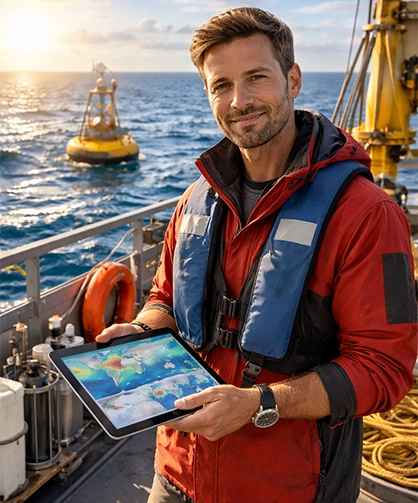
A deep understanding of the physical processes in the atmosphere and ocean underpins all of these activities.
This work is closely connected with other roles at Windy.app:

- Data engineers and backend developers who build and maintain large-scale data pipelines, numerical processing systems, GIS workflows, and high-performance services.
- Frontend developers and designers who transform complex geophysical data into fast, clear, and intuitive visualizations.
- Product managers who study user needs and translate them into meaningful features, layers, and product improvements.
👉 Together, these specialists contribute their expertise toward a shared goal: delivering accurate, reliable forecasts in a form that is clear, accessible, and genuinely useful.
How Windy.app works
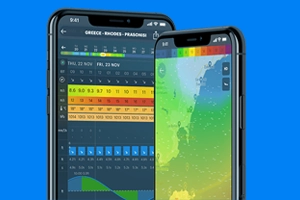
At its core, Windy.app is a forecast data integration and visualization platform. We ingest outputs from major models (e.g. ECMWF and MyOcean), validate and normalize them, and convert them into a common internal representation. From there, the data is spatially processed, optimized for different zoom levels and use cases, and distributed to clients via backend services.
A simplified flow looks like this:
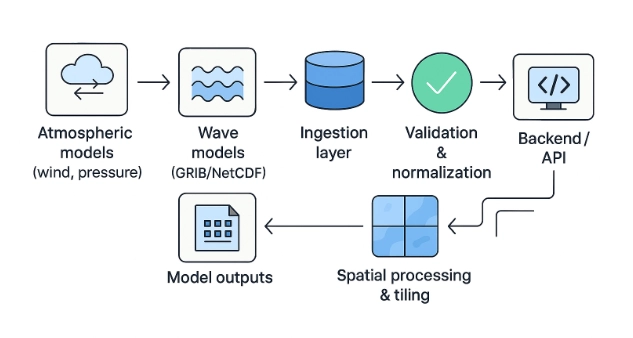
Atmospheric models (wind, pressure) → Wave models → Model outputs (GRIB/NetCDF) → Windy.app ingestion layer → Validation & normalization → Spatial processing & tiling → Backend / API → Visualization
We also run our own research projects, primarily in meteorology. The largest one is EXP3, our AI-powered coastal wind model. It refines wind forecasts for coastal areas by better accounting for terrain and hydrography, and provides high-resolution (3 km) coverage for most of the world’s coasts.
How oceanography feeds into our forecasting
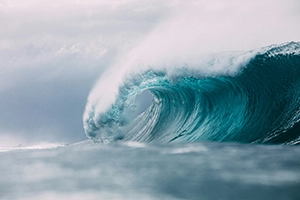
In deep water, waves are mainly driven by wind strength, the distance over which the wind blows, and how long it lasts. Global wave models describe these conditions quite well and form the basis of open-ocean forecasts. In shallow and coastal waters, forecasting becomes much more challenging because bathymetry, wave refraction, and energy loss strongly influence wave behaviour.
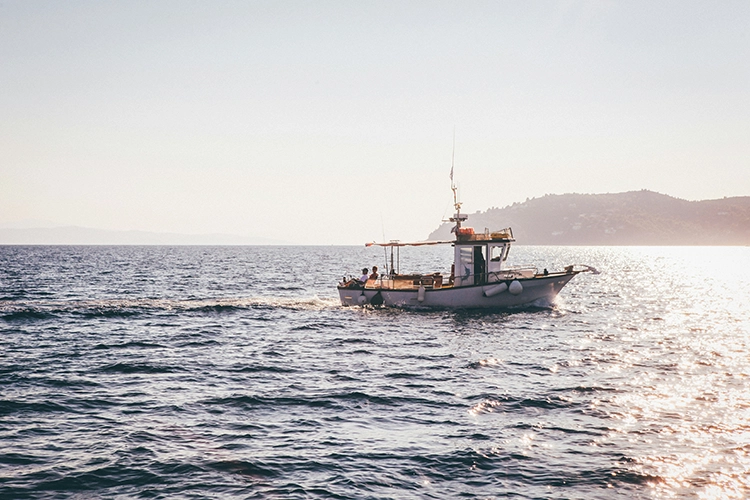
We use the best available wave models and carefully adjust the data near the coast. The goal isn't perfect precision everywhere, but wave information that's still useful and shown only where it makes sense and can support real decisions.
Windy.app's mission
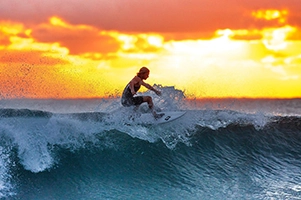
⭐ Our goal is to provide outdoor enthusiasts around the world with the most accurate forecast data available, presented in a clear, user-friendly way.
We're outdoors people ourselves, so we know how critical reliable data and a dependable interface are when you're on the move. At the same time, as meteorology and ocean science specialists, we understand the limits of forecasting and the differences between models. That's why we encourage users to think critically: compare models, learn their strengths, and see which ones perform best in specific regions and conditions. By allowing users to compare models, we prefer to make uncertainty visible rather than hide it. 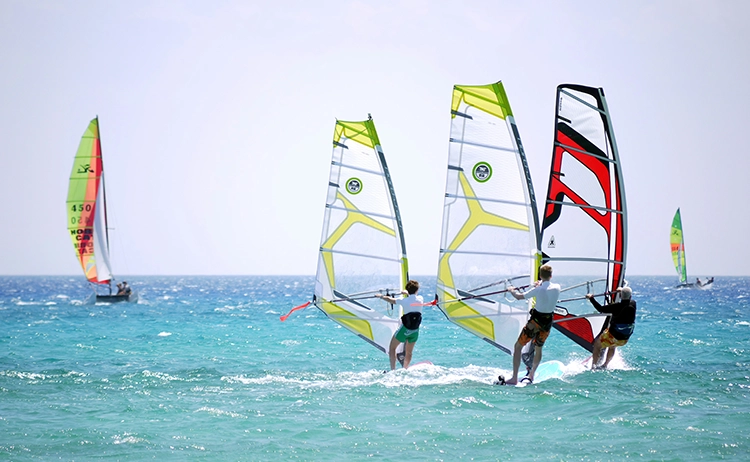
Overall, our key priorities include:
- safety;
- outdoor and professional decision-making;
- accessibility and customization of the user interface.
Windy.app interview with Eugene (Meteorologist / Oceanologist)
Academic career path / qualifications for the job?
I studied geography at university, with an emphasis on hydrodynamics and especially meteorology. In my opinion, outdoor weather forecasting requires several layers of understanding across Earth sciences:
- Astronomy — to understand where the Earth receives most of its energy and forcing from.
- Geology — to understand the long-term processes and structures shaping the planet.
- Geography — to see the global distribution of patterns and environmental conditions.
- Mechanics — to understand the movement of air and water masses.
- Physics — to explain the fundamental processes behind weather and ocean dynamics.
- Mathematics — to describe these processes quantitatively.
- Coding — to apply all this knowledge in practice through models, data analysis, and forecasting tools.
What motivated you to choose your academic route?
My motivation comes from a love of nature and a fascination with the laws it lives by. It started in childhood with an interest in different countries — why plants and animals differ across regions and climates. Later this curiosity evolved into a desire to understand how the entire Earth system works.
At university, I studied many geographical sciences, including oceanology, meteorology, geology, biogeography, and others. Eventually, I chose to focus on the atmosphere, as it is one of the most dynamic and fascinating spheres of our planet. At the same time, meteorology is closely connected with oceanology. Both fields are strongly linked through the study of water, which is the main substance shaping processes on Earth.
What are your main tasks / priorities in your current role?
My tasks include almost everything that requires specific meteorological or oceanographic knowledge. For example:
- Searching for new data sources, datasets, or forecasting methods
- Participating in the integration of data into the app, including testing
- Consulting users and team members about physical processes behind the mathematical models
- Helping translate scientific knowledge into practical features for the product
- Creating educational content about weather science
What is the most challenging aspect of your job or industry?
For me personally, the most challenging part is keeping up with modern methods and tools. Things are evolving extremely fast. For example, during 2025 coding has become much easier with AI assistants, and it has changed the limits of what you can realistically build yourself. It requires constantly reassessing what is possible and learning new approaches.
What aspects do you enjoy the most?
In commercial work, you focus on creating solutions that help real people today. What I enjoy most in my job is realizing that the things we build can immediately improve someone's experience, whether it's helping them plan a surf session, a sailing trip, or simply understand the weather better.
To me, that differs a lot from scientific work, where you develop long-lasting ideas and move human knowledge forward, but it can take years before those ideas find practical applications. I think these two approaches reflect two different mindsets, and it's important to choose which one feels closer to you.
What tips would you recommend for anyone looking to get into the surf forecasting industry?
Think about what exactly interests you in surf forecasting. Within geographical and environmental sciences there are many possible directions: coding, research and development, studying physical processes, or forecasting conditions itself.
One of the coolest and most unique paths in this industry is becoming a local forecaster focused on a specific region or surf spot. In this case, the most important skills are a deep understanding of local conditions and firsthand experience in the water. You might share forecasts through a website, social media, or a newsletter, combining forecasting with content creation and community building. This is an alternative path that is more creative, communication-driven, and community-focused.
