
11Nov
Why Are Estuaries Important? 3 Ways They Help Sea Life, People and Water
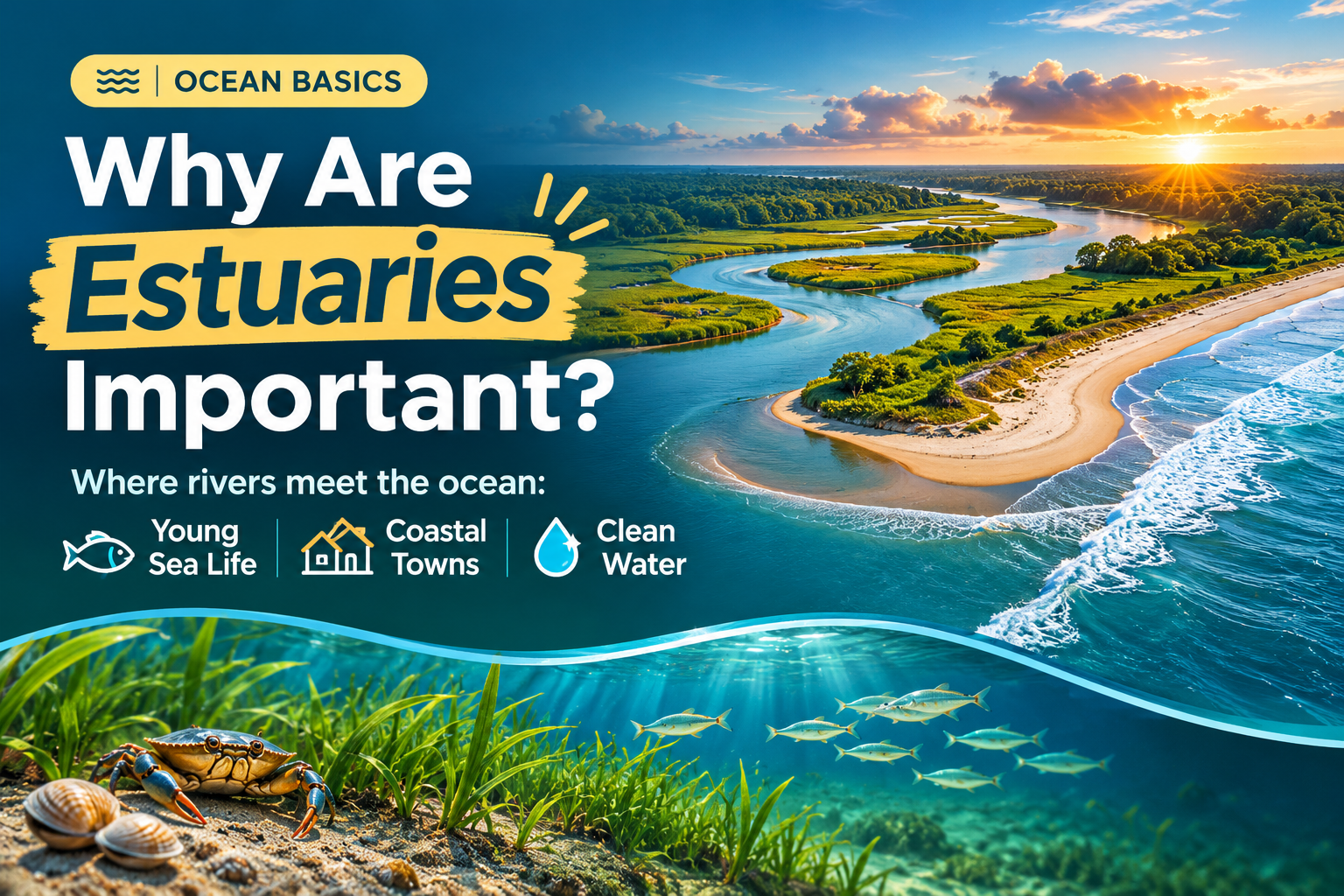
Why are estuaries important? Estuaries are where rivers meet the ocean. They raise young sea animals, protect coastal towns and clean our water. This guide shows how each one works, with facts from NOAA and the EPA.
Quick Answer
Estuaries are important because they are nurseries for young fish and shellfish. They filter dirt and pollution from water. They soak up floods and calm storm waves. They also support food, jobs and trade. According to NOAA, U.S. estuaries support about 68% of the commercial fish catch.
Key Takeaways
• An estuary is where fresh river water mixes with salty seawater.
• Most fish and shellfish Americans eat spend part of their lives in estuaries.
• One oyster can filter up to 50 gallons of water a day.
• Coastal wetlands prevented about $625 million in damage during Hurricane Sandy.
• Nearly 40% of Americans live on or near an estuary.
What Is an Estuary?
An estuary is a coastal area where fresh river water mixes with salty seawater. This mix is called brackish water. It changes every day with the tides, rain and seasons.
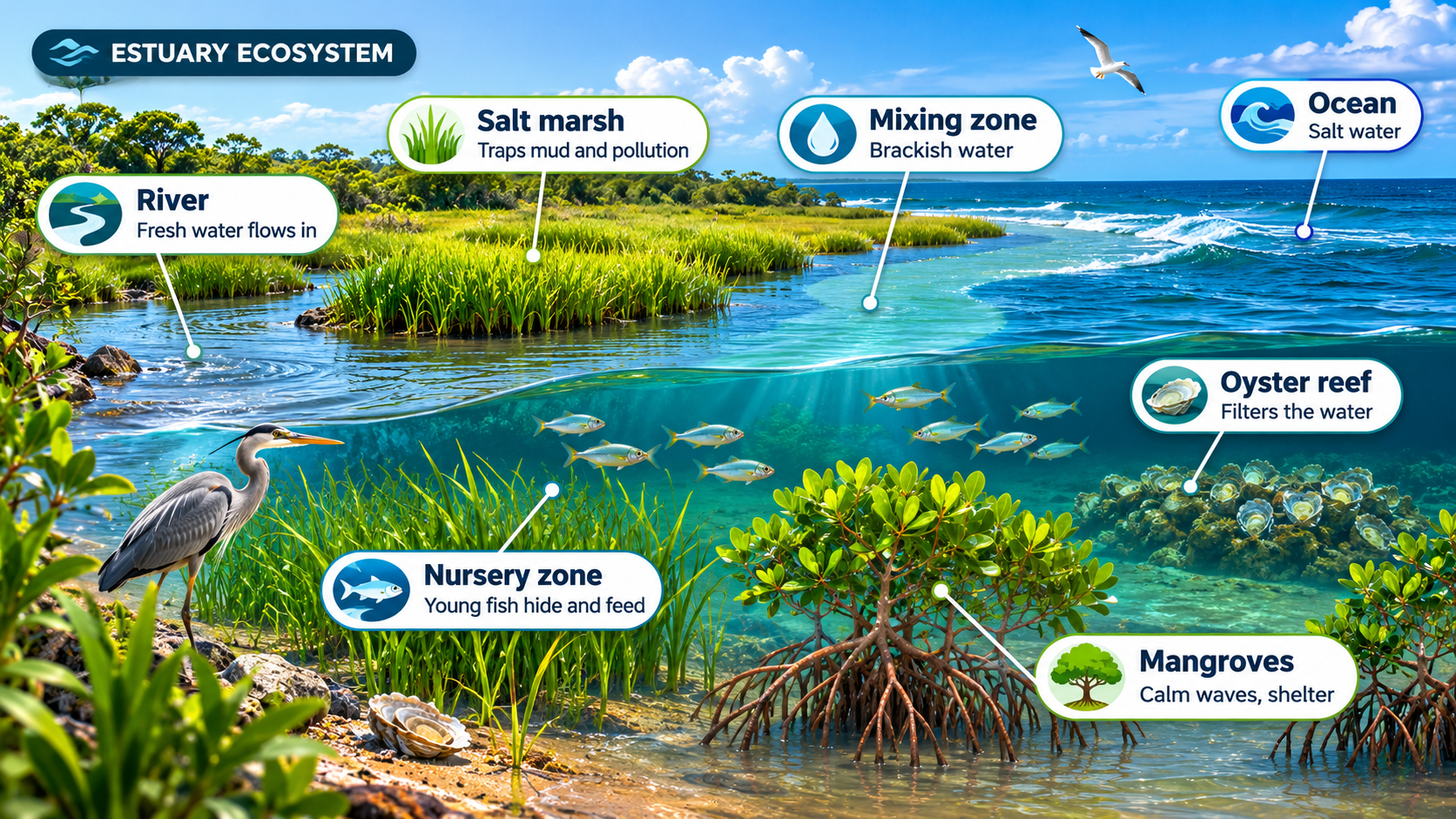
Bays, lagoons, sounds and river mouths can all be estuaries. Salt marshes, mudflats and seagrass grow around them. In Florida and other warm places, mangrove forests line the edges. Well-known U.S. estuaries include Chesapeake Bay, Puget Sound and Tampa Bay.
Bays, lagoons, sounds and river mouths can all be estuaries. Salt marshes, mudflats and seagrass grow around them. In Florida and other warm places, mangrove forests line the edges. Well-known U.S. estuaries include Chesapeake Bay, Puget Sound and Tampa Bay.
Why Are Estuaries Important for Young Sea Animals?
Estuaries are important for young sea animals because they give them food, shelter and calm water. That is why people call them the nurseries of the sea. Here is how they help.
1. Safe hiding places. Marsh grass, mangrove roots and seagrass hide baby fish from predators.
2. Lots of food. Rivers carry nutrients from the land. These feed plankton that young fish eat.
3. Calm water. Bays and marshes block strong ocean waves. Small animals do not get swept away.
4. Safe places to lay eggs. Many fish, crabs and shrimp spawn in these sheltered waters.
5. A path between rivers and the sea. Salmon pass through estuaries on their way to the ocean. They return the same way to spawn.
NOAA Fisheries says most fish and shellfish Americans eat use estuaries. That includes salmon, herring, crabs and oysters. Learn how these food webs work in our guide to biological oceanography.
Why Are Estuaries Important to Coastal Communities?
Estuaries are important to coastal communities because they provide food, jobs, ports and flood protection. Here are the main ways they help people.
1. Food and fishing. Estuaries support about 68% of the U.S. commercial fish catch. They also support about 80% of the recreational catch.
2. Homes and cities. Nearly 40% of Americans live on or near an estuary, says NOAA. Twenty-two of the world's 32 largest cities sit on one.
3. Jobs and money. U.S. estuary regions hold 39% of the country's jobs. They also produce 47% of its economic output.
4. Flood and storm protection. Marshes work like big sponges. During Hurricane Sandy in 2012, coastal wetlands prevented about $625 million in flood damage, a 2017 study found.
5. Culture and fun. Native American communities have used estuaries for thousands of years. Today, people also fish, boat and watch birds here.
How Do Estuaries Keep Water Clean?
Estuaries keep water clean by slowing rivers down and trapping pollution in mud, plants and shellfish. They work like the coast's water filter. Here is how.
1. Water slows down. Rivers lose speed when they reach the estuary. Mud and sand sink to the bottom.
2. Plants trap pollution. Marsh grasses and peat catch pesticides, heavy metals and extra nutrients, NOAA explains.
3. Oysters filter the water. One oyster can filter up to 50 gallons a day. More oyster reefs mean clearer water.
4. Cleaner water reaches the sea. This helps seagrass, coral reefs and the open ocean.
But there is a limit. Too much runoff can overload an estuary. Then algae grows fast and oxygen drops. Fish can die. New pollutants are a growing worry too, as our post on pharmaceuticals in the ocean explains.
What Does Chesapeake Bay Teach Us About Estuaries?
Chesapeake Bay shows all three benefits in one place. It is the largest estuary in the United States. Its watershed covers about 64,000 square miles. It touches six states and Washington, D.C. More than 17 million people live there, says NOAA.
1. Sea life. More than 250 kinds of fish use the bay for part of their lives.
2. People. Crabs, oysters and fish from the bay support local fishing towns.
3. Clean water. NOAA and partners are rebuilding oyster reefs here. More oysters mean clearer water near the reefs.
The lesson is simple. One healthy estuary can feed wildlife and support millions of people.
How Can You Help Protect Estuaries?
You can help estuaries even if you live far from the coast. Rivers carry what we do on land to the sea. Start with these steps:
• Use less fertilizer on lawns and gardens.
• Pick up pet waste so it does not wash into storm drains.
• Never pour oil, paint or chemicals down drains.
• Keep plastic and trash out of rivers and beaches.
• Join a local cleanup or marsh planting day.
• Teachers can bring estuaries into class with our teacher resources.
What Happens If We Lose Estuaries?
If we lose estuaries, we get fewer fish, more flooding and dirtier water. Coastal building, polluted runoff and rising seas all wear them down.
The good news is that estuaries can recover. Groups restore marshes and oyster reefs every year. The EPA's National Estuary Program runs 28 local programs across the country. Other coastal habitats are bouncing back too, as our post on kelp forest restoration shows.
Frequently Asked Questions
What is an estuary in simple words?
It is a place where a river meets the sea. Fresh water and salt water mix there.
Why are estuaries called nurseries of the sea?
Many young fish and shellfish grow up there. The water is calm, safe and full of food.
What is the largest estuary in the United States?
Chesapeake Bay is the largest. It touches six states and Washington, D.C.
What animals live in estuaries?
Fish, crabs, oysters, shrimp, birds and manatees live there. Seagrass and mangroves grow there too.
How do estuaries improve water quality?
Plants, mud and oysters trap dirt and pollution. Cleaner water then flows out to sea.
How do estuaries protect against floods?
Marshes soak up extra water and slow storm waves. Restore America's Estuaries explains how.
Is estuary water fresh or salty?
It is both. This mix is called brackish water, and it changes with the tides.
What is the difference between an estuary and a delta?
An estuary is where fresh and salt water mix. A delta is land built from mud a river drops at its mouth. WHOI explains both.
What are the main threats to estuaries?
Pollution, runoff, coastal building and rising seas are the biggest threats.
How can I help protect estuaries?
Use less fertilizer and keep trash out of drains. You can find a local program through the EPA National Estuary Program.
