
27Oct
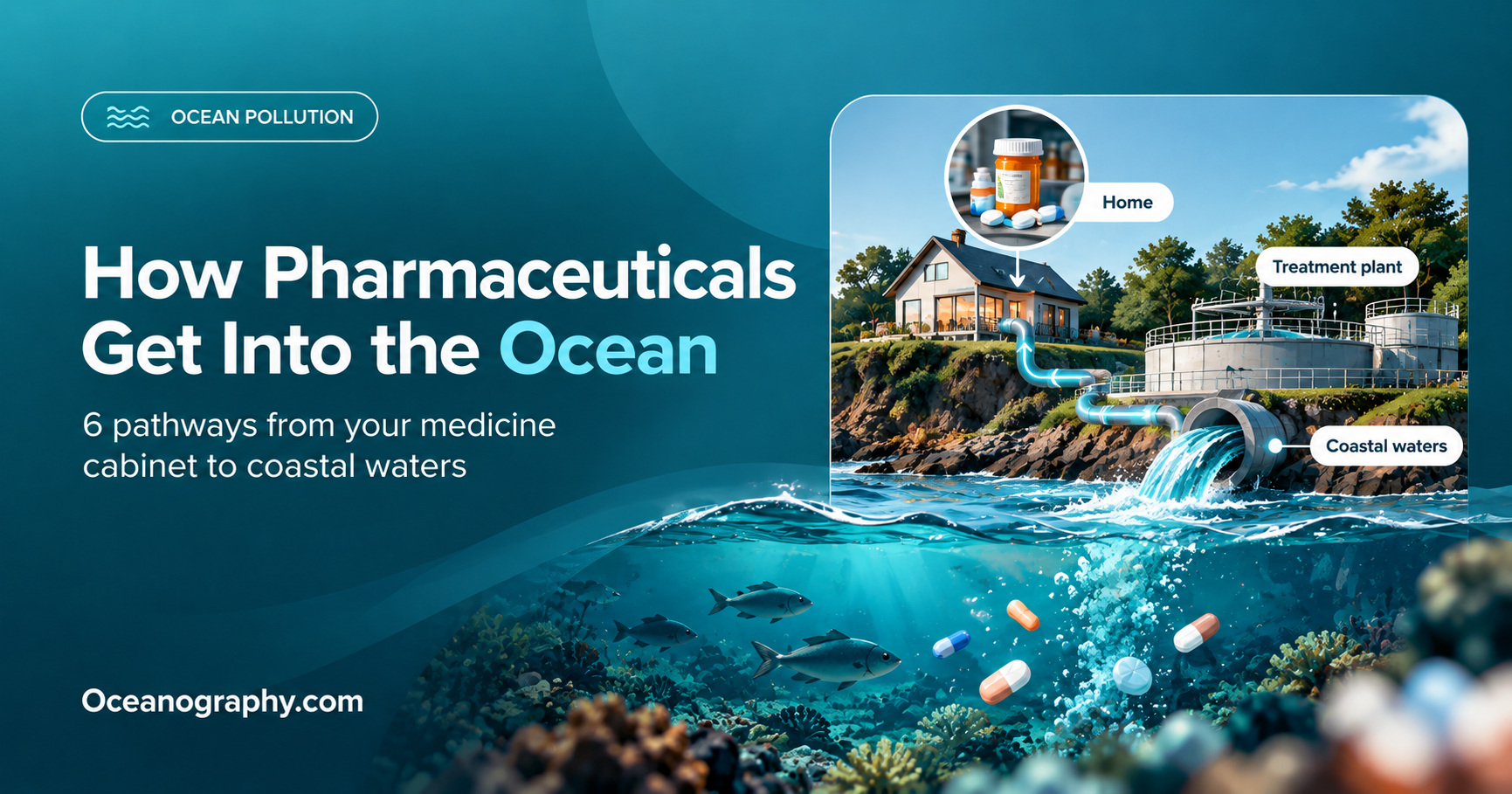
How Pharmaceuticals Get Into the Ocean: 6 Pathways Explained
Ever wondered how pharmaceuticals get into the ocean? Most of them start in our own bathrooms. This guide follows medicines and personal-care chemicals from home to coast, step by step.
Quick Answer
Pharmaceuticals get into the ocean mainly through sewage. Our bodies pass out part of every medicine we take. Most treatment plants cannot remove these drug traces. So treated water carries them into rivers, estuaries and the sea. Flushed pills, sewer overflows, landfills, fish farms and sunscreen add more.
Key Takeaways
• Treated sewage is the main route for drugs into the sea.
• Most treatment plants were built for solids and germs, not medicines.
• Heavy rain can send untreated sewage straight to the coast.
• Fish farms and sunscreen add chemicals right at the shore.
• Drug take-back programs are the easiest way to help.
How Do Pharmaceuticals Get Into the Ocean Through Sewage?
Sewage is the biggest pathway by far. Here is the journey:
1. You take a medicine, like a painkiller or an antibiotic.
2. Your body uses only part of it.
3. The rest leaves your body in urine and stool.
4. Sewer pipes carry it to a treatment plant.
5. The plant removes solids and germs, but many drugs pass through.
6. Treated water flows into a river, estuary or ocean outfall.
The US EPA says treatment plants are not designed to remove medicines. A UNESCO and HELCOM report checked 118 drugs in Baltic Sea wastewater. Only nine were removed at more than 95%. Nearly half were removed at less than 50%. Some drugs are even made to resist breaking down. That makes them harder to remove.
What Happens When You Flush Old Medicines?
1. Someone flushes old pills or pours syrup down the sink.
2. The drugs join the normal sewage stream.
3. Many pass through the treatment plant.
4. They flow out with the treated water toward the coast.
That is why the EPA asks people to avoid flushing medicines, except in rare cases.
Can Medicines in the Trash Reach the Sea?
1. Unused pills go into the household trash.
2. The trash goes to a landfill.
3. Rain soaks through the waste and picks up chemicals.
4. This dirty liquid, called leachate, often goes to a treatment plant.
5. Drug traces can pass through and reach rivers and lakes.
How Do Pharmaceuticals Get Into the Ocean When It Rains?
1. Many older cities use one pipe for sewage and rainwater.
2. A big storm fills these pipes past their limit.
3. The system is built to overflow when this happens.
4. Raw sewage, drug traces and all, pours into rivers, bays and coastal waters.
A 2004 EPA report to Congress counted 772 of these systems in the US. Each year, they released about 850 billion gallons of untreated wastewater and stormwater. Leaky septic tanks near the shore can also seep into groundwater and the sea.
How Do Fish Farms Add Antibiotics to Coastal Waters?
1. Farmers give fish antibiotics to prevent or treat disease.
2. Often, the drugs are mixed into the fish feed.
3. Uneaten feed and fish waste drift out of the pens.
4. Wild fish nearby eat the leftover feed and waste.
5. Coastal pond farms can also leak or release dirty water.
A review of drugs in marine waters describes each of these steps.
How Do Sunscreen and Personal-Care Chemicals Enter Coastal Waters?
1. You put on sunscreen, lotion or soap.
2. Some washes off when you swim near the shore.
3. More washes off in the shower and goes down the drain.
4. Sewage carries it through the plant and out to sea.
5. UV filters like oxybenzone then reach coral reefs.
NOAA says these chemicals can build up in coral tissue. It links them to bleaching, DNA damage and deformed young corals.
How Can You Research This Topic on Oceanography.com?
1. Open Search Articles and type “pharmaceuticals” or “PPCPs.”
2. Use Search Datasets to find real-time and historic ocean data for your region.
3. Visit View Institutes to find labs that study coastal waters.
4. Read Biological Oceanography to see how chemicals move through food webs.
5. Browse Environment and Conservation for related posts.
Which Method Should You Use?
• Leftover pills at home? Drop them at a drug take-back site or pharmacy kiosk.
• No take-back site nearby? Follow the FDA disposal guide. Flush only drugs on its flush list.
• Heading to a reef? Wear sun-safe clothing and skip oxybenzone sunscreens.
• Living in an older city? Back local plans to cut sewer overflows.
• Student or researcher? Start with Oceanography.com articles and datasets.
Why Does Pharmaceutical Pollution Matter?
Medicines are made to work at tiny doses. So small traces can affect animals they were never meant for. The German Environment Agency says hormones can harm fish breeding. Some mental-health drugs change how fish behave. Antibiotics can slow the natural growth of algae.
The problem is also global. A PNAS study tested 1,052 river sites in 104 countries. At 25.7% of sites, at least one drug reached a risky level. The risk was to aquatic life or to drug resistance. Rivers then carry these traces to the coast. Coastal waters sit at the end of this chain. Like red tide, this ocean problem starts on land.
FAQ
How do pharmaceuticals get into the ocean?
Mainly through treated sewage. Treatment plants cannot remove most drug traces before release.
What is the main source of drugs in the sea?
Everyday medicine use. Our bodies pass out part of each dose, the EPA explains.
Can wastewater treatment plants remove medicines?
Only partly. Most plants were built to remove solids and germs, not drugs. Advanced treatment can remove more.
Which drugs are most common in rivers?
Carbamazepine, metformin, and caffeine topped a global PNAS study.
Does sunscreen pollute the ocean?
Yes. Some UV filters wash off swimmers and reach reefs, NOAA reports.
Are antibiotics in the ocean harmful?
They can slow algae growth. They may also help drug-resistant bacteria spread.
How do medicines affect fish?
Hormones can harm breeding. Some mental-health drugs can change fish behaviour.
Is it safe to flush old pills?
Usually not. Flush only medicines on the FDA flush list. Use a take-back site for the rest.
What are PPCPs?
It means pharmaceuticals and personal care products. Scientists call them emerging pollutants.
How can I reduce pharmaceutical pollution?
Use take-back sites, never pour drugs down the drain, and pick reef-safe sun care.
