
21Jul
Understanding the Ocean’s Role in the Global Carbon Cycle
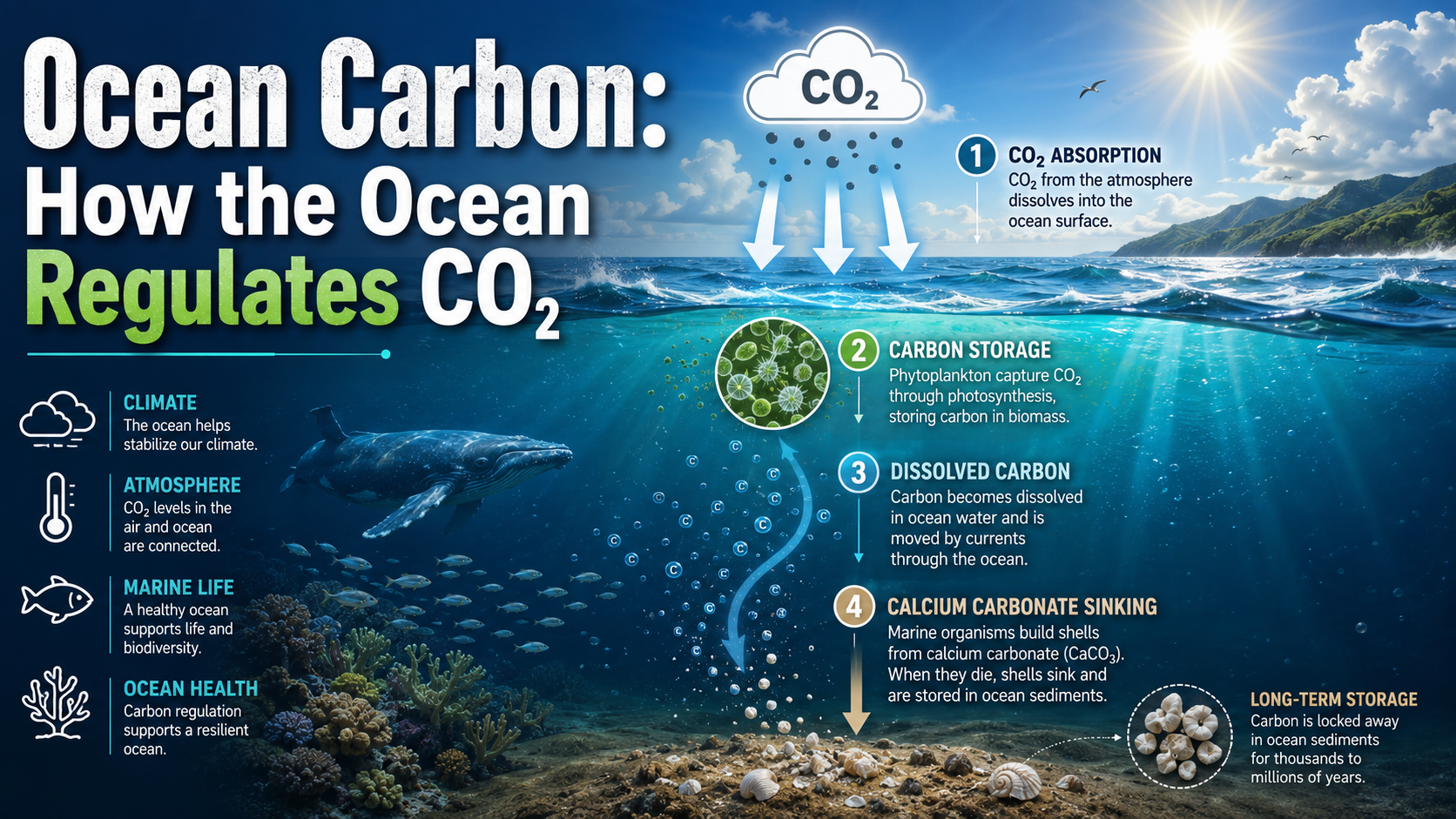
Ocean carbon is a critical component of the global carbon cycle. Oceans take in atmospheric CO₂, store it in dissolved and particulate forms, and regulate climate through both physical and biological processes. Understanding ocean carbon dynamics helps scientists predict climate change impacts and manage marine ecosystems.
Why Ocean Carbon Matters
The ocean covers over 70% of Earth’s surface and acts as a massive carbon sink. About 25–30% of human CO₂ emissions are absorbed by the oceans annually. This mitigates atmospheric warming but also creates challenges like ocean acidification.
By understanding ocean carbon, researchers can track how carbon moves between the atmosphere, surface waters, deep oceans, and marine life. This knowledge is essential for climate models, policy decisions, and conservation strategies.
How Carbon Enters the Ocean
1. Physical Carbon Uptake
The ocean absorbs carbon dioxide from the atmosphere through gas exchange at the surface. CO₂ dissolves in seawater, forming bicarbonate and carbonate ions, a process governed by temperature, salinity, and circulation.
Cold polar waters absorb more CO₂ due to higher solubility. Ocean circulation then transports dissolved carbon to deeper layers, a key part of the global carbon cycle.
2. Biological Carbon Pump
Phytoplankton in the sunlit surface ocean photosynthesize, converting CO₂ into organic matter. When organisms die or are consumed, some carbon sinks to the deep ocean. This biological carbon pump sequesters carbon for decades to centuries.
- Example: Phytoplankton blooms in the North Atlantic play a major role in seasonal carbon absorption.
- Example: Zooplankton fecal pellets transport carbon to deep waters.
Ocean Carbon Storage Mechanisms
- Dissolved Inorganic Carbon (DIC): Carbon stored as CO₂, bicarbonate, and carbonate ions in seawater.
- Particulate Organic Carbon (POC): Carbon incorporated into organic matter, sinks, or accumulates in sediments.
- Calcium Carbonate: Shell-forming organisms sequester carbon as calcium carbonate, contributing to long-term storage in sediments.
These mechanisms make the ocean the largest active carbon reservoir on Earth.
Impact of Ocean Carbon on Climate
Ocean carbon directly influences atmospheric CO₂ levels and climate regulation:
- CO₂ buffering: The ocean absorbs excess CO₂, reducing greenhouse warming.
- Temperature feedback: Warmer oceans hold less CO₂, creating positive feedback on global warming.
- Ocean acidification: Increased CO₂ lowers seawater pH, affecting marine life, coral reefs, and food webs.
Understanding these dynamics is crucial for climate mitigation strategies and predicting ecosystem responses.
Human Impacts on Ocean Carbon
1. CO₂ Emissions
Rising anthropogenic emissions increase ocean CO₂ uptake but accelerate acidification and disrupt natural carbon storage.
2. Overfishing and Ecosystem Disruption
Removing top predators or phytoplankton grazers can alter the biological carbon pump efficiency, reducing carbon sequestration potential.
3. Land-Based Runoff
Nutrients and pollutants from agriculture increase eutrophication, sometimes enhancing phytoplankton blooms but also causing hypoxic zones that release stored carbon back into the atmosphere.
Measuring and Monitoring Ocean Carbon
- Satellites: Measure chlorophyll, surface temperature, and proxies for carbon uptake.
- Argo Floats: Autonomous floats track CO₂, temperature, salinity, and pH profiles across oceans.
- Research Vessels: Collect water samples for dissolved carbon and biological carbon measurements.
- Sediment Cores: Reveal historical carbon deposition and long-term sequestration trends.
Why Understanding Ocean Carbon Is Critical
- Climate Predictions: Ocean carbon data improve global climate models and CO₂ projections.
- Ecosystem Protection: Helps assess the impact of acidification on fisheries and coral reefs.
- Carbon Management: Informs geoengineering proposals like ocean fertilization and blue carbon initiatives.
- Policy Guidance: Supports international agreements on emission reduction and marine conservation.
Examples of Ocean Carbon in Action
1. North Atlantic Carbon Sink
Seasonal phytoplankton blooms absorb vast amounts of CO₂, illustrating the ocean’s dynamic role in the carbon cycle.
2. Southern Ocean Upwelling
Nutrient-rich waters bring carbon to the surface, enhancing phytoplankton growth and sequestration when it sinks.
3. Coastal Blue Carbon
Mangroves, salt marshes, and seagrass meadows store carbon in sediments for centuries, complementing open ocean processes.
Challenges and Future Research
- Acidification Effects: Understanding how lower pH affects calcium carbonate organisms is essential.
- Deep Ocean Storage: Quantifying carbon in deep waters remains complex.
- Climate Feedbacks: Predicting how ocean carbon responds to warming and stratification.
- Human Impacts: Monitoring how fisheries, pollution, and coastal development influence carbon storage.
Conclusion
Ocean carbon plays a pivotal role in regulating Earth’s climate, supporting marine ecosystems, and controlling atmospheric CO₂ levels. Preserving and understanding this system is critical for climate mitigation, ecosystem health, and future sustainability.
By integrating satellite data, Argo floats, sediment studies, and biological measurements, scientists continue to unlock the ocean’s secrets in the global carbon cycle. Awareness of ocean carbon helps policymakers, researchers, and the public make informed decisions for a sustainable future.
Explore ocean carbon data and learn how researchers track carbon across oceans in Oceanography.
FAQs
What is ocean carbon?
Ans: Ocean carbon is CO₂ absorbed and stored by oceans, including dissolved inorganic carbon and organic matter, which helps regulate the global carbon cycle.
Why is ocean carbon important?
Ans: It mitigates climate change by removing CO₂ from the atmosphere and supports marine ecosystems. Learn more from Ocean Climate.
How do oceans absorb carbon?
Ans: Through gas exchange at the surface and photosynthesis by phytoplankton, which convert CO₂ into organic matter.
What is the biological carbon pump?
Ans: It’s the process where phytoplankton capture carbon, which sinks to deep ocean layers, sequestering carbon for decades to centuries.
What human activities affect ocean carbon?
Ans: CO₂ emissions, overfishing, and coastal pollution reduce the ocean’s ability to store carbon.
How is ocean carbon measured?
Ans: Scientists use satellites, Argo floats, research vessels, and sediment cores to track dissolved and particulate carbon.
What is ocean acidification?
Ans: Ocean acidification occurs when CO₂ absorption lowers seawater pH, affecting coral reefs and shell-forming organisms.
Can oceans offset climate change?
Ans: Yes, oceans absorb roughly 25–30% of human CO₂ emissions, but their capacity is limited. More details are available at IAEA Ocean Carbon Cycle.
What are blue carbon ecosystems?
Ans: Mangroves, salt marshes, and seagrasses that store carbon in sediments over long periods, aiding climate mitigation.
How can we protect ocean carbon?
Ans: Reducing CO₂ emissions, conserving marine ecosystems, and minimizing pollution all help maintain ocean carbon storage.
