
27Nov
Hidden Extinction Risk in the Deep Sea: What Gulf Fish and Shrimp DNA Reveals
Quick answer: A Florida International University team studied 12 years of DNA from five deep-sea species in the Gulf, three lanternfish and two shrimp. All five showed genetic signs linked to higher extinction risk. Climate models also point to possible habitat losses of up to 70% for four species, so the deep sea may not be the safe refuge many assumed.
Key Takeaways
- Researchers examined DNA from 486 specimens of three lanternfish and two deep-sea shrimp collected in the Gulf between 2011 and 2023.
- Every one of the five species showed genetic traits linked to a higher risk of extinction.
- The lanternfish Diaphus dumerilii lost roughly 8% of its genetic diversity in 12 years.
- Climate models suggest four of the five species could lose substantial habitat, potentially up to 70%, by 2050 or 2100.
- The team has not shown a direct link between the Deepwater Horizon oil spill and the genetic changes they measured.
What did scientists find in the deep Gulf?
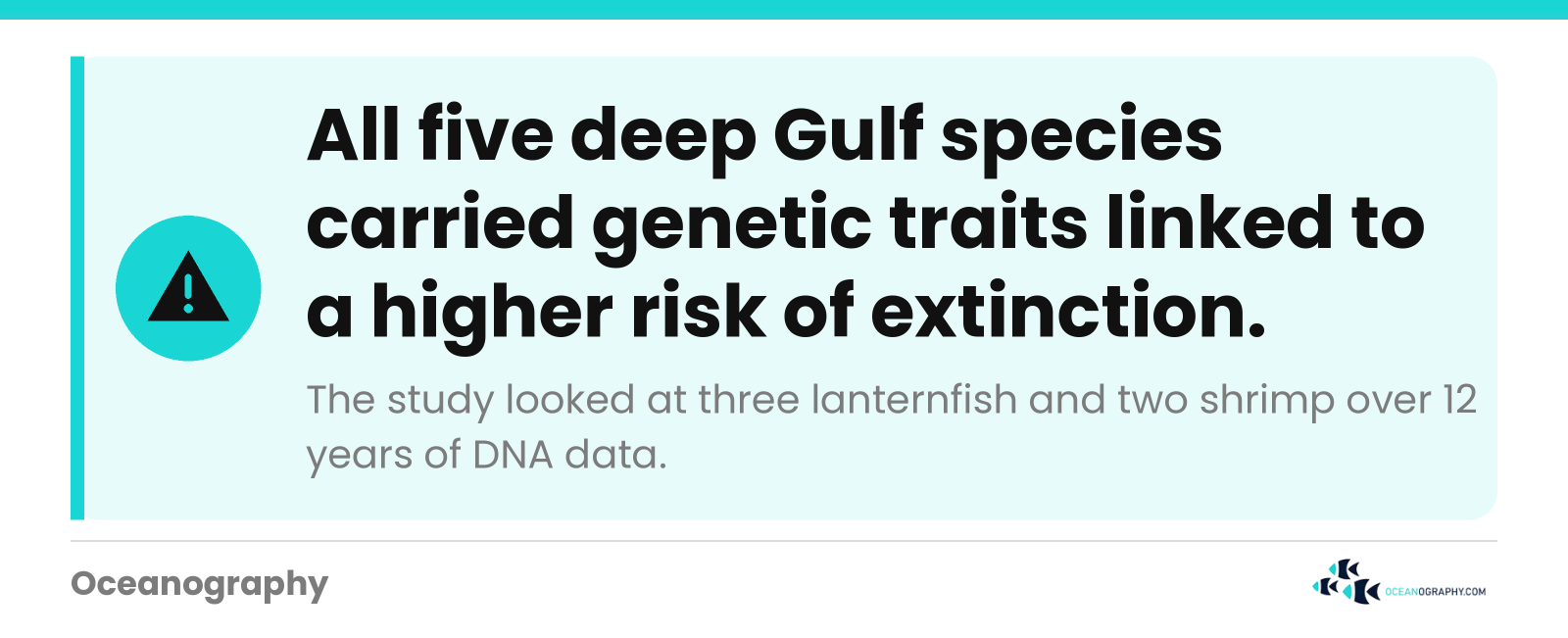
Florida International University (FIU) researchers looked at 12 years of DNA data from five deep-sea animals in the Gulf: three lanternfish and two shrimp. All five species carried genetic traits linked to a higher risk of extinction. Many people picture the deep sea as a safe refuge, so this result pushes back on that idea.
Pedro A. Peres, a marine scientist at FIU, headed the project as a member of the Bracken-Grissom Lab. According to the ScienceDaily report on the study, these animals live far down in the water column, at depths of several hundred meters. Lanternfish are small fish of the deep sea. Many have organs that produce light, and that is the source of their name.
The study at a glance
| Detail | What the report says |
|---|---|
| Lead institution | Florida International University |
| Species studied | Three lanternfish, two deep-sea shrimp |
| Collection years | 2011 to 2023 |
| Specimens with DNA examined | 486 |
| Standout result | About 8% drop in genetic diversity in one lanternfish, Diaphus dumerilii, over 12 years |
| Habitat projection | Four of five species could lose substantial habitat, potentially up to 70% |
One lanternfish lost diversity quickly
Diaphus dumerilii showed the clearest pattern. Across the 12 years studied, its genetic diversity fell by roughly 8%. Researchers note this equals or exceeds declines recorded in certain animals at risk of extinction, although those drops took place across much longer periods.
Peres notes that few studies have followed deep-sea genetics for so many years. That gap helps explain why this finding stands out.
Why does genetic diversity matter for survival?
Genetic diversity means the range of DNA differences among individuals in a population. When temperatures shift, disease spreads or a disturbance hits, that range gives a species more options. Less variety means fewer ways to adjust, and recovery after a shock can get harder.
According to Heather Bracken-Grissom, who is an assistant director in FIU's Institute of Environment and a co-author, this variety is the raw material a species uses to adapt, resist disease and recover. When it declines, a species can lose some of its capacity to cope with threats ahead.
Effective population size, explained
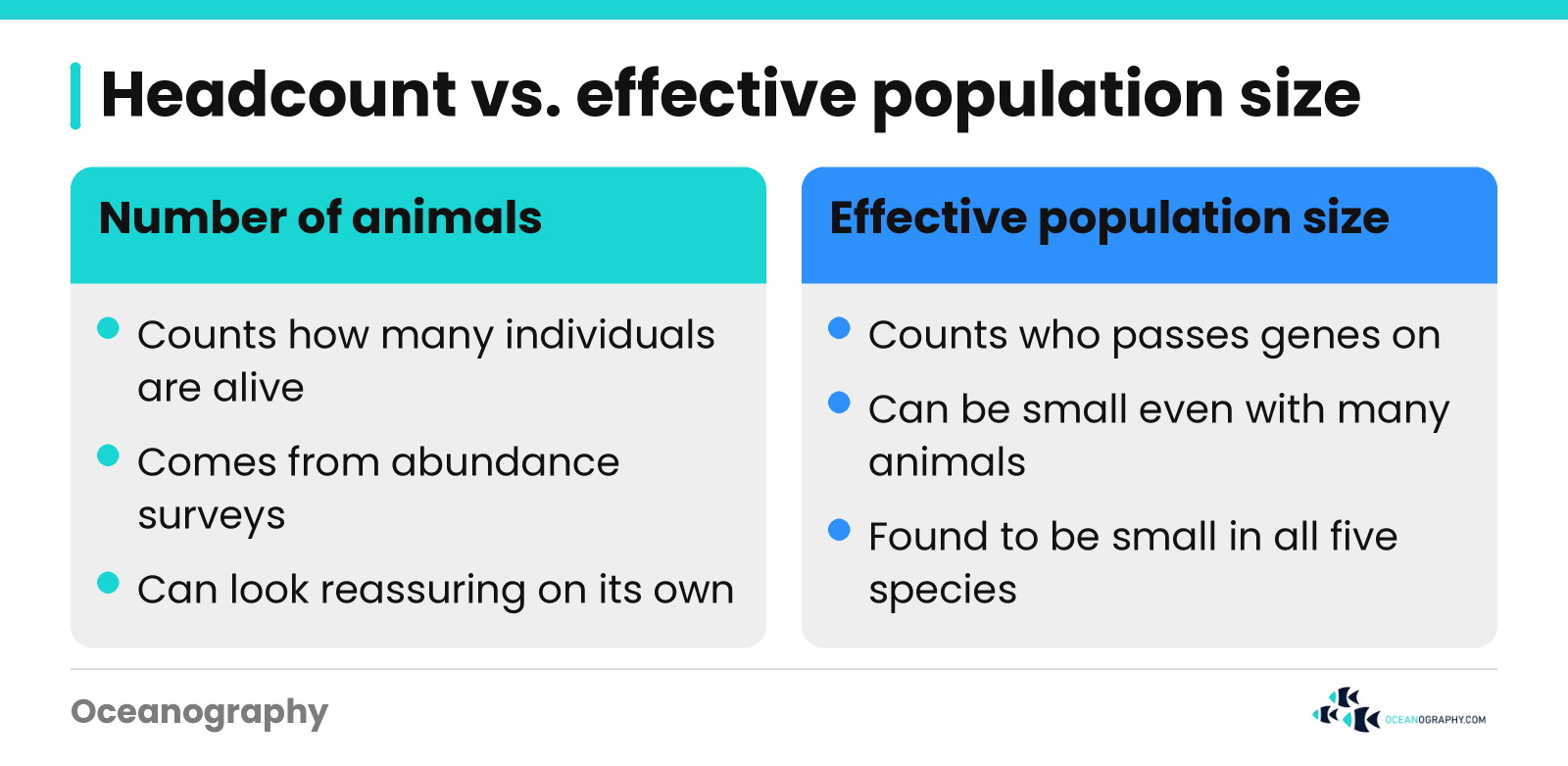
Small effective population sizes showed up in all five species too. Despite the name, this is not a headcount. It measures how many individuals actually pass their genes to the next generation.
A species can have plenty of animals in the water and still have a small effective population size. Researchers say this does not mean the animals are necessarily rare. It points to only a limited share of them contributing to future generations.
Why counting animals is not enough
Abundance surveys can look reassuring. A huge volume of ocean and a wide geographic range seem to promise large, sturdy populations. Peres points out that this view can miss problems that only show up in DNA.
Here is a lesson that applies to any marine topic. How many animals exist and how healthy a population is over the long run are related, but they are different measurements. To read more about how sea life is studied, visit our Biological Oceanography page.
Could climate change shrink deep-sea habitats?
The study's climate models point to yes. Researchers estimated how well the Gulf might suit these species by 2050 and 2100. All but one of the five species studied might lose much of their suitable habitat, possibly as much as 70%. These figures are projections rather than measurements, so they show risk, not guaranteed results.
How to read a habitat projection
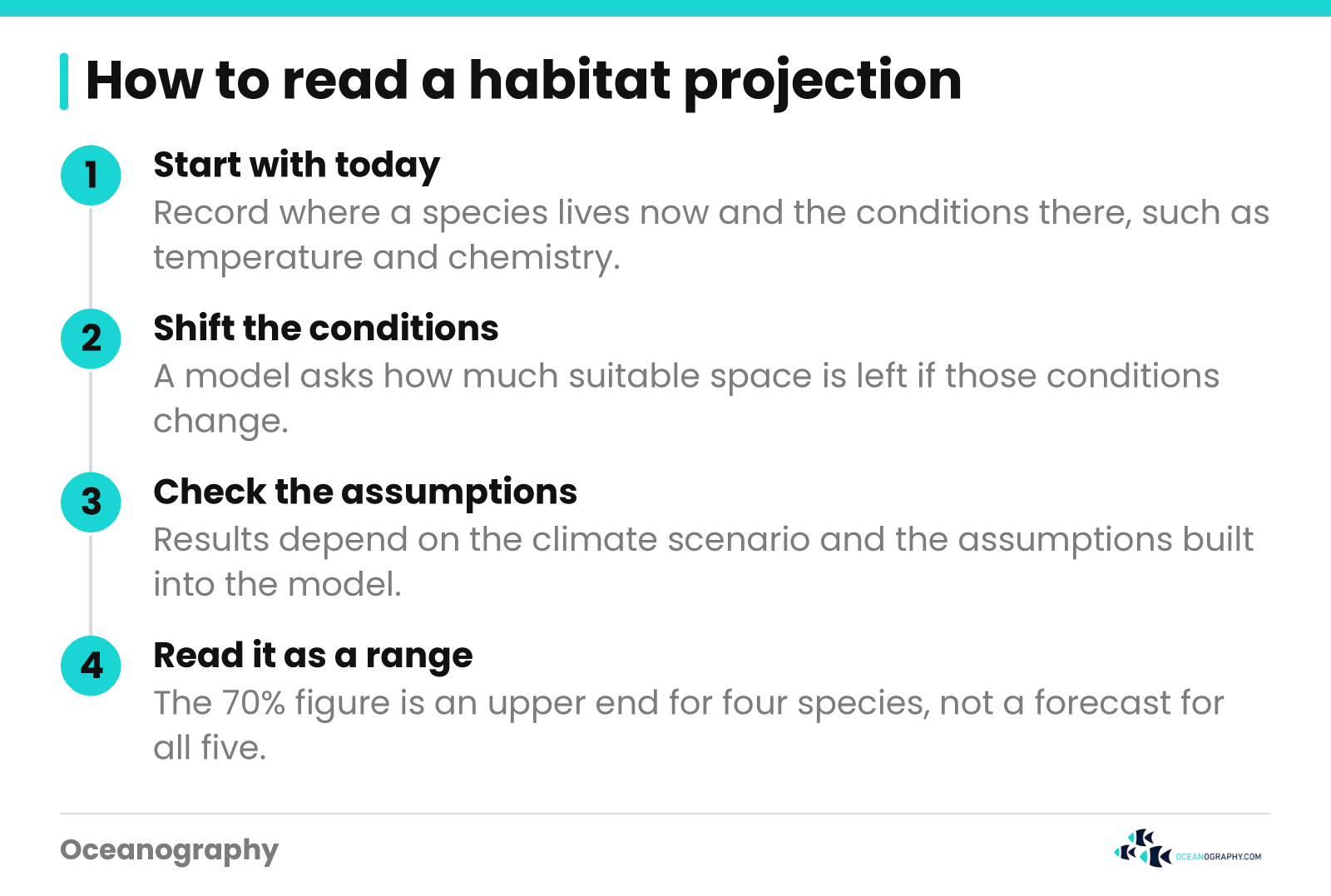
A habitat projection starts with where a species lives now and the conditions there, such as temperature and chemistry. A model then asks how much suitable space is left if those conditions shift. Results depend on the climate scenario and on the assumptions built into the model.
So read the 70% figure as the upper end of a possible range for four species, not a forecast for all five. The fifth species was not part of that finding.
How does the Deepwater Horizon spill fit in?
Past studies reported steep declines in deep-sea animal populations following the Deepwater Horizon oil spill in 2010. The new findings add questions about lasting effects. However, the team could not show that the spill directly caused the genetic shifts they observed.
Peres proposes that certain populations may have been fragile in their genes already, prior to the spill. If so, a disturbance like an oil spill could cause more harm than population counts alone would suggest, and its effects could extend far past the initial impact.
What does this mean for deep-sea research?
Monitoring of deep-sea life, it suggests, should include genetics alongside counts. Long DNA records help scientists spot slow, hidden declines. They also show which species might cope with stress, which matters for planning around fishing, pollution and a warming ocean.
Questions worth asking of any deep-sea study
- How long was the record? Twelve years of samples reveal change that a single survey cannot.
- How many specimens? This study used 486, spread over five species.
- What is measured? Abundance, genetic diversity and effective population size each answer a different question.
- Is it a measurement or a projection? Genetic changes were observed; habitat losses are modeled.
- Is cause proven? In this case, the oil spill link is raised as a question, not shown.
Other hidden features wait in the deep. Our post on deep seabed permafrost in the Arctic Ocean covers a very different one on the ocean floor.
How Oceanography helps you follow deep-sea science
Oceanography.com is a learning and research community based in Franklin, Massachusetts. We help you find the data, papers and teaching materials behind stories like this one. That way you can read past the headline and check the evidence yourself.
Explore data and research
Our map tool lets you search datasets by region, using live ocean measurements gathered from some of the largest oceanographic institutions. Results appear as tables or graphs, and you can download them. They are not the genetic data from this study, but they can add context about conditions in a region.
For the research itself, our worldwide index covers oceanographic documents on all aspects of ocean science. Papers in our repository of peer-reviewed articles go online right after publication, and members can search articles for free.
Learn and teach
Students can explore courses and lectures. Educators can use our teacher resources to bring a story like this into the classroom. One good class question: why might a species with many animals still be at risk? You can also view institutes doing ocean research.
Ready to look at the data? Search Datasets or call us at +1 (877) 805-3282.
Frequently Asked Questions
What did the deep-sea extinction risk study find?
It found genetic signs linked to higher extinction risk in all five species examined. The team studied three lanternfish and two deep-sea shrimp from the Gulf, using DNA from 486 specimens collected between 2011 and 2023. One lanternfish lost about 8% of its genetic diversity in 12 years.
What is genetic diversity in marine animals?
Genetic diversity is the range of DNA differences among individuals in a population. It gives a species more ways to adapt to changing conditions, resist disease and recover from disturbances. When diversity falls, a population may lose some of its ability to handle future threats.
What is effective population size?
Effective population size describes how many individuals actually pass their genes to the next generation. It is not the same as the total number of animals. A species can be common yet have a small effective size, which the researchers linked to greater extinction risk.
Are lanternfish going extinct?
The study does not say lanternfish are going extinct. It found genetic traits linked to higher extinction risk in three lanternfish species in the Gulf. The authors describe signs of vulnerability, and the findings do not show the animals are necessarily scarce today.
Did the Deepwater Horizon oil spill cause these genetic changes?
The scientists have not established a direct link. Earlier research found large drops in deep-sea animal populations after the 2010 spill. The new results suggest some populations may already have been genetically vulnerable, so disturbances like spills could have longer-reaching effects.
How much deep-sea habitat could be lost by 2100?
Climate models in the study suggest four of the five species could face substantial habitat losses, potentially reaching 70%. The estimates cover 2050 and 2100. They are projections that depend on model assumptions, so they describe possible risk rather than a certain outcome.
