

The world's first Bamboo Coral Reef discovered?
Institute of Marine Research (Norway)
Published: 9 October 2025
Researchers on the Mareano expedition discovered what may be the world's first documented bamboo coral reef, stretching over 800 meters along the Arctic Mid-Ocean Ridge in the Norwegian Sea at nearly 1,000 meters depth.
Keywords: bamboo coral, coral reef, deep sea, Norwegian Sea, Arctic Mid-Ocean Ridge, Mareano, ROV exploration

Blackouts Beneath the Waves
University of California, Santa Barbara
Published: 13 January 2026
Research defines marine darkwaves—sudden, intense periods of underwater light loss lasting days to months—as a new threat to ocean ecosystems. Analysis of long-term data from California and New Zealand reveals these events can nearly eliminate seafloor light.
Keywords: marine darkwaves, underwater light, kelp forests, coastal ecosystems, ocean productivity, seafloor, light loss
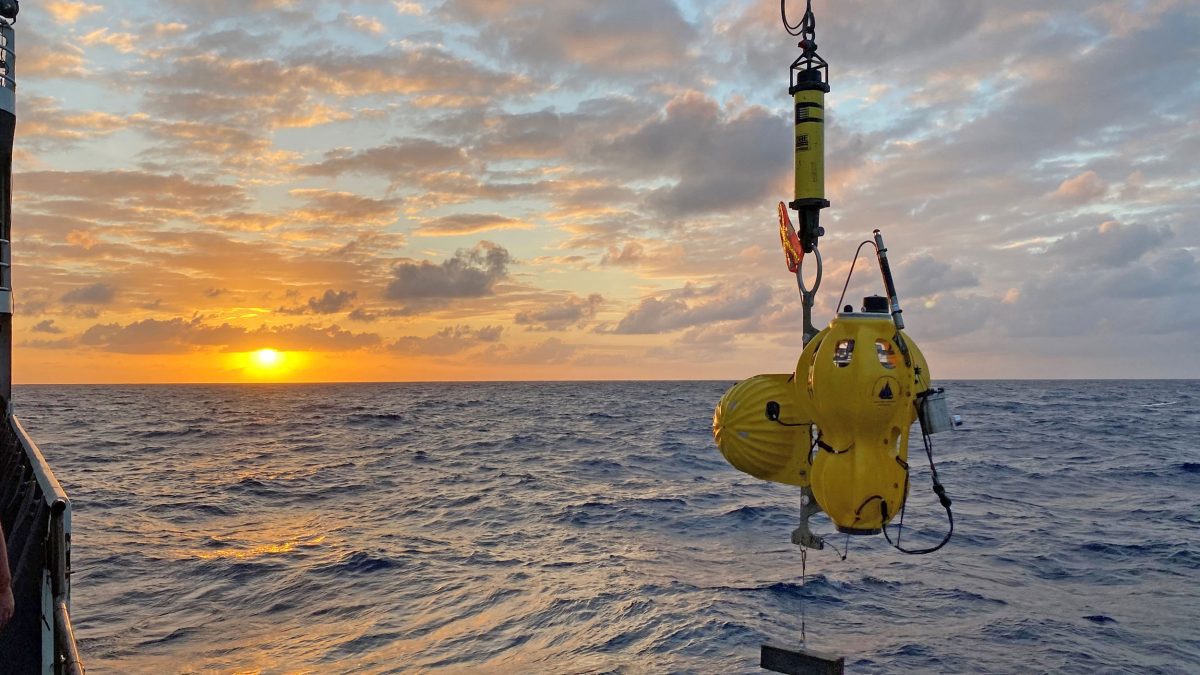
Researchers help solve mystery of clockwork-like earthquake system deep beneath the Pacific
Woods Hole Oceanographic Institution
Published: 14 May 2026
Study of the Gofar transform fault reveals barrier zones controlled by dilatancy strengthening that prevent rupture spread, explaining why M6 earthquakes recur like clockwork every 5-6 years at the same locations along the East Pacific Rise.
Keywords: transform fault, earthquakes, deep-sea geology, tectonic plates, East Pacific Rise, seismology, dilatancy strengthening
