
13Jun
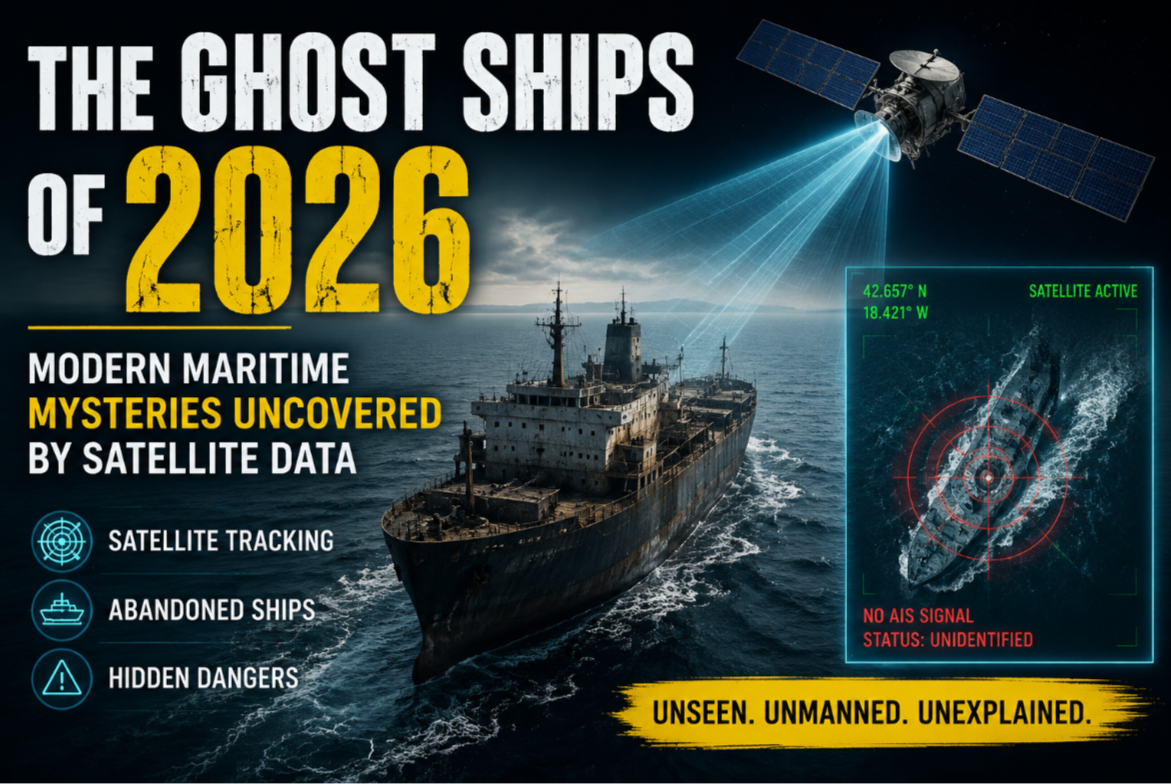
The Ghost Ships of 2026: Modern Maritime Mysteries Uncovered by Satellite Data
The oceans hold secrets that have puzzled sailors for centuries. In 2026, modern technology has revealed a new chapter in maritime mysteries: ghost ships drifting across the seas without crews, sometimes for months. These anomalies are no longer tales of folklore they are tracked and documented through advanced satellite imagery, AIS (Automatic Identification System) data, and real-time maritime monitoring. This post dives deep into these modern ghost ships and explores how satellite data is changing our understanding of abandoned vessels.
How Satellite Technology Detects Ghost Ships
The first step in identifying ghost ships involves satellite-based remote sensing. High-resolution optical satellites detect the presence of vessels in unusual locations or moving without active AIS signals. Infrared sensors can identify heat signatures, or the absence of them, indicating whether a ship is manned or abandoned. The combination of optical, radar, and infrared data allows maritime authorities to track suspicious drifting vessels globally.
Why Ghost Ships Appear in 2026
Several factors contribute to the rise of ghost ships. Economic pressures and abandoned cargo vessels are a primary reason. Shipping companies sometimes leave vessels at sea when operational costs outweigh potential profits. Environmental conditions, such as rogue waves or storms, can also incapacitate crews, leaving ships adrift. Cybersecurity breaches affecting navigation systems occasionally cause autonomous or semi-autonomous vessels to drift off course.
The Dangers Posed by Ghost Ships
Ghost ships are not just curiosities; they are potential hazards. Collisions with other vessels can occur due to unpredictable drift paths. Oil leaks or onboard chemical hazards can impact marine ecosystems. Satellites help monitor these risks in real time, allowing authorities to issue warnings and, when necessary, intercept these vessels. Understanding ghost ship movement helps safeguard both commercial shipping lanes and sensitive marine habitats.
Famous Ghost Ship Cases of 2026
In early 2026, a freighter dubbed “The Silent Wave” was tracked drifting near the North Atlantic shipping routes. AIS data indicated the vessel’s crew abandoned it after a mechanical failure. Satellite imagery confirmed no human activity on board. Another case involved a tanker in the South Pacific, detected by radar satellites for over 60 days. These vessels, now classified as ghost ships, provide valuable data for maritime safety research.
How Authorities Respond to Ghost Ships
Maritime organizations employ a multi-tiered response. Satellite monitoring feeds alerts to coast guards and international shipping organizations. Remote inspection drones can investigate abandoned vessels without risking human life. In some cases, tugboats are dispatched to secure or tow the ship to prevent collisions or environmental damage. Real-time satellite tracking ensures authorities know a vessel’s location at all times.
The Role of Predictive Analytics in Maritime Safety
Predictive analytics, using historical satellite and AIS data, forecasts potential ghost ship drift paths. Machine learning algorithms analyze ocean currents, wind patterns, and ship weight to model where abandoned vessels are likely to move. These insights allow proactive planning, reducing collision risks and environmental impacts. Predictive models are now a core tool in modern maritime risk management.
International Collaboration to Track Ghost Ships
The issue of ghost ships crosses borders. Countries share satellite data through international agreements, enabling collaborative monitoring. Organizations like the International Maritime Organization (IMO) integrate satellite feeds from multiple nations, creating a global map of vessel anomalies. Collaboration ensures timely responses and prevents ghost ships from causing cross-border incidents.
Future Outlook: Autonomous Shipping and Ghost Ships
As autonomous shipping grows, the line between manned and unmanned ghost ships may blur. AI-controlled vessels could malfunction or lose connectivity, appearing as ghost ships on satellite data. Regulations for autonomous navigation and emergency protocols will become crucial to avoid maritime accidents. Continuous monitoring will be essential for a safer, smarter ocean.
The Modern Significance of Ghost Ships
Ghost ships in 2026 are no longer myths. They are real, measurable, and consequential. Satellite data and maritime analytics reveal patterns that were previously invisible. Authorities, shipping companies, and researchers can now respond faster, reducing risks to people, ecosystems, and commerce. Tracking and understanding these drifting vessels provides insight into broader maritime trends, from shipping economics to environmental risks.
The phenomenon emphasizes the importance of robust monitoring, predictive modeling, and international collaboration. Each ghost ship carries lessons for safer seas, smarter shipping, and better-informed maritime policy.
Explore More About Ghost Ships 2026
For in-depth research, data visualization, and real-time tracking, visit Oceanography.
FAQs About Ghost Ships in 2026
1. What defines a ghost ship in 2026?
Ans: A ghost ship is any vessel detected adrift without active crew presence or communication, often tracked via satellite or AIS.
2. How do satellites detect abandoned vessels?
Ans: Satellites use optical imaging, radar, and infrared sensors to spot unusual positions, lack of movement, or absent heat signatures on ships.
3. Are ghost ships dangerous?
Ans: Yes, they pose collision risks, potential oil spills, and environmental hazards in busy shipping lanes.
4. How long can a ghost ship drift?
Ans: Some vessels have drifted for months, depending on ocean currents, wind, and vessel buoyancy.
5. Can predictive analytics forecast ghost ship paths?
Ans: Yes, by analyzing ocean currents, wind data, and ship mass, predictive models estimate drift paths accurately.
6. Which regions have the most ghost ship sightings?
Ans: North Atlantic, South Pacific, and Indian Ocean trade routes report higher frequencies due to heavy shipping traffic.
7. What role does AIS play in detecting ghost ships?
Ans: AIS provides automated vessel tracking; sudden loss or erratic signals often indicate abandoned or malfunctioning ships.
8. How do authorities secure ghost ships?
Ans: Coast guards and maritime organizations may deploy drones, tugs, or patrol vessels to investigate and secure abandoned ships.
9. Are ghost ships more common with autonomous vessels?
Ans: Autonomous ships can appear as ghost ships if connectivity is lost or AI malfunctions.
10. Why study ghost ships?
Ans: Studying ghost ships improves maritime safety, environmental protection, and predictive models for shipping route planning.
