
23May
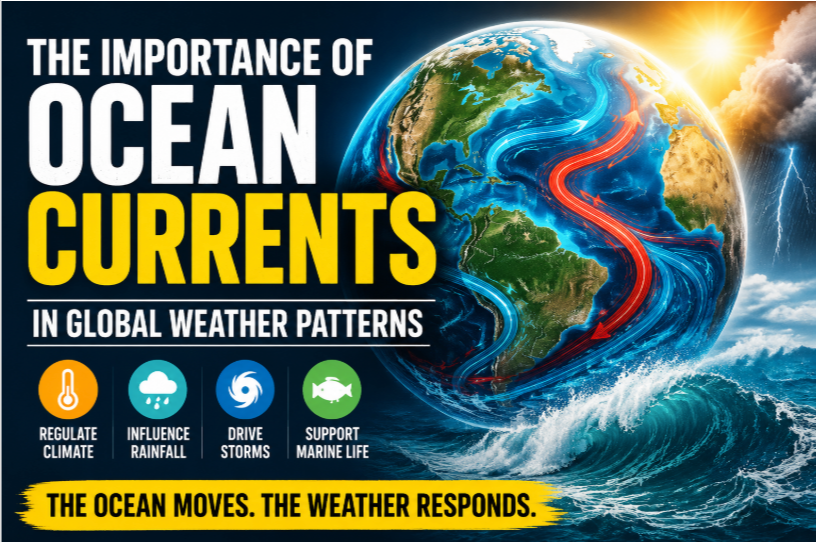
The Importance of Ocean Currents in Global Weather Patterns
Ocean currents are powerful rivers within the sea that shape weather across the planet. They transport heat, influence storms, and regulate climates. Understanding how ocean currents operate is crucial for predicting weather patterns, planning agriculture, and managing coastal communities.
How Ocean Currents Work
Ocean currents form due to wind patterns, the Earth’s rotation, salinity differences, and temperature gradients. Surface currents are primarily wind-driven, moving warm and cold water across vast distances. Deep ocean currents, known as thermohaline circulation, are driven by differences in water density, caused by temperature and salinity. Together, these create the global conveyor belt of water movement.
Key Types of Ocean Currents
- Surface Currents: Driven by winds; influence coastal weather. Examples include the Gulf Stream and the Kuroshio Current.
- Deep Ocean Currents: Driven by density; circulate cold water from poles to equator.
- Upwelling and Downwelling Currents: Bring nutrient-rich water to the surface, impacting marine life and local weather.
Each current interacts with the atmosphere, affecting temperature, precipitation, and storm systems.
Ocean Currents and Climate Regulation
Ocean currents redistribute heat from the equator toward the poles. Warm currents moderate temperatures in northern Europe, while cold currents cool equatorial regions. Changes in these currents can lead to heatwaves, droughts, or unusually cold periods. Monitoring currents helps predict these climate shifts accurately.
Impact on Storms
Currents fuel tropical storms. Warm water transported by currents raises sea surface temperatures, intensifying hurricanes and typhoons. Conversely, regions influenced by cold currents see fewer or weaker storms. Understanding these interactions enables meteorologists to improve forecasting models and issue timely warnings.
Ocean Currents and Precipitation Patterns
Currents influence rainfall by moving moisture-laden water across continents. For instance, the El Niño-Southern Oscillation (ENSO) is a disruption in Pacific currents that causes abnormal rainfall patterns globally. Droughts in some regions and flooding in others are directly linked to changes in ocean currents.
Effects on Marine Ecosystems
Currents affect nutrient distribution. Upwelling currents deliver nutrients to the surface, supporting plankton growth. Healthy plankton populations sustain fish stocks, which in turn impact food security for coastal communities. A disruption in current patterns can lead to ecological imbalances, affecting both marine life and human economies.
Predicting Weather with Ocean Current Data
Modern satellites and buoys track current speed, direction, and temperature. This data feeds into climate models, enhancing predictions of storms, heatwaves, and rainfall. Agencies like NOAA and ECMWF integrate ocean current data to improve weather forecasts and long-term climate projections. Real-time monitoring allows better disaster preparedness.
Human Implications
- Agriculture: Farmers rely on seasonal forecasts influenced by currents to plan crop cycles.
- Fisheries: Ocean currents determine fish migration, critical for fishing economies.
- Coastal Planning: Cities use current data to anticipate flooding and storm surges.
Recognizing the role of currents in weather patterns helps societies adapt to climate variability.
Global Consequences of Altered Currents
Climate change is affecting the speed and direction of major currents. The Gulf Stream is slowing, potentially causing harsher winters in Europe and rising sea levels along the U.S. east coast. Disruptions in thermohaline circulation can trigger extreme weather events, making it vital to study and preserve these natural systems.
Ocean currents are the unseen engines driving global weather and climate. Their influence spans temperature regulation, storm development, precipitation patterns, and marine ecosystems. Recognizing these forces is critical for forecasting, planning, and adapting to a changing world.
Explore more about ocean currents and global climate impacts at oceanography
FAQs
What are ocean currents?
Ans: Ocean currents are large-scale water movements in the ocean, transporting heat, nutrients, and salinity across the globe.
How do ocean currents influence weather?
Ans: They redistribute heat and moisture, affecting temperatures, rainfall, and storm intensity worldwide.
What causes ocean currents?
Ans: Wind patterns, Earth’s rotation, temperature, and salinity differences create and drive ocean currents.
What is the Gulf Stream?
Ans: The Gulf Stream is a warm Atlantic surface current that moderates Europe’s climate and affects hurricane activity.
How does El Niño affect weather?
Ans: El Niño disrupts Pacific currents, causing droughts in some regions and floods in others; more info here.
Can ocean currents impact marine life?
Ans: Yes, currents distribute nutrients and influence fish migration, sustaining marine ecosystems.
Are ocean currents changing due to climate change?
Ans: Yes, major currents like the Gulf Stream are slowing, altering global weather patterns.
What tools monitor ocean currents?
Ans: Satellites, drifting buoys, and underwater sensors track temperature, salinity, and flow direction; learn more here.
How do cold currents affect coastal weather?
Ans: Cold currents cool coastal regions, reducing storm intensity and lowering precipitation levels.
Why is studying ocean currents important?
Ans: Understanding currents improves climate predictions, disaster preparedness, and resource management.
