
27Aug
The Ocean Twilight Zone: Life Between Sunlight and Darkness
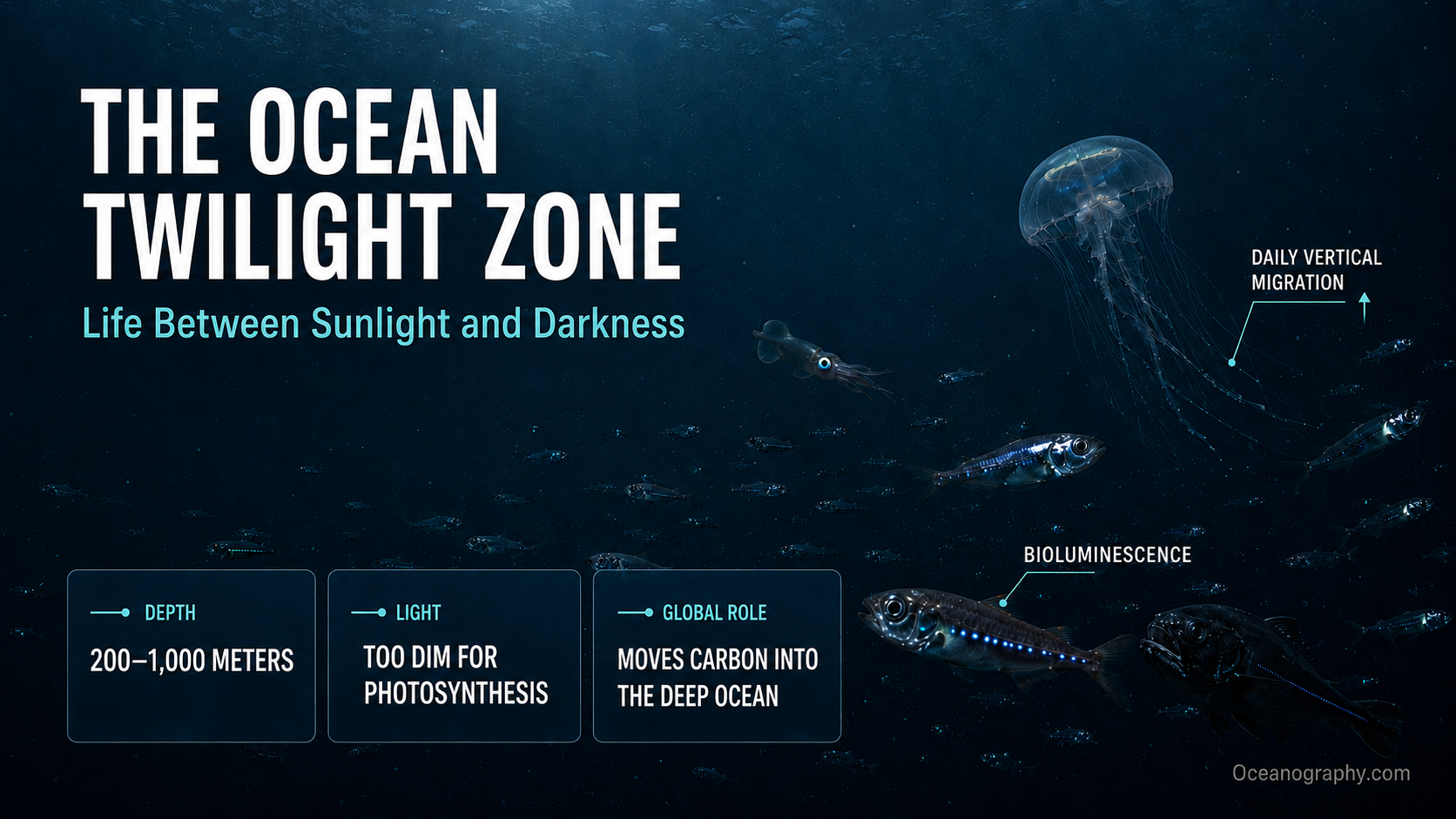
Imagine sinking beneath the bright ocean surface until blue water slowly becomes a world of shadows. You have entered the ocean twilight zone, a vast region where sunlight is weak but darkness is not yet complete.
I find this part of the sea fascinating because it feels like another planet hidden inside our own. Its strange residents illuminate themselves, migrate enormous distances, and help regulate Earth’s climate - all while remaining mostly unseen.
Introduction
The twilight zone is a borderland between two ocean worlds. Above it, sunlight powers photosynthesis. Below it, darkness becomes permanent. Between them lies a cold, dim habitat filled with organisms adapted to conditions that would overwhelm most surface life.
Learning about this region matters because its animals connect surface food webs with the deep sea. Their movements also help carry carbon away from the atmosphere and into deeper water.
Key Takeaways
What Is the Ocean Twilight Zone?
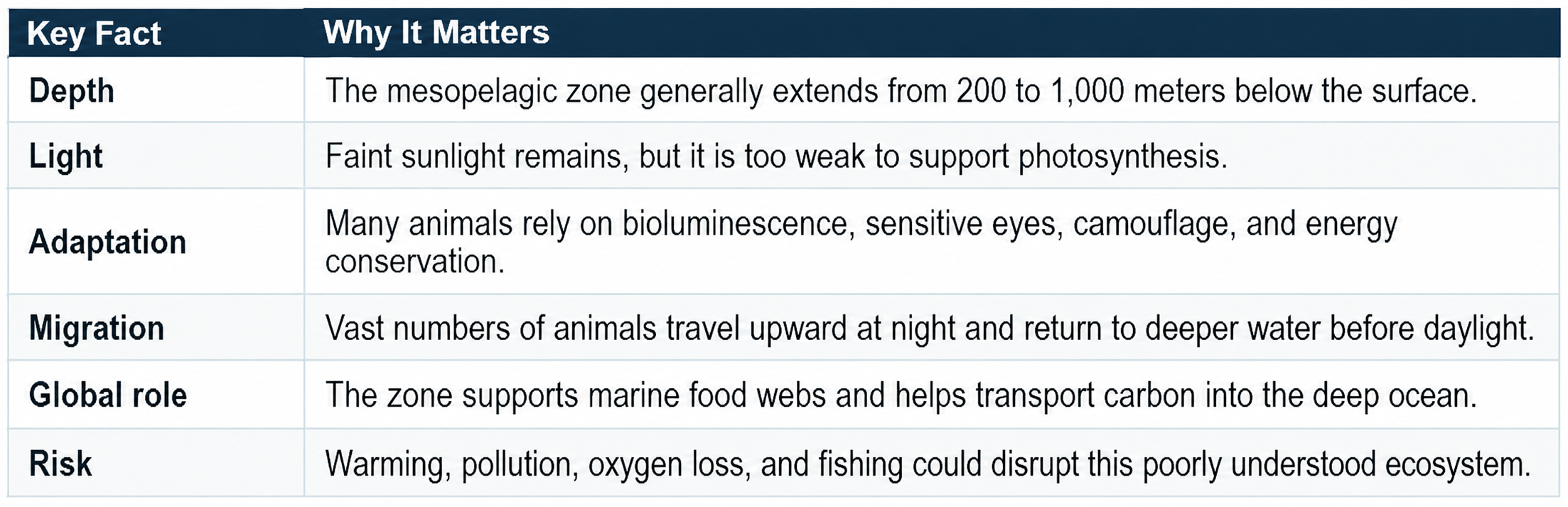
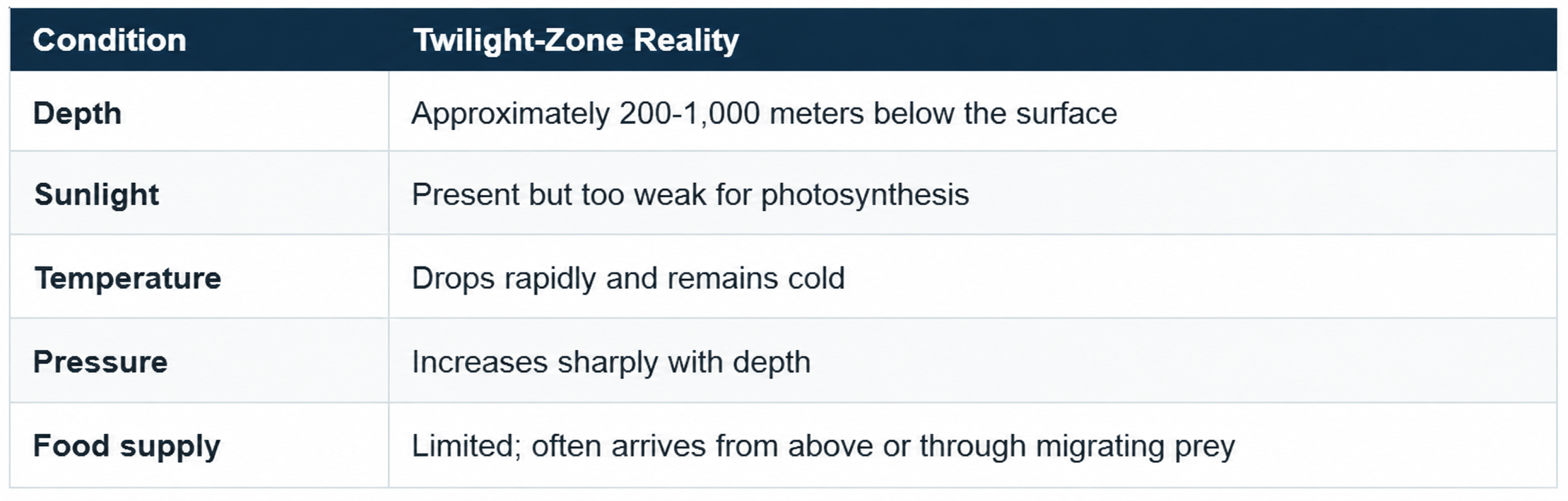
The ocean twilight zone, also called the mesopelagic zone, lies between the sunlit surface and the dark midnight zone. It commonly extends from approximately 200 to 1,000 meters deep, although local conditions can shift its boundaries.
This region connects two very different ocean depth zones. The twilight zone sits between them like a dim hallway connecting two rooms.
Depth, Light, Temperature, and Pressure
What Lives in the Mesopelagic Zone?
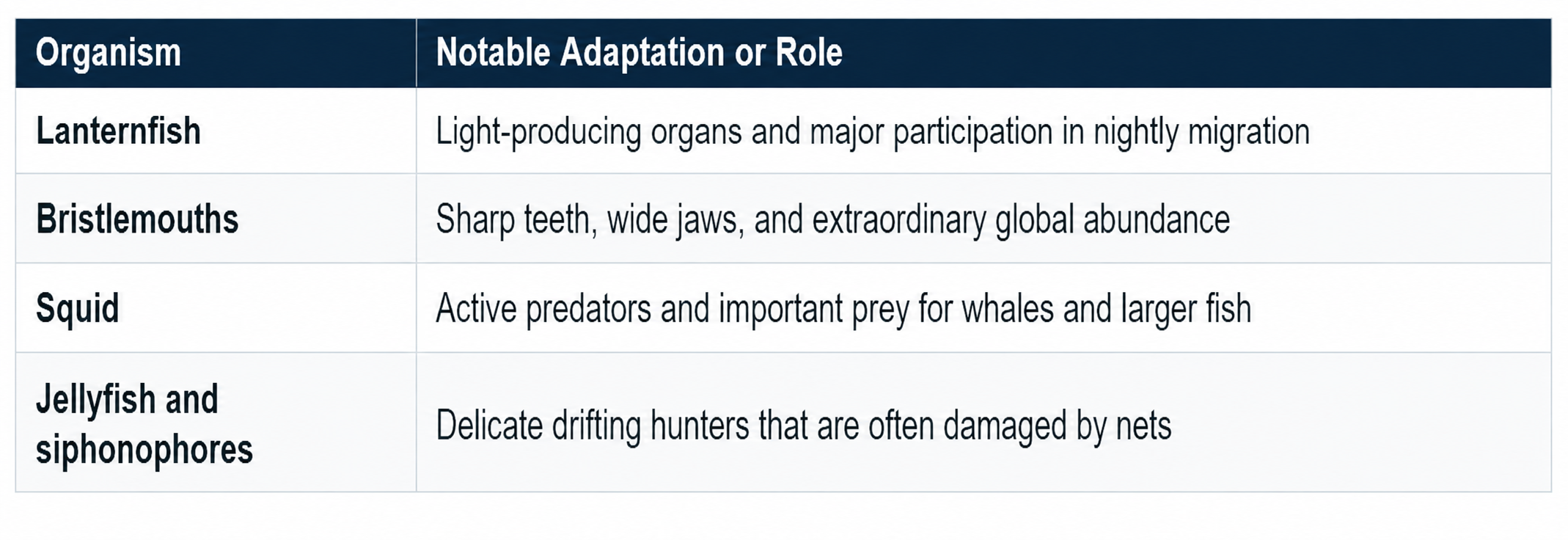
The animals in the mesopelagic zone include fish, squid, jellyfish, crustaceans, and fragile drifting organisms that rarely reach the surface. Some look familiar, while others seem designed for science fiction.
Scientists believe this region may contain an enormous share of the planet’s fish biomass. Estimating its population is difficult because nets, cameras, and sonar can each miss different species.
How Do Twilight Zone Animals Survive?
How can an animal find food or avoid danger when it can barely see? Deep-sea adaptations provide the answer. Many creatures have oversized eyes, light-sensitive organs, expandable stomachs, dark coloring, or transparent bodies.
Some predators possess enormous mouths and needle-like teeth. These traits help them seize almost any meal they encounter because another opportunity may not arrive soon.
Bioluminescence and Camouflage
Bioluminescence occurs when organisms create light through chemical reactions. Animals may flash to attract prey, confuse predators, communicate, or recognize potential mates.

What Is Daily Vertical Migration?
Every evening, countless twilight-zone animals rise toward surface waters to feed. Before daylight returns, they descend into darkness again. This daily vertical migration is considered one of the largest animal movements on Earth.
Surface waters contain more food, but daylight makes small animals visible to predators. Night offers safer feeding conditions, while deeper daytime waters provide concealment.
The Twilight Zone Food Chain
The twilight zone food chain connects microscopic organisms with fish, squid, seabirds, whales, and commercial fisheries. Small animals eat plankton or organic particles, and larger predators eat them in turn.
Another food source is marine snow: a steady shower of dead organisms, waste, mucus, and organic material sinking from above. It may not sound appetizing, but in this hungry world it is a valuable buffet.
Why Is the Ocean Twilight Zone Important?
The importance of the ocean twilight zone extends far beyond its mysterious wildlife. Its animals feed predators living above and below it, making the region a critical bridge within the global underwater ecosystem.
Its immense biodiversity may also contain species, behaviors, and biological compounds unknown to science. Studying them can deepen our understanding of evolution, climate, and marine health.
Carbon Storage in the Deep Sea
Migrating animals consume carbon-rich food near the surface and carry part of that carbon downward. Waste, dead organisms, and marine snow transport additional material into deeper water.

How Scientists Explore the Twilight Zone
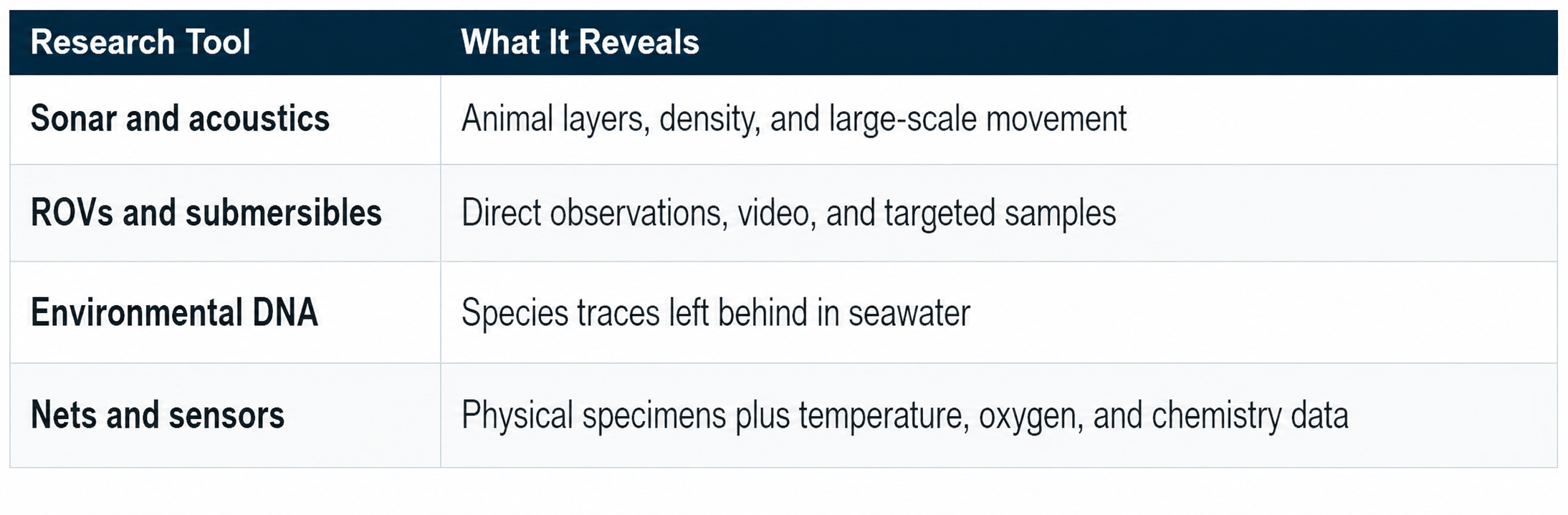
Deep-ocean exploration requires specialized technology because humans cannot safely work at these depths for long. Researchers combine multiple tools to detect both strong swimmers and fragile drifting organisms.
Further reading: Woods Hole Ocean Twilight Zone Project | NOAA Ocean Exploration
Threats to the Ocean Twilight Zone
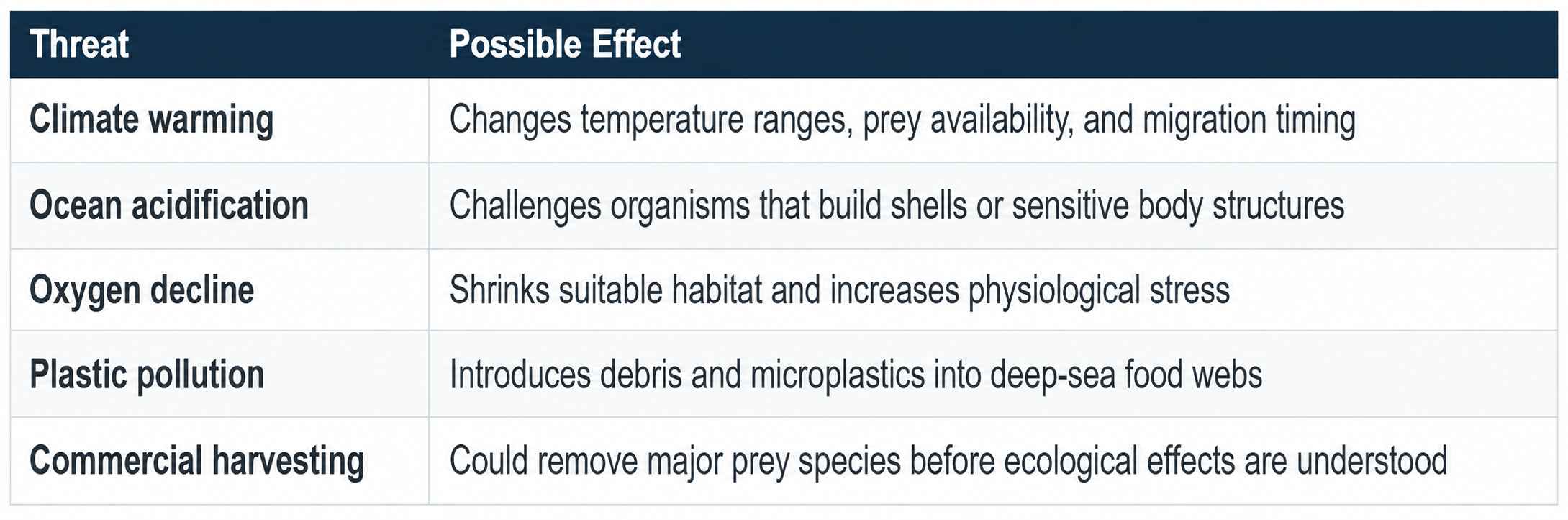
Potential threats include ocean warming, acidification, declining oxygen, plastic pollution, underwater noise, and expanding commercial fishing. These pressures may alter migration, reproduction, feeding, and species distribution.

Conclusion
The ocean twilight zone is neither bright nor completely dark, yet it supports an astonishing range of life. Its glowing animals, nightly migrations, complex food web, and role in carbon transport make it one of Earth’s most important hidden habitats.
The more I learn about life in the ocean twilight zone, the clearer one lesson becomes: darkness does not mean emptiness. It can hold a thriving world that influences the entire planet.
EXPLORE MORE OCEAN DISCOVERIES
Frequently Asked Questions
1. 1. How deep is the ocean twilight zone?
Answer: It generally extends from approximately 200 to 1,000 meters below the ocean surface.
2. Is the twilight zone completely dark?
Answer: No. Faint sunlight reaches its upper areas, but it is too weak to support photosynthesis.
3. What animals live there?
Answer: Fish, squid, jellyfish, crustaceans, sharks, and many other deep-ocean creatures inhabit the zone.
4. Can plants grow in the twilight zone?
Answer: Plants cannot normally grow there because they do not receive enough sunlight for photosynthesis.
5. Why do twilight-zone animals glow?
Answer: They produce light to hunt, communicate, find mates, hide, or distract predators.
6. What is vertical ocean migration?
Answer: It is the regular movement of animals between deeper water and the surface, usually following a daily cycle.
7. What do twilight-zone animals eat?
Answer: They eat plankton, smaller animals, organic particles, and marine snow sinking from surface waters.
8. Why is the zone difficult to explore?
Answer: Darkness, cold, high pressure, enormous depth, and fragile organisms make research challenging.
9. Does the twilight zone affect climate?
Answer: Yes. Its organisms help transport and retain carbon below the surface, influencing the global carbon cycle.
10. What lies below the twilight zone?
Answer: The midnight zone lies below it, where sunlight disappears and animals live in permanent darkness.
EXPLORE MORE OCEAN DISCOVERIES
