
23Sep
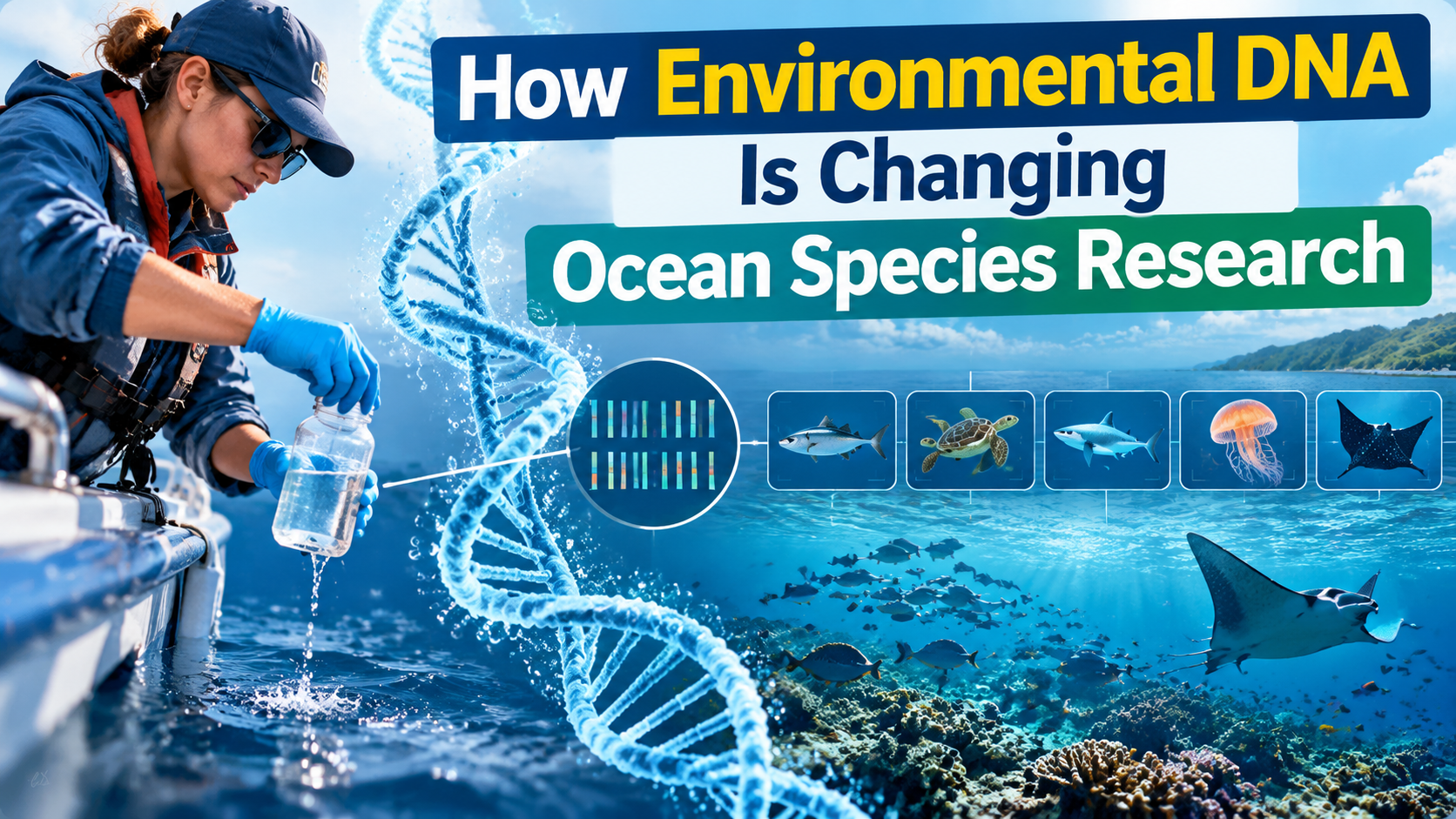
How Environmental DNA Is Changing Ocean Species Research
Understanding marine life is difficult because oceans cover vast areas and many species live in environments that are difficult to observe directly. Environmental DNA (eDNA) is transforming marine research by allowing scientists to identify organisms from genetic traces collected in seawater. Marine environments cover vast areas, many species live in difficult-to-reach habitats, and traditional surveys can require expensive equipment and long research periods.
A newer approach is changing marine research: environmental DNA (eDNA) monitoring allows scientists to identify species by analyzing genetic traces left behind in seawater. Every marine organism leaves behind microscopic genetic evidence through cells, mucus, scales, and other biological material. Scientists can collect these traces from seawater and use DNA analysis to identify which species are present.
Instead of searching for every animal directly, researchers can collect water samples and analyze the DNA fragments contained within them.
What Is Environmental DNA?
Environmental DNA, often called eDNA, refers to genetic material released by living organisms into their surroundings.
Marine animals constantly leave behind biological traces through:
- Skin cells
- Scales
- Mucus
- Waste materials
- Reproductive cells
These tiny genetic signals can remain in water long enough for scientists to collect and analyze them.
The process allows researchers to identify species without capturing or physically observing every organism.
How Is eDNA Different From Traditional Marine Surveys?
Traditional marine surveys often require researchers to visually observe, capture, or photograph organisms. Environmental DNA provides another approach by detecting genetic evidence that organisms naturally leave behind.
Instead of finding every animal directly, scientists can analyze water samples to understand which species may be present in an ecosystem.
How Environmental DNA Marine Monitoring Works
The basic process involves collecting and analyzing water samples from marine environments.
Scientists typically follow these steps:
- Collect seawater samples from specific locations.
- Filter the water to capture genetic material.
- Extract DNA from collected particles.
- Compare genetic sequences with reference databases.
- Identify species present in the environment.
This approach allows researchers to create a snapshot of marine biodiversity in a specific area.
Environmental dna marine monitoring provides information about ecosystems that may be difficult to study using traditional methods alone.
Why eDNA Is Valuable for Marine Research
Traditional marine surveys often rely on visual observation, fishing surveys, underwater cameras, or specialized equipment. While these methods remain important, they have limitations.
Some marine species are:
- Rare
- Deep-sea inhabitants
- Highly mobile
- Difficult to observe directly
eDNA provides another source of information by detecting biological evidence that might otherwise be missed.
Researchers can use genetic monitoring to discover species presence, track population changes, and identify ecosystem shifts.
Monitoring Marine Species Without Disturbing Habitats
One major advantage of eDNA research is that it is minimally invasive.
Scientists do not always need to capture animals or disturb habitats to collect information. A small water sample may contain enough genetic evidence to reveal which species are nearby.
This makes eDNA especially useful for sensitive environments such as:
- Coral reefs
- Protected marine areas
- Deep-sea ecosystems
- Coastal habitats
By reducing physical disturbance, researchers can gather valuable data while supporting conservation goals.
How eDNA Helps Track Ocean Biodiversity
Ocean biodiversity is constantly changing due to climate conditions, habitat loss, pollution, and human activity.
Marine species monitoring using eDNA helps scientists detect these changes by comparing genetic information from different locations and time periods.
For example, researchers can use eDNA to:
- Identify new species locations
- Detect invasive species
- Monitor endangered populations
- Measure ecosystem diversity
These insights help conservation teams make better decisions about protecting marine environments.
Real Examples of Marine eDNA Monitoring
Scientists have used eDNA methods to monitor fish communities, detect invasive species, and study biodiversity changes in sensitive marine habitats.
For example, researchers can collect seawater samples near coral reefs or protected marine areas to identify species diversity without disturbing the ecosystem.
The Role of Technology in eDNA Research
Modern genetic technology has made eDNA analysis faster and more reliable.
Scientists use advanced sequencing techniques to examine DNA fragments and match them with known species databases.
Data analysis tools help researchers process large amounts of genetic information collected from different locations.
Organizations such as Oceanography share educational resources about ocean science, exploration, and marine research technologies.
Challenges of Using Environmental DNA
Although eDNA offers many benefits, researchers must also consider several challenges.
Environmental conditions
DNA breaks down at different rates depending on temperature, sunlight, water movement, and chemical conditions.
Reference databases
Accurate identification depends on having reliable genetic information available for comparison.
Understanding abundance
Finding DNA from a species does not always indicate exactly how many individuals are present. Scientists often combine eDNA results with other research methods.
Because of these limitations, eDNA is usually used alongside traditional ecological surveys.
The Future of Marine Species Monitoring
As technology improves, environmental DNA is expected to become an increasingly important tool for ocean research.
Future developments may include faster field testing, larger genetic databases, and improved methods for analyzing biodiversity patterns.
Scientists may be able to monitor marine ecosystems more frequently and detect changes earlier.
The combination of genetic technology, ocean research, and conservation science is creating new opportunities to understand underwater life.
Protecting Oceans Through Genetic Information
Healthy oceans depend on accurate information. Scientists need reliable ways to understand which species exist, where they live, and how environmental changes affect them.
Environmental dna marine monitoring provides a powerful method for collecting this information with minimal impact on marine habitats.
By revealing hidden biodiversity through genetic clues, eDNA is helping researchers develop better strategies for ocean conservation.
Continue exploring Oceanography to discover how modern technology, genetic research, and marine science are helping scientists understand and protect Earth’s oceans.
FAQs
1. What is environmental DNA in marine research?
Answer: Environmental DNA is genetic material collected from environmental samples such as seawater. Scientists analyze these DNA traces to identify organisms living in an area.
2. How does environmental DNA marine monitoring work?
Answer: Scientists collect water samples, extract DNA fragments, sequence genetic material, and compare the results with databases to identify marine species.
3. Why is eDNA useful for marine species monitoring?
Answer: eDNA allows researchers to detect species without directly capturing animals. It can help study rare, hidden, or difficult-to-observe marine organisms.
4. Can eDNA identify all ocean species?
Answer: Not always. Detection depends on factors such as available genetic databases, environmental conditions, and the amount of DNA present in the sample.
5. Is environmental DNA testing harmful to marine life?
Answer: No. Collecting seawater samples is generally considered a low-impact method because it does not require capturing or disturbing animals.
6. What types of marine animals can eDNA detect?
Answer: eDNA can help detect many organisms, including fish, marine mammals, shellfish, and other aquatic species.
7. How is eDNA different from traditional marine surveys?
Answer: Traditional surveys often involve direct observation or capture methods, while eDNA relies on genetic traces collected from environmental samples.
8. Can eDNA detect invasive marine species?
Answer: Yes. Scientists can use eDNA to identify invasive species early and support management efforts before populations become widespread.
9. How does eDNA help ocean conservation?
Answer: eDNA provides biodiversity information that helps researchers monitor ecosystems, identify threats, and develop conservation strategies.
10. Where can I learn more about environmental DNA research?
Answer: The National Oceanic and Atmospheric Administration (NOAA) provides educational resources about marine science, biodiversity research, and ocean monitoring methods.
