
3Mar
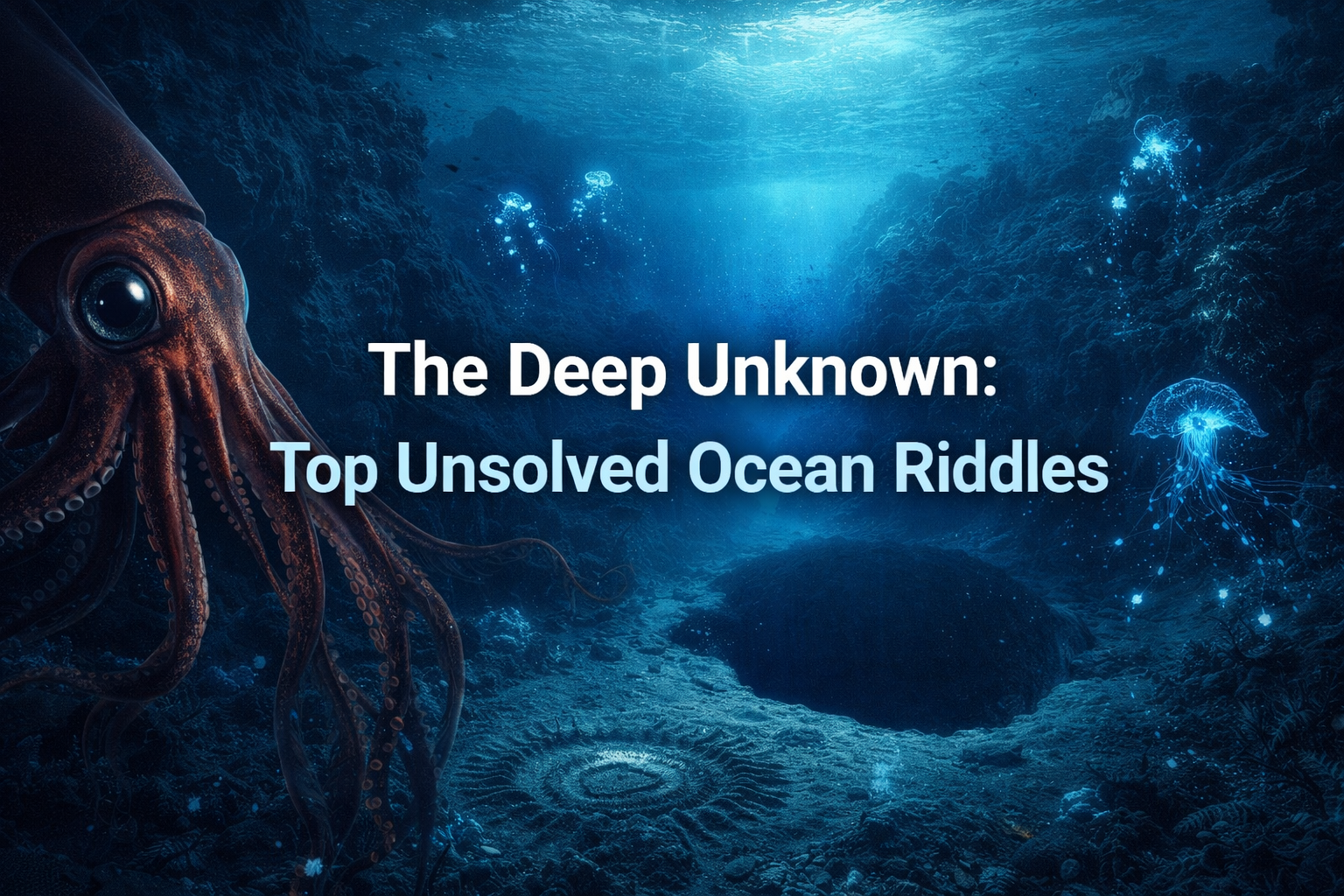
The Deep Unknown: Top Unsolved Ocean Riddles
Table of Contents
- Introduction to the Unexplored Depths of the Ocean
- Why the Ocean Remains Mysterious
- The Importance of Ocean Exploration
- The Bloop: An Unexplained Deep Sea Sound
- What is The Bloop?
- Possible Theories Behind the Bloop
- The Bermuda Triangle: Fact or Fiction?
- Mysterious Disappearances and Theories
- The Role of Ocean Currents and Geological Activity
- The Unknown Creatures of the Deep
- Gigantic Squids and Unidentified Marine Species
- Why We Struggle to Discover New Marine Life
- Underwater Crop Circles: Unsolved Ocean Patterns
- What Are Underwater Crop Circles?
- Possible Explanations for the Phenomenon
- The Lost City of Atlantis: Myth or Reality?
- Historical and Archeological Clues
- Theories on Atlantis' Possible Locations
- Ocean’s Dark Matter: Deep Sea Chemistry
- What is Deep Sea Chemistry?
- How Chemical Reactions in the Deep Remain Unexplored
- The Ocean’s Blue Holes and Their Mysteries
- What Are Blue Holes?
- Unsolved Questions Around Their Origins and Purpose
- The Mystery of Ocean Depths and Their Inhabitants
- The Challenges of Exploring the Ocean's Deepest Zones
- What We Still Don’t Know About Life at Extreme Depths
- The Future of Ocean Exploration and Solving Ocean Riddles
- Upcoming Technologies in Ocean Exploration
- The Importance of Continued Research
- Conclusion: The Ongoing Quest to Understand Our Oceans
Introduction to the Unexplored Depths of the Ocean
Why the Ocean Remains Mysterious
The ocean is vast, covering over 70% of our planet, and yet, much of it remains unexplored. With the deep sea reaching depths of over 36,000 feet, it’s no surprise that the ocean holds many secrets. Even with modern technology, the ocean is still largely unknown, hiding mysterious creatures, sunken cities, and unsolved ocean riddles. The challenges of exploring this immense, dark expanse of water are compounded by the intense pressure, freezing temperatures, and limited visibility.
Many of the ocean’s secrets are buried beneath layers of mystery, making it one of the last frontiers for scientists and explorers. While we have mapped and studied the surface of Mars in greater detail than the ocean floor, the truth is that the ocean still holds secrets that could radically change our understanding of marine biology, geology, and even history. From strange underwater sounds to bizarre creatures, the ocean continues to stump marine experts.
The Importance of Ocean Exploration
Ocean exploration is essential for understanding the health of our planet and its future. The ocean plays a crucial role in regulating our climate, providing food, and maintaining biodiversity. However, without detailed knowledge of the ocean, we cannot fully understand its role in the global ecosystem. Through ocean exploration, scientists aim to uncover the truth about marine science enigmas like the origins of the Bermuda Triangle, the mysteries behind the "Bloop," and the eerie phenomena of deep-sea creatures.
By solving these oceanic riddles, we can develop better marine conservation policies, improve our climate models, and create strategies to protect marine ecosystems that are facing unprecedented challenges from pollution and climate change.
The Bloop: An Unexplained Deep Sea Sound
What is The Bloop?
In 1997, researchers recorded a powerful, unexplained sound from the depths of the Pacific Ocean. Known as "The Bloop," this mysterious sound was so loud that it was heard across thousands of miles, suggesting it originated from a massive source. It sounded like a strange, low-frequency boom, something like the noise of a gigantic creature. Yet, no known animal could produce such a sound.
Scientists speculated that the Bloop might have been caused by the breaking of icebergs or some geological activity, but the sound didn’t match anything observed before. While many have tried to explain the origins of the Bloop, it remains one of the most famous unsolved ocean riddles to date. Was it a biological sound, perhaps from an undiscovered creature lurking in the depths, or was it simply a natural phenomenon caused by the ocean itself?
Possible Theories Behind the Bloop
Various theories have been proposed to explain the source of The Bloop. Some believe it could have been the sound of an undiscovered creature. Marine biologists have long wondered about the existence of massive, deep-sea creatures that have evaded detection. Others suggest that geological activity, such as underwater volcanoes or the shifting of tectonic plates, could have caused such a low-frequency sound. However, despite numerous investigations, The Bloop remains a mystery, sparking curiosity and speculation within the scientific community.
The Bermuda Triangle: Fact or Fiction?
Mysterious Disappearances and Theories
The Bermuda Triangle is another one of the ocean’s great mysteries. It stretches from Miami to Bermuda and Puerto Rico, and within this area, numerous planes and ships have mysteriously disappeared over the years. While some believe the disappearances are due to violent weather patterns or human error, others speculate that something more supernatural or inexplicable might be at play.
Various theories have been proposed, including magnetic anomalies, alien activity, and underwater gas pockets. However, no theory has definitively explained the frequent disappearances, leaving this particular oceanic riddle still unsolved.
The Role of Ocean Currents and Geological Activity
One plausible explanation for the Bermuda Triangle’s mysterious disappearances could be related to ocean currents and geological activity. Underwater currents can change rapidly, creating turbulent waters that could lead to shipwrecks. Additionally, methane gas leaks from the ocean floor could displace water and make ships sink or cause planes to lose altitude. However, until further exploration and research are conducted, the Bermuda Triangle will remain one of the ocean’s great mysteries.
The Unknown Creatures of the Deep
Gigantic Squids and Unidentified Marine Species
One of the most intriguing aspects of the deep sea is the creatures that call it home. The ocean is teeming with species that scientists have yet to discover, and many of them could hold the key to marine biology mysteries. Among the most famous of these creatures is the giant squid, which can grow up to 43 feet in length. These squids were once considered mythological until they were first filmed in 2006.
Despite the discoveries, many deep-sea creatures remain unidentified, and their unique adaptations to life in extreme conditions continue to baffle scientists. The ocean’s depths are home to life forms that survive in conditions we could never imagine, and it’s possible that the true diversity of life in the ocean has yet to be uncovered.
Why We Struggle to Discover New Marine Life
Exploring the deep sea is incredibly difficult. The pressure at extreme depths is immense, and the temperatures are freezing. Without advanced technologies like submersibles and AUVs, exploring these regions would be nearly impossible. The vast, unexplored areas of the ocean floor make it difficult to gather enough data to fully understand what species live there. As technology advances, we may eventually unlock the mysteries of these deep-sea ecosystems.
Underwater Crop Circles: Unsolved Ocean Patterns
What Are Underwater Crop Circles?
In recent years, underwater crop circles have been discovered in various parts of the ocean, sparking intrigue and speculation. These patterns resemble the crop circles that have appeared in fields on land, but they are formed in the sand at the ocean floor. While some believe that marine animals, such as fish or cephalopods, create these patterns, others argue that there is something more mysterious at play.
Possible Explanations for the Phenomenon
Some theories suggest that the crop circles are the result of mating rituals by marine species, while others think they may be caused by currents or geological activity. Despite extensive studies, the true origin of these underwater patterns remains unknown, making it another one of the many unsolved ocean riddles.
The Lost City of Atlantis: Myth or Reality?
Historical and Archeological Clues
The Lost City of Atlantis is one of the oldest and most well-known oceanic mysteries. According to legend, Atlantis was a highly advanced civilization that sank into the ocean after a great catastrophe. While many believe Atlantis to be purely a myth, there have been some archeological clues that hint at the existence of such a place.
Various theories have been proposed about where Atlantis might have been located, with some suggesting that it could have been somewhere in the Mediterranean, while others believe it could have been located in the Atlantic Ocean. The mysteries of Atlantis continue to fascinate historians and oceanographers, and ongoing underwater exploration may one day uncover the truth.
Theories on Atlantis' Possible Locations
Over the centuries, numerous expeditions have searched for the remains of Atlantis. Some believe the city lies beneath the waters off the coast of Spain, while others suggest it could be near the Azores Islands or even Antarctica. Despite the lack of concrete evidence, the mystery of Atlantis endures, and new technologies may one day reveal more about the lost city.
Ocean’s Dark Matter: Deep Sea Chemistry
What is Deep Sea Chemistry?
Deep-sea chemistry is another fascinating and unsolved ocean riddle. The ocean’s depths harbor vast quantities of organic and inorganic compounds, many of which remain unexplored. The ocean acts as a massive carbon sink, absorbing large amounts of carbon dioxide, and understanding the chemistry of the deep sea could help us understand its role in regulating the Earth's climate.
How Chemical Reactions in the Deep Remain Unexplored
The deep ocean is a place where chemical reactions occur under extreme pressure and temperature, creating unique compounds that are unlike anything found on land. Studying these reactions could unlock new scientific knowledge and lead to breakthroughs in energy production and climate science. However, due to the difficulty of accessing these deep-sea environments, much of this chemistry remains unexplored.
The Ocean’s Blue Holes and Their Mysteries
What Are Blue Holes?
Blue holes are underwater sinkholes, typically found in shallow coastal areas, with stunningly clear blue water. These mysterious formations are known for their unique geological features and rich biodiversity. They often act as marine sanctuaries, with many species of fish, corals, and other marine life thriving in these environments.
Unsolved Questions Around Their Origins and Purpose
Despite extensive research, scientists are still unsure about how blue holes are formed or what their full purpose is within the marine ecosystem. Some believe they are the result of ancient sea-level changes, while others speculate they are connected to hydrological processes that remain mysterious. These enigmatic features continue to intrigue researchers and remain a key focus of ongoing exploration.
The Mystery of Ocean Depths and Their Inhabitants
The Challenges of Exploring the Ocean's Deepest Zones
The deepest zones of the ocean are some of the most difficult places to explore due to extreme pressures, frigid temperatures, and complete darkness. Even with cutting-edge technologies, researchers face immense challenges in accessing and studying these depths. As technology advances, we may uncover more about life in the deep and discover species that have never been seen before.
What We Still Don’t Know About Life at Extreme Depths
Life at extreme depths remains largely a mystery. Some species have evolved to survive under these harsh conditions, but we still don’t fully understand how they thrive. The deep-sea bioluminescence seen in many species and the unique adaptations they have to cope with pressure, cold, and darkness make them fascinating subjects for research.
The Future of Ocean Exploration and Solving Ocean Riddles
Upcoming Technologies in Ocean Exploration
The future of ocean exploration is bright, with new technologies being developed to explore deeper and more efficiently than ever before. Autonomous underwater vehicles (AUVs), advanced sonar systems, and satellite imaging are all improving our ability to explore the deep ocean and unravel its mysteries.
The Importance of Continued Research
Continued research is vital for solving the many riddles of the ocean. As our understanding of the ocean deepens, we can better protect marine ecosystems, discover new species, and understand the ocean’s role in global climate regulation.
Conclusion: The Ongoing Quest to Understand Our Oceans
The ocean remains one of the most mysterious and unexplored parts of our planet. From the Bermuda Triangle to deep-sea creatures, there are countless unsolved ocean riddles that continue to intrigue scientists and ocean explorers. As technology advances, we may one day unlock the secrets of the deep and gain a better understanding of our planet’s most valuable resource our oceans.
Explore More Ocean Mysteries and Discoveries
FAQs
1. What is the Bloop?
The Bloop is a mysterious, unexplained deep-sea sound recorded in 1997. It was initially thought to be from an unknown creature, but scientists believe it may have been caused by iceberg movement or geological activity.
2. Is the Bermuda Triangle a real phenomenon?
While the Bermuda Triangle is known for mysterious disappearances, many believe the phenomenon can be explained by natural causes, such as ocean currents and weather patterns.
3. What are blue holes?
Blue holes are underwater sinkholes that are often characterized by their clear blue water and rich marine life. Their formation and purpose remain a mystery.
4. Are there really giant squids in the deep ocean?
Yes, giant squids are real and can grow up to 43 feet. They live in the deep ocean, and while they’ve been filmed, much of their life remains a mystery.
5. What is the lost city of Atlantis?
The lost city of Atlantis is a legendary civilization that sank into the ocean. Many theories exist about its possible location, but its existence is still unproven.
6. How does ocean chemistry affect climate change?
The ocean absorbs large amounts of carbon dioxide and plays a crucial role in regulating global temperatures. Understanding deep-sea chemistry is vital for addressing climate change.
7. What are underwater crop circles?
Underwater crop circles are mysterious patterns found on the ocean floor. Some believe they are created by marine animals, while others suggest geological causes.
8. What is the biggest challenge in ocean exploration?
The extreme pressure, cold temperatures, and darkness at ocean depths make it incredibly difficult to explore, limiting our understanding of deep-sea ecosystems.
9. How do autonomous underwater vehicles (AUVs) help in ocean exploration?
AUVs allow for efficient and safe exploration of the deep ocean, providing critical data on ocean health, marine life, and geological formations.
10. What are the most significant ocean mysteries yet to be solved?
Some of the biggest ocean mysteries include the Bermuda Triangle, the Bloop, giant squids, and the true origin of Atlantis.
