
31Aug
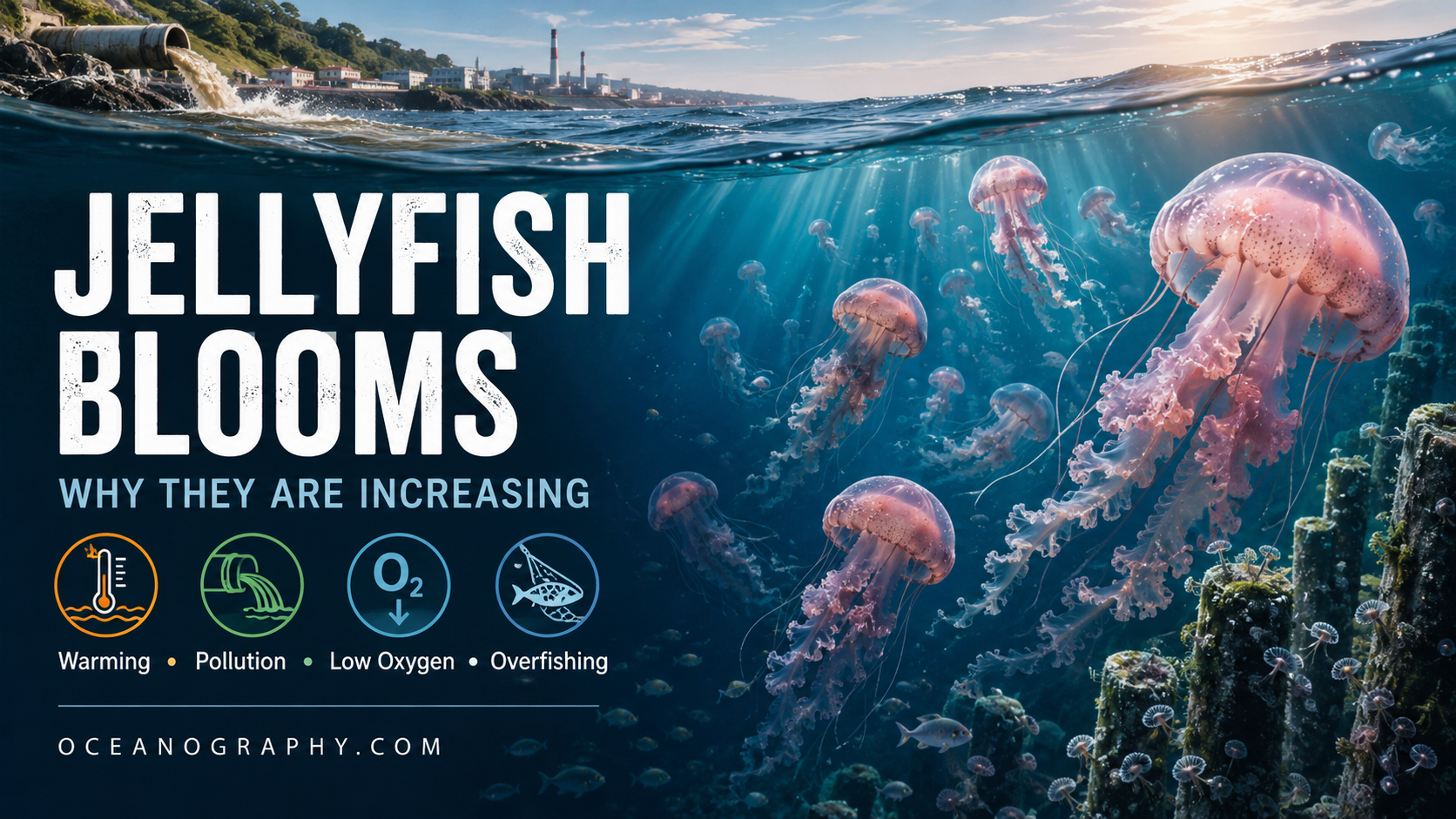
Jellyfish Blooms: Why They Are Increasing
Introduction

Reports of increasing jellyfish populations have raised concerns about warming oceans and damaged ecosystems. However, the story is not as simple as “more jellyfish everywhere.” Blooms vary by species, season, region, and environmental conditions.
Key Takeaways
What Are Jellyfish Blooms?
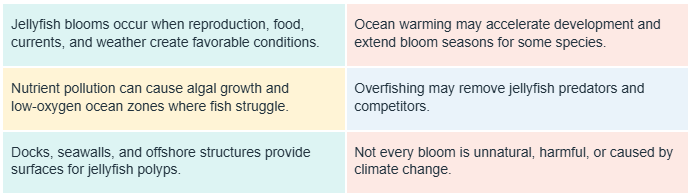
Scientists use the term jellyfish blooms for unusually dense gatherings of jellyfish or other gelatinous zooplankton. Some form through rapid reproduction, while currents and winds may simply push scattered animals into one coastal area.
Natural Blooms Versus Unusual Outbreaks
Seasonal blooms are a normal part of jellyfish ecology. Water temperature, daylight, prey availability, and life-cycle timing can produce predictable annual increases.
A bloom becomes more concerning when it grows unusually large, lasts longer, or appears repeatedly in a new location. These events may signal broader marine ecosystem changes, although researchers must examine each bloom individually.
Are Jellyfish Blooms Increasing Worldwide?
Evidence suggests that some regions experience more frequent or intense blooms, but scientists have not confirmed one consistent worldwide rise. Long-term jellyfish records are limited, and historical observations often came from fishermen, beachgoers, or power-plant operators rather than standardized surveys.
Why Trends Are Difficult to Measure
Jellyfish bodies are fragile, seasonal, and mostly water, so they are difficult to sample and preserve. A crowded beach may receive extensive attention while an offshore bloom goes unnoticed.
This uneven reporting can make seasonal jellyfish population changes look more dramatic. Scientists therefore compare field surveys, fisheries data, climate records, citizen reports, and modern imaging before identifying a trend.
What Environmental Conditions Cause Jellyfish Blooms?

Warm Water, Food, and Calm Conditions
For some species, warmer water speeds growth and triggers polyps to release young jellyfish. Abundant zooplankton provides food, while calm seas help concentrations remain together.
Coastal winds and currents may then move jellyfish toward beaches. Therefore, a visible jellyfish outbreak does not always mean the local population suddenly reproduced; physical forces may have gathered it.
How Ocean Warming May Increase Jellyfish Blooms

Marine Heatwaves and Shifting Habitats
Marine heatwaves may create temporary conditions that favor warmer oceans and jellyfish. Yet different species respond differently, and extreme heat can also exceed their biological limits.
That distinction matters. Climate change and jellyfish are connected in some regions, but warming interacts with food supply, oxygen, salinity, currents, predators, and local habitat.
How Pollution and Low Oxygen Favor Jellyfish

Dead Zones and Jellyfish Survival

Pollution can also restructure the food web. Although it does not automatically create a bloom, nutrient pollution and jellyfish blooms can become connected through increased plankton production and ecological imbalance.
How Overfishing Changes Jellyfish Populations

Predators, Competitors, and Fish Larvae
Overfishing can also reduce the loss of jellyfish predators indirectly by removing turtles, large fish, or interconnected food-web species. Once abundant, jellyfish may consume fish eggs and larvae, making fish recovery harder.
This creates a troubling feedback loop: fewer fish may allow more jellyfish, while more jellyfish can suppress young fish. However, overfishing effects on jellyfish differ among ecosystems and should not be treated as universal.
Coastal Development and Jellyfish Reproduction

Artificial Structures as Hidden Nurseries
Ports, docks, seawalls, aquaculture equipment, bridges, ships, and offshore platforms create shaded surfaces for settlement. This means coastal development and jellyfish polyps may be closely connected.
Artificial structures can act like underwater apartment blocks for polyps. More attachment space may support artificial structures and jellyfish growth, especially in protected coastal waters.
The Role of Ocean Currents

Why Blooms Suddenly Reach Beaches
Because jellyfish cannot swim strongly against currents, their location depends heavily on moving water. A change in wind direction can transform a clear beach into a jellyfish-filled shoreline within hours.
The same forces can later disperse the bloom. This is why beach conditions may change quickly without any major alteration in the total regional population.
How Jellyfish Blooms Affect Ecosystems and People

Fishing, Tourism, and Infrastructure
The impacts of jellyfish blooms extend beyond ecology. Jellyfish can clog fishing nets, damage farmed fish, discourage swimmers, and create additional costs for coastal tourism.
There are also documented cases of jellyfish blocking power plants by clogging cooling-water intakes. Still, jellyfish are not villains; they feed turtles, fish, seabirds, and other animals and contribute naturally to nutrient movement.
Monitoring and Predicting Jellyfish Blooms

Toward Early-Warning Systems
Forecasts may combine water temperature, salinity, oxygen, nutrients, winds, and currents. When reliable local records exist, these models can help beaches, aquaculture facilities, and coastal industries prepare.
Prediction remains difficult because reproduction and transport interact. A forecast must estimate both how many jellyfish develop and where moving water will carry them.
Can Jellyfish Blooms Be Controlled?

Protecting Healthier Coastal Ecosystems
Reducing fertilizer runoff, improving sewage treatment, restoring wetlands, managing fisheries responsibly, and protecting predators may reduce coastal ecosystem imbalance. Thoughtful infrastructure design may also limit artificial polyp habitat.
These measures provide benefits beyond controlling jellyfish populations. They improve water quality, protect fisheries, strengthen biodiversity, and make coastal ecosystems more resilient.
Conclusion: Understanding a Changing Ocean

I see blooms as ocean signals. By studying them carefully, we learn how changing ocean conditions reshape marine communities and where better environmental management can make a meaningful difference.
EXPLORE MORE OCEAN DISCOVERIES
Frequently Asked Questions
1. Why are jellyfish blooms increasing?
Answer: Some blooms may increase because of warming, pollution, low oxygen, overfishing, abundant food, artificial structures, and favorable currents.
2. Are jellyfish blooms caused by climate change?
Answer: Climate change can influence some blooms through warming and shifting habitats, but it is rarely the only cause.
3. What temperature is best for jellyfish?
Answer: There is no universal temperature. Each species has its own preferred range and seasonal response.
4. How does pollution encourage jellyfish blooms?
Answer: Nutrient pollution stimulates algae and can create low-oxygen water, altering food availability and reducing fish competition.
5. Why can jellyfish survive in low-oxygen water?
Answer: Some species tolerate low oxygen levels in coastal waters better than many fish, giving them an advantage in degraded habitats.
6. Does overfishing increase jellyfish populations?
Answer: It may remove competitors and predators, but the outcome depends on the local species and food web.
7. When is jellyfish season?
Answer: It varies by location and species, although many coastal blooms occur during warmer spring and summer months.
8. Are jellyfish blooms dangerous to swimmers?
Answer: Some are hazardous because of painful or medically significant stings. Others involve species with relatively mild stings.
9. How do blooms affect fisheries?
Answer: They may clog nets, consume fish larvae, compete for food, damage aquaculture stock, and increase operating costs for jellyfish and fishing industries.
10. Can scientists prevent jellyfish blooms?
Answer: Scientists cannot prevent every natural bloom, but research, forecasting, pollution reduction, sustainable fishing, and habitat management may lower risks.
