
5May
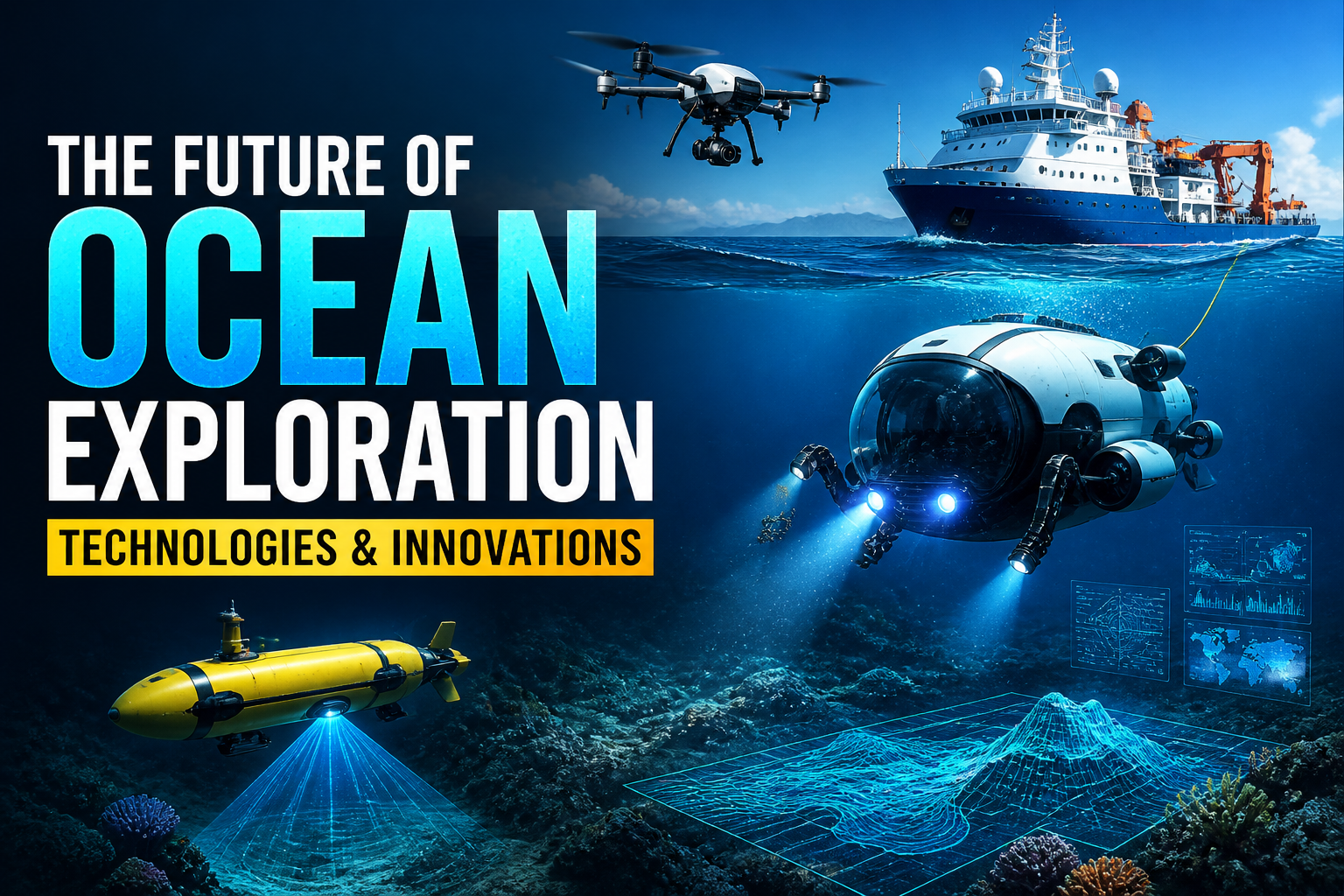
The Future of Ocean Exploration: Technologies & Innovations
Table of Contents
- Introduction to Ocean Exploration
- What is Ocean Exploration?
- The Importance of Exploring Our Oceans
- Key Technologies Shaping the Future of Ocean Exploration
- Autonomous Underwater Vehicles (AUVs)
- Underwater Drones and Robotics
- Ocean Mapping and Seafloor Surveying Tools
- Innovations in Deep-Sea Exploration
- Advancements in Submersible Technology
- Underwater Sensors and Data Collection
- The Role of AI and Machine Learning in Ocean Exploration
- Real-Time Data Processing and Analysis
- AI-Powered Exploration Tools
- Sustainable Ocean Exploration: Challenges and Solutions
- Eco-friendly Exploration Technologies
- Balancing Exploration with Conservation
- The Future of Ocean Research and Discovery
- The Impact of Ocean Exploration on Marine Science
- Collaboration Across Industries and Nations
- Conclusion: The Potential of Ocean Exploration Innovations
Introduction to Ocean Exploration
What is Ocean Exploration?
Ocean exploration is the scientific investigation of the Earth’s oceans. It involves mapping the ocean floor, studying marine life, analyzing ocean chemistry, and understanding the geological processes beneath the waves. The ocean covers over 70% of the Earth’s surface, yet more than 80% of it remains unexplored. It’s a vast and complex world, filled with wonders and mysteries waiting to be uncovered. Ocean exploration technologies and marine science innovations are at the forefront of uncovering these hidden secrets.
Understanding the oceans is not just important for scientific curiosity; it has practical applications too. It’s crucial for protecting marine ecosystems, managing fisheries, and addressing climate change. As we face environmental challenges, ocean exploration becomes key to finding sustainable solutions for the future.
The Importance of Exploring Our Oceans
Ocean exploration is vital for numerous reasons. It helps us understand the Earth’s climate, supports marine biodiversity, and uncovers resources hidden deep below the surface. With the growing threat of climate change, it’s more important than ever to understand the oceans, as they play a crucial role in regulating global temperatures, weather patterns, and carbon cycles.
Exploring the oceans also allows us to monitor marine ecosystems and ensure sustainable practices in industries like fishing, shipping, and energy production. The more we learn about the oceans, the better we can protect them for future generations.
Key Technologies Shaping the Future of Ocean Exploration
Autonomous Underwater Vehicles (AUVs)
One of the most exciting developments in ocean exploration is the advent of Autonomous Underwater Vehicles (AUVs). These robotic vehicles are capable of navigating the ocean independently, collecting valuable data on the ocean’s physical, chemical, and biological properties. AUVs can dive to great depths, withstanding the immense pressure of the ocean’s depths while performing tasks like mapping the seafloor, studying underwater ecosystems, and monitoring water quality.
AUVs play a significant role in deep-sea research, providing insights that were previously unattainable with human divers or traditional equipment. Their ability to operate autonomously and for long periods makes them essential for exploring remote and extreme ocean environments.
Underwater Drones and Robotics
In addition to AUVs, underwater drones and robotics are becoming increasingly important in ocean exploration. These drones are equipped with cameras, sensors, and other technology that allow them to explore and map the ocean’s deepest regions. They’re used to study marine life, monitor underwater habitats, and even assist in tasks like shipwreck recovery or underwater infrastructure inspection.
The use of marine robotics is a game-changer for ocean exploration. These tools can reach areas too dangerous or inaccessible for humans, providing data and images that were once unimaginable.
Ocean Mapping and Seafloor Surveying Tools
Ocean mapping is an essential part of ocean exploration. It involves creating detailed maps of the ocean floor, identifying underwater mountains, valleys, and ridges, and understanding the geological makeup of the seafloor. This information is crucial for a wide range of applications, from marine biology to offshore drilling.
Modern ocean mapping tools, such as multibeam sonar systems and sub-bottom profilers, allow scientists to create high-resolution maps of the ocean floor, providing critical data about oceanic features and helping us understand the complex dynamics of ocean currents and ecosystems.
Innovations in Deep-Sea Exploration
Advancements in Submersible Technology
The development of advanced submersible technology has been instrumental in exploring the deep ocean. Modern submersibles are capable of diving to incredible depths, giving scientists direct access to the deep-sea environment. These manned or unmanned vehicles are equipped with cameras, sensors, and sampling tools that allow researchers to study deep-sea life, geological formations, and ocean chemistry.
With improved materials and engineering, submersibles are now more durable, reliable, and capable of operating at deeper depths. This is a significant step forward in understanding the unknown regions of the deep ocean.
Underwater Sensors and Data Collection
Underwater sensors play a crucial role in ocean exploration. These devices measure various physical and chemical parameters of the ocean, including temperature, salinity, pressure, and dissolved oxygen levels. They’re also used to monitor marine life, track currents, and collect data on underwater ecosystems.
These sensors are typically deployed on buoys, moored platforms, or in conjunction with AUVs and underwater drones. The data they collect is essential for understanding ocean dynamics, tracking environmental changes, and conducting marine research.
The Role of AI and Machine Learning in Ocean Exploration
Real-Time Data Processing and Analysis
With the increasing amount of data collected during ocean exploration, real-time data processing has become essential. Machine learning algorithms and artificial intelligence (AI) are being used to analyze vast amounts of data quickly and efficiently. This technology helps researchers identify patterns in ocean conditions, track animal movements, and predict changes in marine ecosystems.
AI can also be used to interpret complex data collected by underwater sensors and robots, allowing for quicker decision-making and more accurate analysis.
AI-Powered Exploration Tools
AI-powered tools are transforming the way we explore the ocean. From autonomous robots to AI-driven mapping systems, these technologies are capable of performing tasks that were once impossible or time-consuming. For example, AI can help oceanic robots identify interesting areas for exploration, while machine learning algorithms can improve the accuracy of seafloor mapping and ocean modeling.
As AI continues to evolve, it will play a more significant role in advancing ocean exploration and deep-sea research.
Sustainable Ocean Exploration: Challenges and Solutions
Eco-friendly Exploration Technologies
With the growing awareness of environmental issues, the future of ocean exploration needs to prioritize eco-friendly technologies. From low-energy underwater vehicles to sustainable materials for submersibles, the ocean exploration community is working on ways to minimize the environmental impact of their research.
Developing energy-efficient technologies, using biodegradable materials, and minimizing waste produced during ocean exploration are key components of future sustainability efforts.
Balancing Exploration with Conservation
One of the biggest challenges in ocean exploration is balancing the desire to discover and learn about the ocean with the need to preserve it. Over-exploitation of marine resources and the disruption of delicate ecosystems can have long-term negative consequences.
Sustainable exploration methods, such as marine protected areas (MPAs) and eco-friendly technology, can help mitigate these impacts. Collaboration between researchers, policymakers, and environmental organizations is essential to ensure that exploration benefits both science and conservation.
The Future of Ocean Research and Discovery
The Impact of Ocean Exploration on Marine Science
Ocean exploration has already led to numerous discoveries in marine biology, geology, and climate science. The study of deep-sea ecosystems, marine species, and the ocean’s role in the carbon cycle is crucial for understanding how the Earth’s systems function.
As technology advances, the potential for new discoveries is limitless. From uncovering new species to understanding climate change, ocean exploration will continue to drive innovation in marine science.
Collaboration Across Industries and Nations
Ocean exploration is a global endeavor, requiring collaboration across industries, nations, and scientific communities. As challenges like climate change and overfishing threaten ocean ecosystems, it’s crucial that governments, researchers, and industries work together to ensure sustainable practices and effective solutions.
International collaboration will accelerate scientific advancements and promote the sharing of knowledge, resources, and technologies necessary to protect the oceans.
Conclusion: The Potential of Ocean Exploration Innovations
Ocean exploration has come a long way, thanks to cutting-edge technologies like AUVs, underwater drones, and AI-powered tools. These innovations have revolutionized our ability to explore, understand, and protect the ocean. As we look to the future, the potential for new discoveries and solutions is vast, and we must ensure that ocean exploration continues to prioritize sustainability, conservation, and collaboration. The ocean holds the key to understanding much of Earth’s past, present, and future—let’s continue exploring responsibly and making waves for a better tomorrow.
FAQs
1. What is ocean exploration?
Ocean exploration involves studying the ocean’s features, ecosystems, and marine life, using advanced technologies like AUVs, drones, and satellite mapping.
2. Why is ocean exploration important?
Ocean exploration helps us understand marine ecosystems, climate change, and the Earth’s geological history, providing insights crucial for environmental conservation and sustainable resource management.
3. What is an Autonomous Underwater Vehicle (AUV)?
An AUV is a robotic vehicle that operates underwater without human control, used for mapping, data collection, and exploration of the ocean floor.
4. How does AI contribute to ocean exploration?
AI helps process vast amounts of data in real-time, improving mapping systems, predictive modeling, and data analysis for deeper insights into marine environments.
5. What are the challenges of ocean exploration?
Challenges include extreme ocean depths, high-pressure conditions, and environmental impacts. Sustainable technologies and eco-friendly practices are essential for overcoming these challenges.
6. How do underwater drones assist in ocean exploration?
Underwater drones gather visual and sensor data from remote or dangerous areas, providing valuable information about marine life, oceanic conditions, and seafloor features.
7. What is the role of ocean mapping in ocean exploration?
Ocean mapping helps create detailed topographic maps of the ocean floor, aiding in seafloor surveying, underwater exploration, and marine conservation.
8. How do ocean currents impact weather patterns?
Ocean currents regulate global temperatures, affect storm systems, and influence regional climates by transferring heat and moisture across the planet.
9. What is the significance of marine core sampling?
Marine core sampling involves extracting sediment cores from the ocean floor to study past climate conditions, geological formations, and marine biodiversity.
10. What is the future of ocean exploration?
The future of ocean exploration includes AI-powered tools, autonomous underwater vehicles, and sustainable research practices, driving innovation and enhancing our understanding of the oceans.
CTA Button
Explore More on Ocean Exploration Innovations
