
16Jul
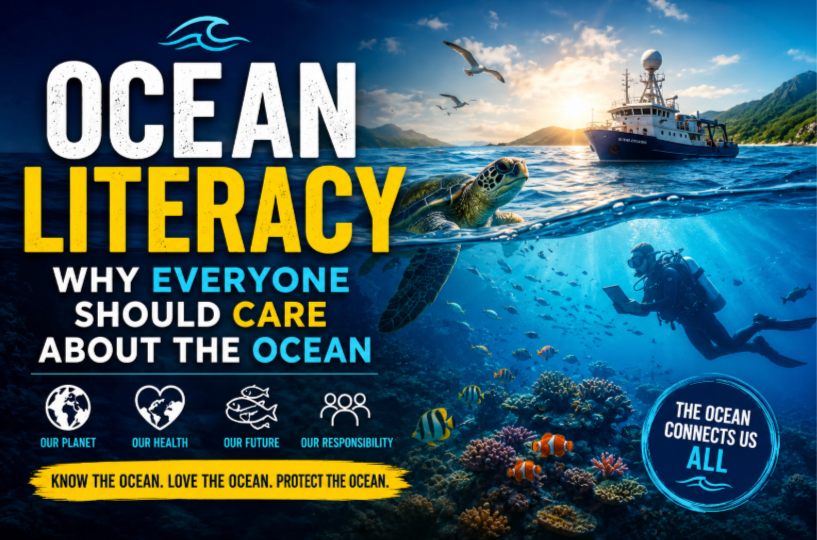
Ocean Literacy: Why Everyone Should Care About the Ocean
Why Ocean Literacy Matters and Is Crucial for Everyone
Ocean literacy explains how our everyday lives, climate, and economies rely on healthy oceans. Understanding this empowers everyone to make informed choices that protect marine life and support sustainable ocean use.
Why Ocean Literacy Matters
Oceans cover over 70% of the planet and regulate climate, provide food, and support millions of jobs worldwide. Yet, many people remain disconnected from ocean science. Ocean literacy bridges this knowledge gap by explaining how ocean processes affect weather, economies, food security, and even cultural practices.
For instance, understanding how currents affect fish migration can inform sustainable fisheries. Recognizing the ocean’s role in heat distribution helps explain weather extremes and climate variability. Literacy empowers citizens and leaders to act responsibly and safeguard ocean resources for future generations.
Core Principles of Ocean Literacy
1. The Ocean Shapes Climate and Weather
Ocean currents redistribute heat across the globe. Phenomena like El Niño, La Niña, and the Gulf Stream directly influence regional climates. Ocean literacy helps the public understand these connections, from local rainfall patterns to extreme storms.
Understanding the ocean-climate relationship also underscores the consequences of rising ocean temperatures. For example, warming seas fuel more powerful hurricanes and alter rainfall patterns, affecting agriculture, infrastructure, and human safety.
2. Oceans Support Life and Food Systems
Marine ecosystems are vital to global food security. Over 3 billion people rely on seafood for primary protein. Healthy oceans sustain biodiversity, regulate nutrient cycles, and maintain ecological balance.
Ocean literacy educates individuals about the importance of conservation and sustainable harvesting practices. For instance, awareness of overfishing consequences can drive better consumer choices, policy advocacy, and support for marine protected areas.
3. Humans Impact the Ocean
Human activities including plastic pollution, greenhouse gas emissions, and coastal development alter ocean chemistry, circulation, and ecosystem dynamics. Ocean literacy teaches how these impacts affect marine life, fisheries, and climate stability.
For example, ocean acidification, caused by excess atmospheric CO₂, reduces coral reef growth, threatening species diversity. Informed citizens can support mitigation strategies such as reducing carbon footprints and advocating for emission regulations.
4. Knowledge Drives Stewardship
Ocean literacy fosters a sense of responsibility. Educated individuals are more likely to engage in conservation programs, participate in citizen science, and advocate for policies that protect the ocean. Literacy bridges the gap between knowledge and action, translating understanding into measurable environmental impact.
How to Promote Ocean Literacy
1. Education
Integrating ocean science into school curricula and informal learning programs builds foundational knowledge. Lessons can include hands-on activities, experiments, or virtual simulations to explain currents, ecosystems, and human impacts.
2. Community Engagement
Participating in beach cleanups, citizen science programs, and local conservation projects strengthens connection to the ocean. Programs such as Reef Check or Ocean Conservancy’s International Coastal Cleanup allow individuals to contribute meaningfully.
3. Media and Online Resources
High-quality resources such as NOAA educational pages, National Geographic’s marine education articles, and Oceanography.com can inform and inspire people to understand and protect oceans.
4. Policy Awareness
Understanding ocean-related policies, international agreements, and local conservation regulations helps individuals and communities influence governance decisions that impact marine ecosystems.
Ocean Literacy in Action
- Classroom Programs: Interactive lessons on marine ecosystems, climate, and human impacts engage students of all ages.
- Citizen Science: Volunteers monitor water quality, record species sightings, and contribute to long-term ocean datasets.
- Digital Tools: Online maps, data visualizations, and species trackers enhance public engagement and scientific literacy.
For example, tracking sea surface temperature changes through NOAA or NASA satellites enables citizens to understand trends in climate change and biodiversity shifts.
Benefits of Ocean Literacy
- Informed Decision-Making: Knowledgeable citizens can advocate for sustainable fisheries, pollution control, and conservation policies.
- Climate Awareness: Understanding ocean-climate interactions helps interpret global weather patterns and climate risks.
- Sustainable Economies: Literacy ensures sustainable use of marine resources while protecting livelihoods dependent on the ocean.
- Public Health: Healthy oceans reduce risks of harmful algal blooms, contaminated seafood, and degraded water quality.
- Cultural and Recreational Value: Awareness fosters appreciation for the ocean’s role in culture, recreation, and mental health.
Conclusion
Ocean literacy empowers everyone students, citizens, and policymakers to understand, value, and protect the ocean. By learning about ocean processes, human impacts, and conservation strategies, society can ensure sustainable and resilient oceans for future generations.
Learn more about ocean literacy programs and get involved in marine conservation today!
Visit Oceanography for educational resources, interactive programs, and updates on marine science initiatives.
FAQs
What is ocean literacy?
Ocean literacy is the understanding of the ocean’s influence on humans and human influence on the ocean.
Why is ocean literacy important?
It empowers informed decisions about conservation, ocean policy, and sustainable marine resource use.
Who should learn about ocean literacy?
Everyone: students, educators, policymakers, environmentalists, and the general public.
How does the ocean influence climate?
Through heat distribution, carbon absorption, and ocean currents that regulate global weather and climate patterns.
What are human impacts on the ocean?
Pollution, overfishing, habitat destruction, and greenhouse gas emissions.
How can I improve ocean literacy?
Through education, citizen science, online resources, and participating in conservation programs.
What is the role of citizen science?
It allows public participation in monitoring ocean health, collecting data, and supporting research.
Does ocean literacy include marine ecosystems?
Yes, it covers biodiversity, habitats, food webs, and their connections to human society.
How does ocean literacy influence policy?
Informed citizens and leaders make better decisions on marine protection, sustainable use, and environmental legislation.
Where can I find resources to learn more?
Reputable sources include Oceanography, NOAA Ocean Service, and other marine education programs.
