
28Aug
The Ocean Microbiome: Tiny Organisms with Planet-Sized Influence
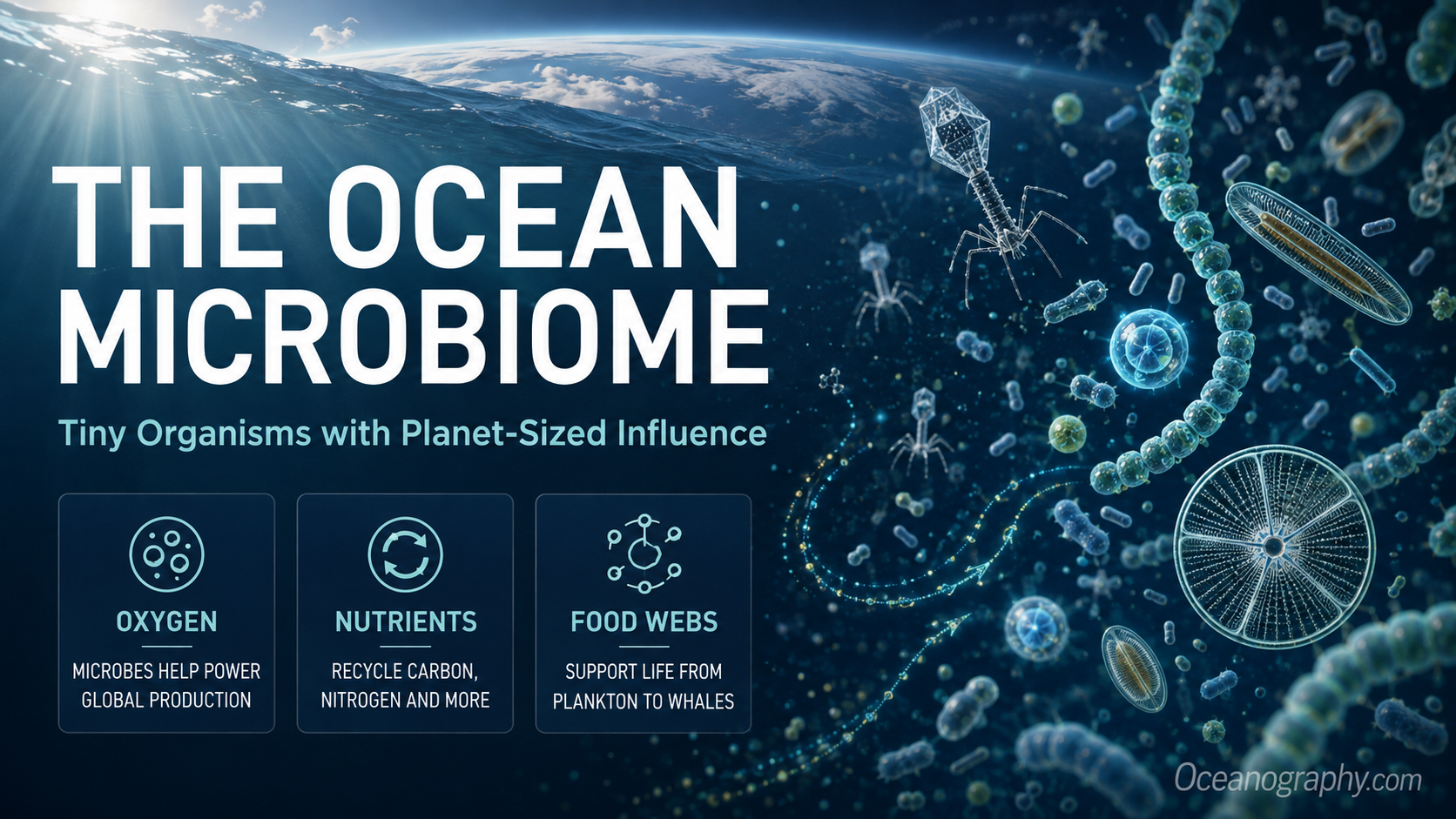
A drop of seawater may look empty, but it contains an active community of bacteria, viruses, archaea, and microscopic algae. Together, these organisms form the ocean microbiome, an invisible network that helps keep the ocean and our planet functioning.
These organisms may be tiny, but their influence is enormous. They recycle nutrients, produce oxygen, support marine food webs, remove carbon from surface waters, and even affect the gases entering our atmosphere.
Introduction
When we picture ocean life, we usually imagine whales, sharks, coral reefs, or colorful fish. Yet much of the ocean’s most important work is performed by organisms too small to see without a microscope.
I like to think of these microbes as the ocean’s unseen workforce. They clean up biological waste, move essential nutrients, feed other organisms, and influence the chemistry of seawater every hour of every day.
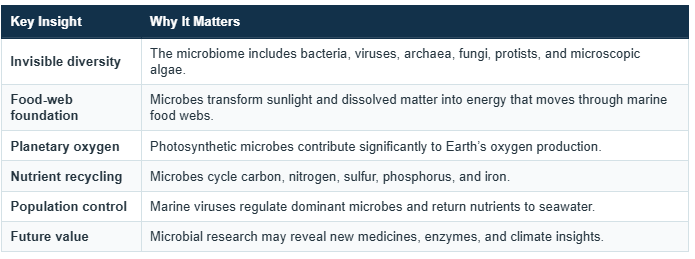
Key Takeaways
What Is the Ocean Microbiome?
The marine microbiome is the complete community of microorganisms living in seawater, sediments, sea ice, coral reefs, animal bodies, and the rocks beneath the seafloor. It includes both free-living microbes and organisms that form close relationships with plants and animals.
This microbial ocean life is astonishingly diverse. Different communities occupy warm surface waters, cold polar seas, oxygen-poor zones, hydrothermal vents, and deep sediments. Even neighboring drops of water can contain different microbial populations.
What Types of Microorganisms Live in the Ocean?
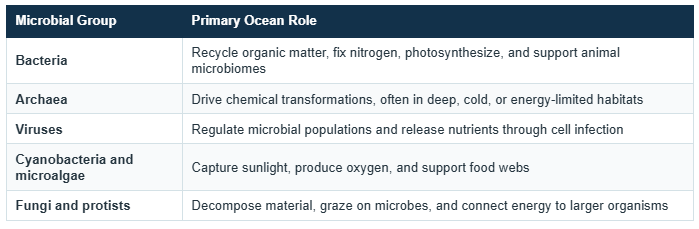
Marine bacteria recycle nutrients and break down organic material. Archaea often perform similar work under extreme or energy-limited conditions, while microscopic algae and cyanobacteria use sunlight to make food.
The ocean also contains enormous numbers of marine viruses. Many infect bacteria, archaea, and phytoplankton rather than humans or animals. Fungi, protists, and other microscopic marine organisms add further complexity.
Why Is the Ocean Microbiome Important?
The importance of the ocean microbiome begins with its position at the base of ocean ecosystems. Photosynthetic microbes capture sunlight, while decomposers return nutrients from dead material to the water.
Without these organisms, essential resources would become trapped in biological waste. Ocean productivity would decline, and the marine food web would lose one of its most important energy sources.
The Hidden Foundation of Ocean Ecosystems
Microbes support everything from tiny zooplankton to fish and whales. Some are eaten directly, while others transform dissolved material into particles that larger organisms can consume.
They also support ocean biodiversity through symbiotic relationships. Corals, sponges, squid, fish, and marine mammals depend on microbial partners for digestion, nutrition, chemical defense, or protection from disease.
Marine Bacteria: Tiny Engines of the Ocean
Marine bacteria behave like an ocean-wide recycling service. They break down dead organisms, waste, and dissolved organic matter, returning useful nutrients to the surrounding water.
The role of bacteria in marine ecosystems is not limited to decomposition. Some bacteria perform photosynthesis, fix nitrogen, produce defensive chemicals, or live inside animals as beneficial partners.
Beneficial and Harmful Marine Bacteria
Most ocean bacteria are harmless or beneficial. They help maintain water chemistry, feed other organisms, and support healthy animal microbiomes.
However, certain bacteria can cause disease or release toxins when environmental conditions favor rapid growth. Temperature increases, pollution, or nutrient runoff may allow harmful populations to spread.
What Role Do Viruses Play in the Ocean?
Viruses in the ocean are remarkably abundant. Although they are usually discussed as disease-causing agents, marine viruses are essential ecological regulators.
By infecting dominant microbes, viruses prevent a few species from taking over. This helps maintain marine microbial diversity and creates opportunities for other organisms to survive.
The Viral Shunt Explained
When viruses that infect marine bacteria destroy their hosts, cellular nutrients spill into the water. Other microbes quickly reuse this material instead of allowing it to move directly toward larger animals.
Scientists call this process the viral shunt. It keeps carbon and nutrients circulating within the microbial community and changes how energy flows through the ocean food web.

How Ocean Microbes Produce Oxygen
Some of the most important bacteria that produce oxygen are cyanobacteria. Like plants, they capture sunlight and release oxygen through photosynthesis.
One famous example is Prochlorococcus, an exceptionally small cyanobacterium found across large areas of the ocean. Its vast population makes it an important contributor to ocean microbes and global oxygen.
Microbes and Phytoplankton
Phytoplankton include cyanobacteria and microscopic algae. Together, these organisms form a floating photosynthetic community that supports marine life and influences atmospheric chemistry.
The relationship between phytoplankton and ocean bacteria is complex. Bacteria reuse material released by phytoplankton, while phytoplankton may benefit from vitamins and nutrients supplied by bacteria.

The Microbial Loop in the Ocean Food Web
Many organisms release dissolved organic matter that larger animals cannot consume directly. Bacteria absorb this invisible material and convert it into new cells.
Protists then eat the bacteria, and small animals eat the protists. Through this microbial loop in the ocean, dissolved material returns to the visible food web rather than being lost.
How Microbial Energy Reaches Larger Animals
The process works like a hidden recycling conveyor belt. Energy passes from dissolved compounds to bacteria, then to microscopic grazers, zooplankton, fish, and larger predators.
This is why microbes in the marine food web matter even to animals that never eat bacteria directly. Microbial energy eventually travels through many levels of the ecosystem.
How Marine Microbes Drive Nutrient Cycles
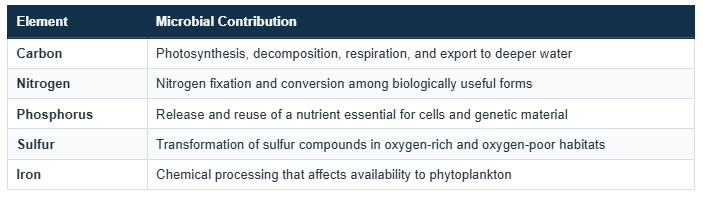
Microbes control major ocean nutrient cycles, including carbon, nitrogen, phosphorus, sulfur, and iron. They transform these elements into chemical forms that other organisms can use.
For example, nitrogen-fixing microbes convert nitrogen gas into biologically useful compounds. This process supports marine productivity in waters where usable nitrogen is limited.
Carbon Cycling and the Biological Carbon Pump
Photosynthetic microbes absorb carbon dioxide and turn it into organic matter. Some of that carbon is eaten, recycled, or released, while another portion sinks toward the deep ocean.
This biological carbon pump supports ocean microbes and carbon storage. It is one reason the connection between the ocean carbon cycle and microbial activity matters to Earth’s climate.

Microbial Life in Extreme Ocean Environments
Deep-sea microbial communities survive in darkness, high pressure, cold water, and nutrient-poor sediments. Instead of sunlight, many obtain energy from chemicals such as hydrogen, methane, sulfur, or ammonia.
These organisms demonstrate that life can flourish under conditions once considered impossible. Some even live deep beneath the seafloor, where growth may occur extremely slowly.
Microbes Near Hydrothermal Vents
Microbes near hydrothermal vents use chemical energy released from Earth’s crust. They form the base of ecosystems containing tube worms, clams, shrimp, and other unusual animals.
These communities provide valuable clues about the origins of life and the possibility of life in hidden oceans on other worlds. The NOAA Ocean Exploration website offers further information about deep-ocean habitats and research.
Marine Microbes and Ocean Animals
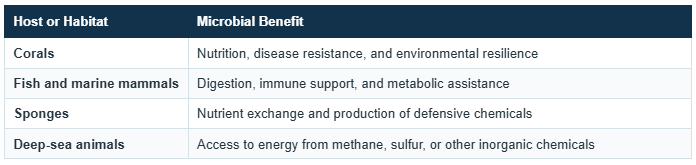
Corals depend on a community of algae, bacteria, archaea, fungi, and viruses known collectively as the coral microbiome. A balanced community supports nutrition, disease resistance, and environmental resilience.
Fish, whales, sponges, and deep-sea animals also carry distinctive microbiomes. These marine microbial interactions can help hosts digest food, obtain nutrients, or survive in chemically extreme habitats.
Threats to the Ocean Microbiome
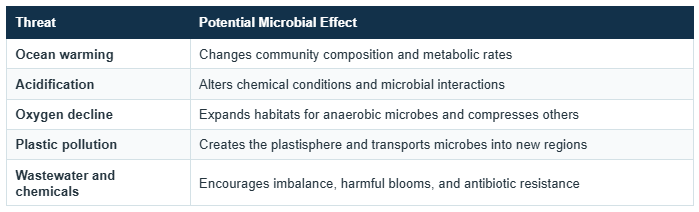
Climate change and ocean microbes are closely connected. Warming, acidification, and declining oxygen can change which microbial species thrive and how quickly they process nutrients.
Even small changes may spread through entire food webs. A shift in microbial photosynthesis, decomposition, or nitrogen cycling can eventually affect fish populations, carbon storage, and ecosystem stability.
Plastic Pollution and the Plastisphere
Plastic surfaces become habitats for bacteria, algae, fungi, and other microorganisms. Scientists call this community the plastisphere.
These floating microbial habitats may transport organisms into new regions. Plastic can also change microbial behavior and potentially carry pathogens or invasive species across ocean ecosystems.
Pollution and Antibiotic Resistance
Chemical pollution and nutrient runoff can encourage harmful algal blooms, reduce oxygen, and disturb normal microbial communities. Wastewater may also introduce antibiotics and resistant bacteria into coastal waters.
Antibiotic resistance in marine environments is therefore an emerging concern. It connects ocean health with human and animal health, reminding us that ecosystems do not exist in isolation.
How Scientists Study the Ocean Microbiome
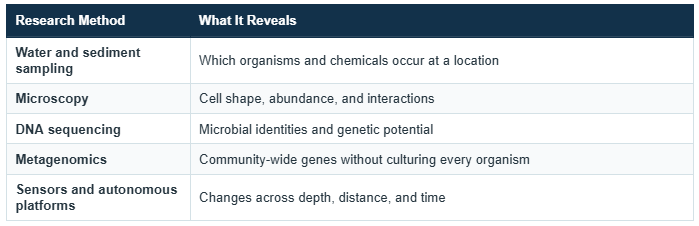
Scientists collect seawater, sediment, and biological samples from the surface to the deepest trenches. They analyze these samples using microscopy, chemical sensors, DNA sequencing, and laboratory experiments.
Metagenomics allows researchers to study genetic material from entire communities without growing every organism in a laboratory. This approach has transformed ocean microbiome research by revealing previously unknown species and metabolic abilities.
What Can Ocean Microbes Teach Us?
Marine microorganisms may contain useful enzymes, antibiotics, anticancer compounds, and industrial chemicals. Their ability to function under extreme conditions makes them especially interesting for biotechnology.
Research initiatives such as Tara Oceans also help scientists improve climate models, monitor ecosystem health, and understand how microbial communities respond to environmental change.
Further reading: NOAA Ocean Exploration | Tara Ocean Foundation
Protecting the Ocean’s Invisible Biodiversity
Protecting whales and coral reefs is important, but conservation must also consider the microbes supporting them. Healthy microbial communities help ecosystems resist disease, recycle nutrients, and recover from disturbance.
Responsible research, reduced pollution, climate action, and better ocean monitoring can help protect microbial biodiversity in seawater. We cannot protect what we never measure.

Conclusion: Small Organisms With Global Influence
The ocean microbiome is a powerful reminder that size does not determine importance. Organisms smaller than a grain of dust help produce oxygen, feed marine animals, recycle nutrients, and regulate carbon.
Understanding why marine microbes matter changes how we see the ocean. It is not merely a collection of visible animals; it is a living microbial system connected to the health of the entire planet.
EXPLORE MORE OCEAN DISCOVERIES
Frequently Asked Questions
1. How many microbes live in the ocean?
Answer: The exact number is unknown, but a single milliliter of seawater can contain millions of microbial cells and even more viruses.
2. Are all ocean bacteria harmful?
Answer: No. Most bacteria are harmless or beneficial and perform essential ecological functions.
3. Do marine microbes produce oxygen?
Answer: Yes. Cyanobacteria and microscopic algae conduct photosynthesis and contribute substantially to global oxygen production.
4. Why are marine viruses important?
Answer: They regulate microbial populations, release nutrients, influence evolution, and alter the movement of carbon through seawater.
5. What is the microbial loop?
Answer: It is the pathway through which bacteria convert dissolved organic material into biomass that returns to the marine food web.
6. How do ocean microbes affect climate?
Answer: They absorb, release, transform, and transport carbon and other climate-related gases.
7. Can microbes survive beneath the seafloor?
Answer: Yes. Microbes can live deep within marine sediments and oceanic crust, often with extremely limited energy.
8. How does plastic pollution affect marine microbes?
Answer: Plastic creates artificial habitats that can change microbial distribution, interactions, and movement across the ocean.
9. How do scientists study ocean microbes?
Answer: Researchers use seawater sampling, microscopy, sensors, DNA sequencing, metagenomics, and autonomous underwater equipment.
10. Why should we protect marine microbial diversity?
Answer: Microbial diversity supports resilient ecosystems, nutrient cycling, oxygen production, climate regulation, and the health of marine animals.
