
8Jun
Exploring the Role of Plankton in Ocean Ecosystems
Plankton are microscopic powerhouses that drive life in the oceans. They form the foundation of the marine food chain and influence global climate. Understanding their role reveals how crucial they are for marine biodiversity, fisheries, and even human survival. In this article, you will learn how ocean plankton ecosystem dynamics sustain life beneath the waves and impact our planet.
What Are Plankton?
Plankton are small, often microscopic organisms drifting in oceans and freshwater. They are broadly classified into phytoplankton (plant-like) and zooplankton (animal-like). Phytoplankton use sunlight to photosynthesize, producing oxygen and capturing carbon dioxide. Zooplankton feed on phytoplankton, forming a vital link to larger predators like fish, whales, and seabirds.
These tiny organisms may seem insignificant, but their abundance makes them essential for maintaining a healthy ocean plankton ecosystem.
Plankton as Primary Producers
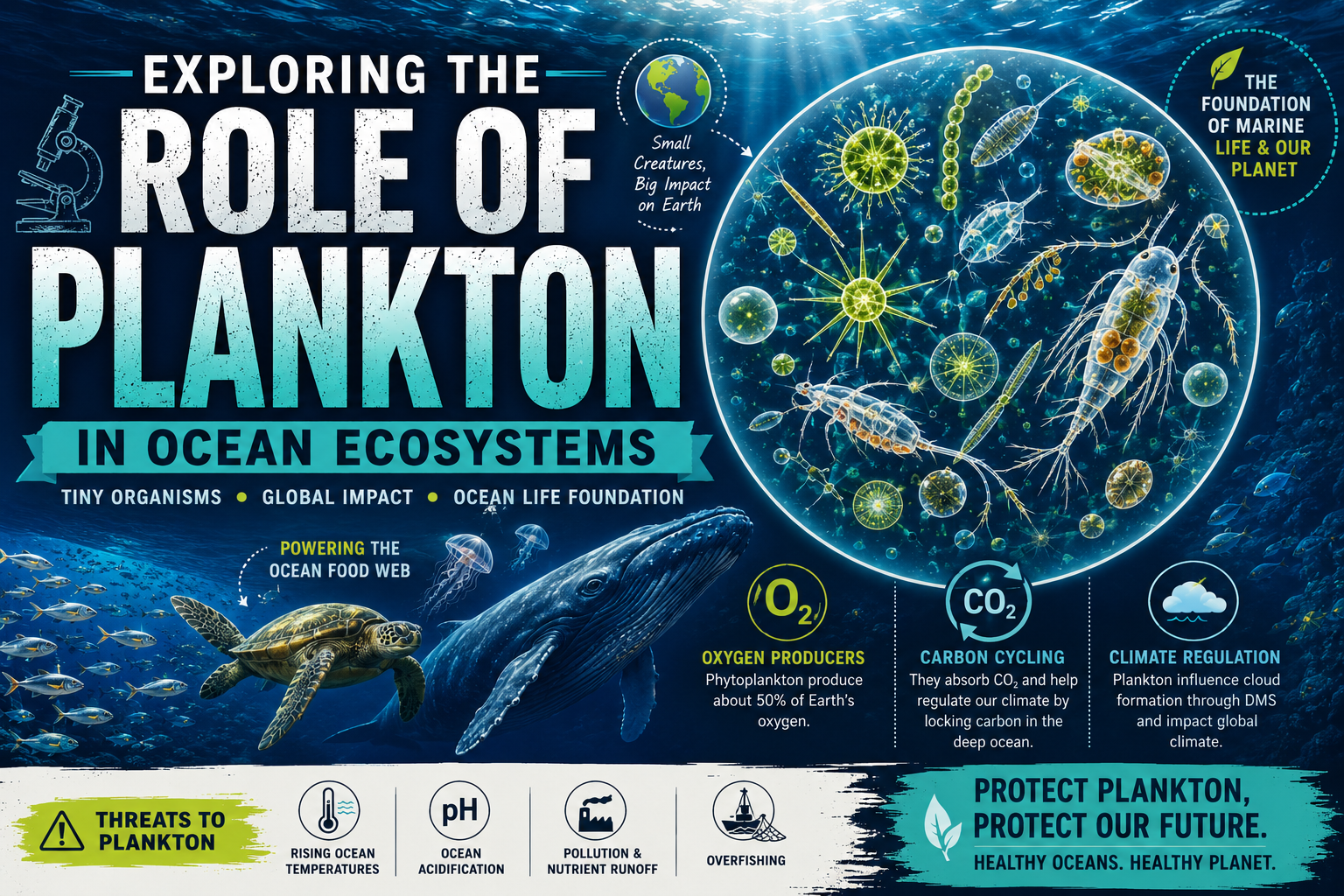
Phytoplankton are the primary producers of the ocean. They generate about half of the world's oxygen and act as the base of the food web. Through photosynthesis, they convert sunlight into chemical energy, supporting everything from microscopic protozoa to massive blue whales.
Their activity directly affects carbon cycling. When phytoplankton die or are consumed, some carbon sinks to the deep ocean, reducing atmospheric CO₂. This natural process plays a significant role in regulating the Earth's climate.
Plankton and Marine Food Webs
The ocean plankton ecosystem supports an intricate food network. Zooplankton consume phytoplankton, while small fish and invertebrates feed on zooplankton. This chain continues up to apex predators. Without plankton, these food webs collapse, impacting fisheries and global food security.
Plankton populations also affect migratory patterns. Seasonal blooms trigger movements of fish, seabirds, and marine mammals. Understanding these patterns helps manage fisheries and conserve marine biodiversity.
Impact on Biogeochemical Cycles
Plankton influence nutrient and chemical cycles in oceans. They absorb nitrogen, phosphorus, and iron, essential for growth. When plankton die, these nutrients return to the water, supporting future generations.
The ocean plankton ecosystem also impacts the sulfur cycle. Certain phytoplankton release dimethyl sulfide (DMS), which influences cloud formation and climate regulation. This connection illustrates how plankton affect not only marine life but the global environment.
Threats to Plankton Populations
Human activities and climate change pose major threats to plankton. Rising ocean temperatures and acidification can alter growth rates and species composition. Pollution, overfishing, and nutrient runoff disrupt the balance of the ocean plankton ecosystem, potentially reducing fish stocks and biodiversity.
Monitoring and protecting plankton populations is critical. Conservation strategies include reducing carbon emissions, controlling pollution, and establishing marine protected areas.
Research and Monitoring Techniques
Scientists study plankton using satellite imaging, oceanographic sensors, and sampling nets. These methods track seasonal blooms, population shifts, and ecosystem health. Research helps predict fisheries productivity, monitor climate change impacts, and inform marine conservation policies.
Innovations in genetic analysis allow identification of plankton species and understanding of ecological interactions at unprecedented scales. Such tools enhance management of marine resources and global carbon cycles.
The Human Connection
Humans rely on plankton indirectly. They support commercial fisheries, contribute to oxygen production, and regulate climate. Algal blooms, though sometimes harmful, indicate nutrient availability in oceans. Studying these patterns can guide sustainable fishing practices and marine conservation strategies.
Supporting healthy ocean plankton ecosystem ensures stable marine environments, economic livelihoods, and climate balance.
Conclusion
Plankton are the unsung heroes of the oceans. They sustain marine food webs, regulate climate, and support fisheries. Protecting the ocean plankton ecosystem safeguards biodiversity, human livelihoods, and the health of our planet. Every effort to understand and conserve these microscopic organisms counts.
Explore more about ocean plankton and their critical roles:
FAQs
What are the main types of plankton?
Phytoplankton (plant-like) and zooplankton (animal-like) are the primary types of plankton in oceans.
Why is plankton important for oxygen production?
Phytoplankton perform photosynthesis, producing around 50% of the Earth's oxygen.
How do plankton affect fisheries?
Plankton are the base of marine food chains; their abundance determines fish populations and commercial catches.
What threats face plankton populations?
Climate change, ocean acidification, pollution, and overfishing threaten the balance of the ocean plankton ecosystem.
Can plankton blooms be harmful?
Yes, harmful algal blooms can produce toxins affecting marine life and human health.
How do scientists monitor plankton?
Using satellite imagery, ocean sensors, nets, and genetic analysis, scientists track population dynamics and ecosystem health.
What role does plankton play in carbon cycling?
Plankton absorb CO₂ during photosynthesis; when they die, some carbon sinks to the deep ocean, reducing atmospheric levels.
Do plankton influence climate?
Yes, phytoplankton release dimethyl sulfide (DMS), which contributes to cloud formation and climate regulation.
How does ocean warming affect plankton?
Rising temperatures can change plankton species composition, growth rates, and distribution, impacting the broader ocean plankton ecosystem.
Can humans help protect plankton?
Reducing carbon emissions, limiting pollution, and creating marine protected areas support plankton populations.
