
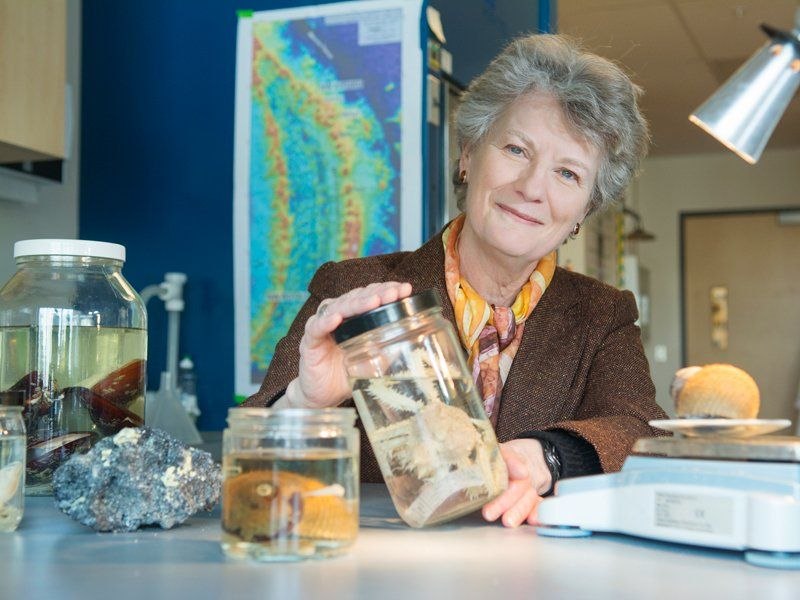
Ocean Networks Canada’s founding visionary appointed to Order of Canada
Ocean Networks Canada
Published: 13 January 2022
Dr. Verena Tunnicliffe, a pioneer in deep-sea exploration and founding visionary of Ocean Networks Canada, was appointed an Officer of the Order of Canada in 2021 for her groundbreaking contributions to ocean science and discovery.
Keywords: Ocean Networks Canada, VENUS project, hydrothermal vents, marine protected area, marine biology
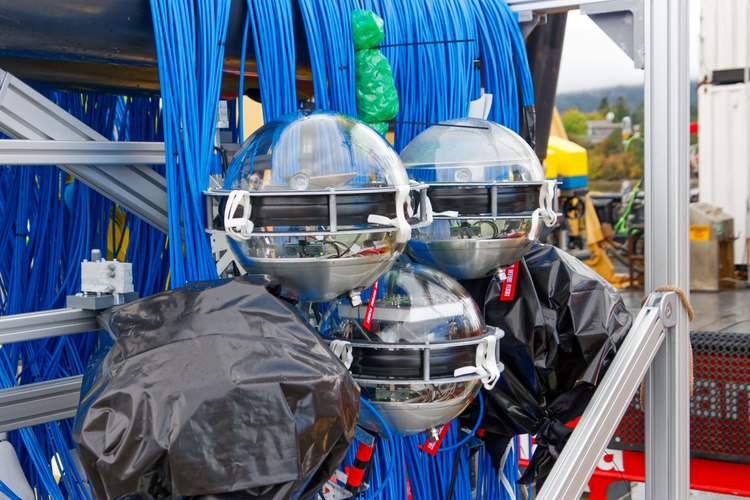
ONC provides ideal conditions for a new neutrino telescope
Ocean Networks Canada
Published: 25 February 2022
Ocean Networks Canada is partnering with global scientists to build P-ONE, a deep-sea neutrino telescope at Cascadia Basin. This groundbreaking project aims to unlock cosmic mysteries by detecting high-energy neutrinos beneath the Pacific Ocean.
Keywords: particle physics, Elisa Resconi, ONC, IceCube, Cherenkov radiation, Oceans 3.0, neutrino detection, cosmic particles
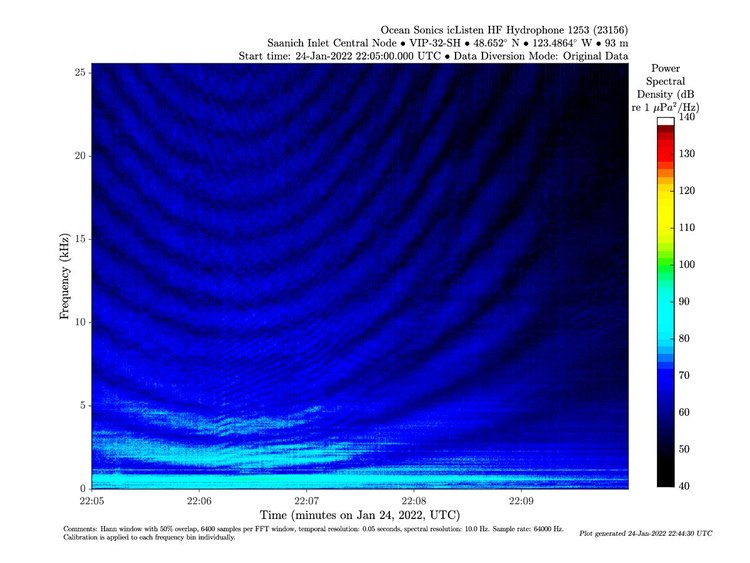
DynaCITE project promotes sea-change in big data research
Ocean Networks Canada
Published: 3 May 2022
Ocean Networks Canada’s DynaCITE project is enhancing data citation practices with tools like Persistent Identifiers (PIDs) to improve research reproducibility, credit data creators, and manage big data more effectively.
Keywords: Metadata, data stewardship, research data management, Reyna Jenkyns, Digital Research Alliance of Canada, open science, scientific transparency
