
12May
The Global Ocean Conveyor Belt and Its Impact on Weather
Table of Contents
- Introduction to the Global Ocean Conveyor Belt
- What is the Global Ocean Conveyor Belt?
- The Science Behind the Ocean Conveyor Belt
- The Role of the Global Ocean Conveyor Belt in Climate
- How Ocean Currents Regulate Global Temperatures
- The Connection Between Ocean Circulation and Climate Change
- How the Global Ocean Conveyor Belt Affects Weather Patterns
- The Gulf Stream and Its Influence on Weather Systems
- The Impact on Storms and Precipitation Patterns
- The Ocean Conveyor Belt’s Effect on Regional Climates
- The Effects on Western Europe’s Climate
- The Influence on Coastal Regions and Weather Extremes
- The Global Ocean Conveyor Belt and Its Role in Marine Ecosystems
- How Ocean Circulation Affects Marine Biodiversity
- The Impact on Fisheries and Coastal Communities
- Challenges to the Ocean Conveyor Belt and Its Impact on Weather
- Climate Change and Disruptions to Ocean Circulation
- The Potential Consequences of Ocean Conveyor Belt Disruptions
- Conclusion: The Importance of Understanding the Ocean Conveyor Belt
- Protecting the Ocean Conveyor Belt for Future Generations
Introduction to the Global Ocean Conveyor Belt
What is the Global Ocean Conveyor Belt?
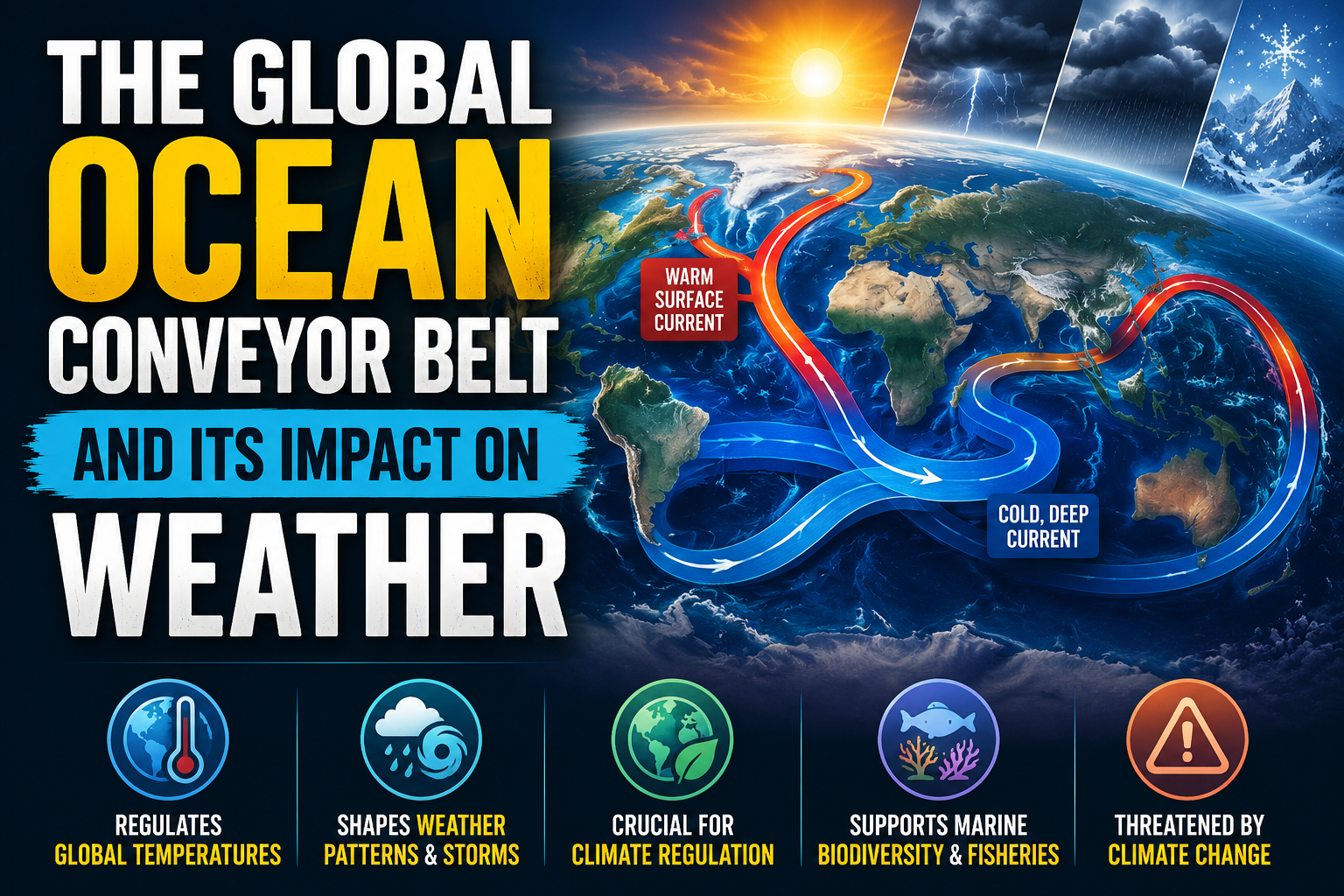
The Global Ocean Conveyor Belt (also known as thermohaline circulation) is a vast system of ocean currents that circulates water across the world’s oceans. It connects all the major ocean basins, helping to transfer heat, nutrients, and gases around the globe. The movement of these currents is driven by differences in water temperature and salinity, which in turn affect the density of the water.
The ocean conveyor belt plays an essential role in regulating global weather systems and climate. For example, warm water from the equator is carried toward the poles, and cold water from the poles is brought toward the equator. This system not only affects the temperature of different regions but also helps drive weather patterns and oceanic ecosystems.
The Science Behind the Ocean Conveyor Belt
The ocean conveyor belt is powered by the interaction between ocean temperature and salinity. When warm water from the equator reaches the poles, it cools down and becomes denser, sinking to the deep ocean. Meanwhile, colder water from the poles moves toward the equator, where it heats up, completing the cycle. This continuous movement forms a global current system that influences ocean temperatures, storm formation, and even global weather.
This current system also has a profound impact on marine ecosystems. It transports nutrients, oxygen, and heat, supporting a variety of life forms in both shallow and deep-sea ecosystems.
The Role of the Global Ocean Conveyor Belt in Climate
How Ocean Currents Regulate Global Temperatures
The ocean conveyor belt is a primary regulator of global temperatures. By moving warm water from the equator to the poles and cold water from the poles to the equator, ocean currents help to distribute heat more evenly across the planet.
For instance, the Gulf Stream, a major component of the ocean conveyor belt, carries warm water from the Gulf of Mexico to Western Europe, keeping the region much warmer than other parts of the world at similar latitudes. This temperature distribution helps stabilize the Earth’s climate, preventing extreme variations in weather patterns.
The Connection Between Ocean Circulation and Climate Change
As climate change accelerates, the functioning of the ocean conveyor belt becomes increasingly important. Rising temperatures, increased greenhouse gas emissions, and melting ice caps are affecting the flow of ocean currents. For instance, if the Gulf Stream weakens or shifts due to global warming, it could result in cooler temperatures in Western Europe and more extreme weather events.
Understanding how ocean currents are affected by climate change is crucial for forecasting future climate scenarios. Disruptions in ocean circulation can exacerbate the effects of climate change, such as more frequent heatwaves, storms, and rising sea levels.
How the Global Ocean Conveyor Belt Affects Weather Patterns
The Gulf Stream and Its Influence on Weather Systems
One of the most well-known components of the ocean conveyor belt is the Gulf Stream. This warm ocean current flows from the Gulf of Mexico toward Western Europe, influencing the region’s mild climate. It’s also a key player in the formation and development of weather systems.
By transporting heat and moisture, the Gulf Stream helps maintain relatively stable weather patterns in nearby regions. When ocean currents like the Gulf Stream change, however, they can dramatically shift weather systems, leading to harsher winters, more intense storms, or even droughts.
The Impact on Storms and Precipitation Patterns
Ocean currents have a direct impact on the formation of storms and precipitation patterns. Warm ocean water provides the energy needed for tropical storms to develop. These storms rely on heat from the ocean surface to fuel their intensity. Changes in the temperature and strength of ocean currents, such as those caused by El Niño or La Niña events, can result in stronger or weaker storms, more intense rainfall, or longer droughts in affected areas.
For example, El Niño events, which are characterized by warmer-than-usual sea surface temperatures in the Pacific Ocean, can cause storm patterns to shift, bringing heavy rains to some regions and droughts to others. These disruptions to the ocean conveyor belt’s flow can result in more unpredictable and extreme weather.
The Ocean Conveyor Belt’s Effect on Regional Climates
The Effects on Western Europe’s Climate
The Gulf Stream has a profound impact on the climate of Western Europe, particularly in countries like the United Kingdom, Ireland, and Norway. By transporting warm water from the tropics, the Gulf Stream helps moderate temperatures in these regions, preventing harsh winters that are common at similar latitudes elsewhere in the world.
However, as climate change affects the ocean conveyor belt, the strength and flow of the Gulf Stream could weaken. This would cause colder winters in Western Europe and potentially disrupt local weather patterns, impacting agriculture, energy demand, and infrastructure.
The Influence on Coastal Regions and Weather Extremes
The ocean conveyor belt also influences the weather in coastal regions around the world. In areas like the U.S. East Coast and parts of the Caribbean, ocean currents help maintain consistent weather patterns. However, disruptions to the currents could lead to rising sea levels, more intense storms, and unpredictable weather in these regions. Rising temperatures and shifting currents could exacerbate the effects of hurricanes, tropical cyclones, and coastal flooding.
The Global Ocean Conveyor Belt and Its Role in Marine Ecosystems
How Ocean Circulation Affects Marine Biodiversity
Ocean circulation plays a critical role in maintaining the health of marine ecosystems. Ocean currents transport nutrients and oxygen to different parts of the ocean, supporting marine life and promoting biodiversity. For example, upwelling currents bring nutrient-rich waters to the surface, providing food for fish and other marine organisms.
When ocean currents change or slow down, it can lead to nutrient imbalances that affect marine life. This disruption can harm fisheries, disrupt marine food webs, and reduce the overall biodiversity of marine ecosystems.
The Impact on Fisheries and Coastal Communities
The health of fisheries is directly tied to ocean currents. Many coastal communities rely on fishing as a primary source of income, and disruptions to ocean circulation can lead to changes in fish populations. If ocean currents weaken or change, it can cause fish to migrate to new areas, affecting the local fishing industry.
Challenges to the Ocean Conveyor Belt and Its Impact on Weather
Climate Change and Disruptions to Ocean Circulation
As the planet warms, the ocean conveyor belt faces unprecedented challenges. The melting of polar ice caps, increased greenhouse gases, and changes in sea surface temperatures are all affecting ocean circulation. These disruptions could weaken or alter the flow of currents, causing changes in global weather patterns.
If ocean currents continue to weaken due to climate change, it could lead to extreme weather events, rising sea levels, and changes in regional climates. This poses significant risks to coastal communities, marine ecosystems, and the global economy.
The Potential Consequences of Ocean Conveyor Belt Disruptions
Disruptions to the ocean conveyor belt could have far-reaching consequences, including shifts in weather patterns, rising sea levels, and increased storm intensity. Western Europe could experience colder temperatures, while tropical regions might face more frequent and severe storms. In addition, disruptions in ocean circulation could reduce the ability of oceans to absorb carbon dioxide, contributing to further climate change.
Conclusion: The Importance of Understanding the Ocean Conveyor Belt
The global ocean conveyor belt plays a crucial role in regulating the planet’s climate and weather patterns. From moderating temperatures to influencing storm formation, ocean currents shape much of the weather we experience. As climate change threatens to disrupt these currents, understanding the ocean conveyor belt becomes more important than ever.
By studying and monitoring ocean currents, we can better prepare for the effects of global warming, rising sea levels, and extreme weather. Protecting the ocean conveyor belt is essential for maintaining the stability of the Earth’s climate, ensuring the health of marine ecosystems, and securing the future of coastal communities worldwide.
FAQs
Q: What is the ocean conveyor belt? A: The ocean conveyor belt, also known as thermohaline circulation, is a global system of ocean currents that circulates water around the world, regulating temperatures and influencing weather patterns.
Q: How do ocean currents affect global weather? A: Ocean currents regulate global temperatures, impact precipitation patterns, and play a key role in the development of storms, hurricanes, and other weather events.
Q: What is the Gulf Stream? A: The Gulf Stream is a warm ocean current that flows from the Gulf of Mexico to Western Europe, influencing the climate of the region by bringing warm temperatures to northern latitudes.
Q: How does the ocean conveyor belt affect regional climates? A: Ocean currents, like the Gulf Stream, influence regional climates by regulating temperatures and moisture levels. Disruptions to these currents can lead to colder winters, more extreme storms, and flooding.
Q: How does climate change impact ocean currents? A: Climate change is causing ocean temperatures to rise and polar ice to melt, disrupting the flow of ocean currents and potentially weakening the ocean conveyor belt.
Q: What are the consequences of ocean conveyor belt disruptions? A: Disruptions to the ocean conveyor belt could lead to cooler temperatures in some regions, rising sea levels, and more frequent and intense storms.
Q: How do ocean currents affect marine life? A: Ocean currents transport nutrients, oxygen, and heat, supporting marine biodiversity and sustaining ecosystems. Disruptions in ocean circulation can harm fisheries and marine food webs.
Q: What is the role of the ocean conveyor belt in climate change? A: The ocean conveyor belt helps regulate the Earth’s carbon cycle and maintains stable global temperatures. Disruptions to the belt could accelerate climate change by reducing the ocean’s ability to absorb carbon.
Q: Can human activities disrupt ocean currents? A: Yes, human activities such as carbon emissions, pollution, and deforestation are contributing to the warming of oceans, which can disrupt natural ocean circulation patterns.
Q: Why is it important to understand the ocean conveyor belt? A: Understanding the ocean conveyor belt is crucial for predicting weather patterns, managing marine resources, and addressing the impacts of climate change and sea-level rise.
CTA Button
Explore More About Ocean Currents and Their Impact on Weather
