
26Feb
Sea Level Rise Forecast: What Coasts Face by 2035
Table of Contents
- Introduction to Sea-Level Rise and Its Impacts
- What is Sea-Level Rise?
- The Science Behind Sea-Level Rise Forecasts
- Understanding the 2035 Projections: Key Drivers of Sea-Level Rise
- Global Mean Sea Level Acceleration
- The Role of Ocean Warming and Ice Melt
- Regional Hotspots: Coasts Facing the Greatest Threat by 2035
- North American Vulnerability Profiles
- Asia-Pacific Delta Regions Under Pressure
- Small Island Developing States (SIDS) and Existential Risk
- Immediate Impacts: How Sea-Level Rise Will Reshape Coastal Life by 2035
- Intensification of Nuisance Flooding
- Groundwater Salinization and Freshwater Scarcity
- Infrastructure and Economic Disruption
- Adaptation Strategies: Preparing for the 2035 Reality
- Hard vs. Soft Engineering Solutions
- Managed Retreat and Policy Adjustments
- Conclusion: A Call to Action for Coasts Facing Rising Seas
Introduction to Sea-Level Rise and Its Impacts
What is Sea-Level Rise?
Sea level rise refers to the gradual increase in the average level of the world's oceans, which is a direct consequence of two primary factors: thermal expansion and ice melt. As the planet warms, the oceans absorb much of this heat, causing the water to expand. At the same time, the warming climate melts glaciers and ice sheets, adding more water to the ocean. By 2035, experts predict that many coastal areas will experience significant increases in sea levels, with rising sea levels by 2035 projected to affect everything from daily life to infrastructure and natural ecosystems.
This phenomenon poses a serious threat to coastal regions, as even modest increases in sea level can lead to flooding, erosion, and other environmental changes. It’s not just about higher tides it's about the long-term reshaping of coastal landscapes and the loss of vital infrastructure.
The Science Behind Sea-Level Rise Forecasts
The science behind sea-level rise forecasts is complex, relying on decades of climate change projections and oceanic measurements. Scientists use tide gauges, satellite data, and computer models to estimate how much sea levels will rise in the coming decades. These models take into account a variety of factors, including the rate of greenhouse gas emissions, the speed of ice melt from glaciers, and the ability of oceans to absorb heat.
By studying the patterns in NOAA sea level data and global sea level rise projections, scientists predict that by 2035, many coasts will experience anywhere from 8 to 14 inches of sea-level rise. This is a significant increase that could drastically alter coastlines, submerge low-lying areas, and increase the frequency of floods, especially during storm surges.
Understanding the 2035 Projections: Key Drivers of Sea-Level Rise
Global Mean Sea Level Acceleration
Currently, the global mean sea level rises at an average rate of about 3.7 millimeters per year. However, this rate is accelerating due to the increase in ocean warming and the accelerated melting of ice from regions like Greenland and Antarctica. The global sea level rise is expected to be between 0.15 to 0.28 meters (about 6 to 11 inches) by 2050, with 2035 marking a significant turning point in this trend.
The acceleration of sea-level rise projections has been linked to the increased pace of climate change impacts. As temperatures rise, more water from glaciers and ice sheets is entering the oceans, making the process of sea-level rise even more pronounced.
The Role of Ocean Warming and Ice Melt
Ocean warming is one of the most critical factors contributing to sea-level rise. As the ocean absorbs heat from the atmosphere, it expands, causing the volume of the oceans to increase. In addition to thermal expansion, the melting of ice sheets in Greenland and Antarctica contributes directly to the rise in sea levels. This process is likely to continue and even intensify as the climate warms, pushing sea levels higher and putting coastal regions at greater risk.
NASA’s GRACE satellites and other advanced technologies are monitoring the loss of ice in real time, providing critical data that helps refine sea-level predictions. Experts agree that unless significant action is taken to reduce emissions, the rise in sea levels will continue to accelerate, leading to profound changes along the world’s coasts by 2035.
Regional Hotspots: Coasts Facing the Greatest Threat by 2035
North American Vulnerability Profiles
In North America, coastal vulnerabilities vary greatly depending on regional factors such as subsidence, local topography, and the rate of sea-level rise. The East Coast of the United States, especially places like Miami, New York City, and Charleston, faces increasing risks from nuisance flooding and coastal erosion. By 2035, it’s predicted that areas like Miami could see sunny day floods more frequently, possibly even weekly, as the sea level rises by 10 to 15 inches.
In the Gulf Coast, areas like Louisiana face even greater threats due to the subsidence of the land. In this region, the ground sinks by about 10 millimeters per year, which compounds the effects of sea-level rise. New York City and Boston are also at risk of increased flooding, causing significant damage to infrastructure, utilities, and urban areas.
Asia-Pacific Delta Regions Under Pressure
Asia is home to some of the world’s most vulnerable coastal areas, particularly the Mekong Delta in Vietnam and the Ganges-Brahmaputra Delta in Bangladesh. These regions face sea-level rise projections of up to 18 inches by 2035, significantly affecting millions of people. Shanghai, Jakarta, and Dhaka are also at risk, with large populations and significant infrastructure exposed to flooding.
These delta regions not only face sea-level rise but also experience the cumulative effects of land subsidence and river sediment loss, making them even more susceptible to inundation. As a result, flooding risks will increase, with entire populations potentially displaced if no intervention occurs.
Small Island Developing States (SIDS) and Existential Risk
The Small Island Developing States (SIDS) are perhaps the most at risk when it comes to sea level rise. Islands like Tuvalu, Maldives, and Kiribati sit just above sea level, making them highly vulnerable to even slight increases in ocean height. By 2035, these islands could lose significant portions of their land, causing not only environmental destruction but also an existential threat to their populations.
Rising seas will contaminate freshwater resources and submerge beaches and coastal communities. In the Maldives, for instance, a 10-inch rise could mean the loss of tourism and agriculture, devastating local economies. These islands are already looking for climate change adaptation strategies, such as relocating residents or building massive sea walls.
Immediate Impacts: How Sea-Level Rise Will Reshape Coastal Life by 2035
Intensification of Nuisance Flooding
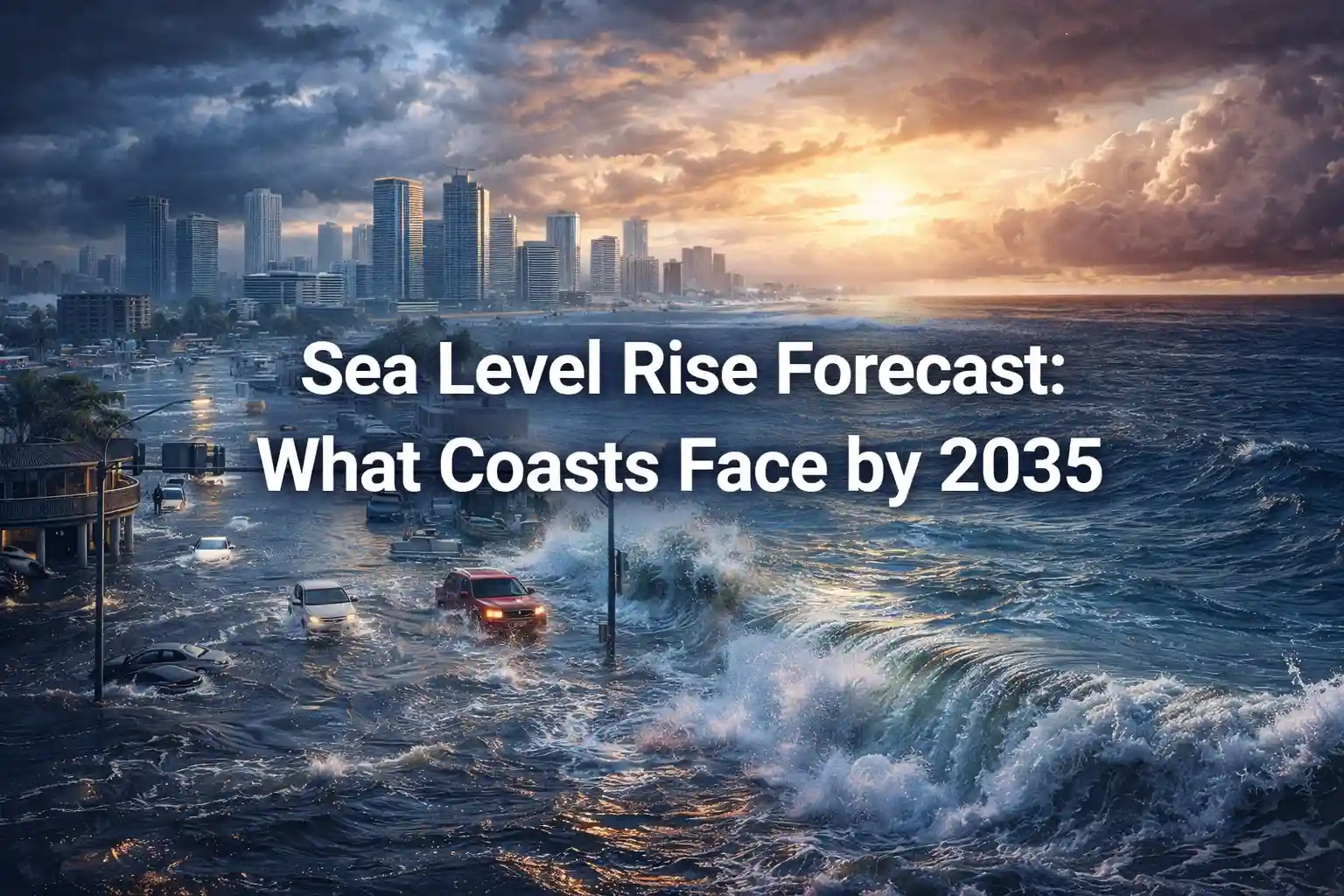
Nuisance flooding, or sunny-day flooding, is already becoming a frequent occurrence in many coastal cities. By 2035, this type of flooding could become the new normal, with cities like Charleston, Boston, and Miami seeing flooding events increase from just a few days a year to dozens. These floods are caused by higher tides that seep into streets, buildings, and basements without any rain, leading to traffic disruptions, property damage, and costly repairs.
By the mid-2030s, major coastal cities could face 50 flood days per year, leading to a significant economic burden. As drains become clogged with saltwater, the cost of maintaining infrastructure will rise, and businesses will struggle with economic disruption.
Groundwater Salinization and Freshwater Scarcity
As sea level rise pushes saltwater into freshwater aquifers, many coastal regions will experience groundwater salinization. This means that coastal wells will become undrinkable, affecting local communities and agriculture. In Florida, over 1,000 wells already show signs of salt contamination, and by 2035, these problems will only worsen.
In some areas, farmers will lose access to irrigation water, while cities will be forced to import fresh water or drill deeper, driving up costs. Freshwater scarcity will become a growing issue, particularly in areas that rely on coastal aquifers for drinking water and agricultural irrigation.
Infrastructure and Economic Disruption
Sea level rise will disrupt infrastructure along coastlines, with roads, bridges, sewage plants, and airports becoming more susceptible to flooding. Major cities like New York, Miami, and Houston will face regular disruptions to their public services and economy, leading to hundreds of millions of dollars in repairs.
In addition to infrastructure damage, tourism and local businesses will be impacted as beaches erode, and storm surges increase. The global economy could see significant delays in shipping ports, further adding to the cost of climate change adaptation.
Adaptation Strategies: Preparing for the 2035 Reality
Hard vs. Soft Engineering Solutions
As sea levels rise, governments will need to decide between hard engineering solutions (like seawalls and dikes) and soft engineering solutions (like restoring wetlands and building living shorelines). Hard solutions are expensive and often unsustainable in the long run, whereas soft solutions are more adaptable and environmentally friendly.
In places like the Netherlands, a combination of both approaches dikes plus dunes has proven effective. By 2035, nature-based solutions will become increasingly important in coastal resilience, helping mitigate the worst effects of sea-level rise.
Managed Retreat and Policy Adjustments
Managed retreat is another strategy for dealing with sea-level rise. It involves relocating people from high-risk areas to safer locations and repurposing flood-prone land for public use. Some regions are already buying out flood-prone homes to create parks or wetlands.
Governments will also need to update zoning laws and insurance policies to reflect the new reality of coastal flooding. Areas like Pima County in Arizona are already planning for managed retreat, and other cities will likely follow suit in the coming years.
Conclusion: A Call to Action for Coasts Facing Rising Seas
The sea-level rise forecast for 2035 paints a concerning picture for many coastal communities, with increasing flooding risks, economic disruption, and environmental damage. However, by acting now and implementing adaptation strategies, we can still minimize the damage and protect future generations. Whether through hard engineering solutions, soft engineering, or managed retreat, tailored policies and proactive measures will be essential in preparing for the rising tide. The clock is ticking it's time for coastal resilience to become a top priority.
Explore More on Sea Level Rise and Coastal Solutions
FAQs
1. What causes sea level rise?
Sea level rise is caused by thermal expansion (water expanding as it warms) and ice melt from glaciers and ice sheets. Both factors contribute to the rising levels of oceans worldwide.
2. What is the projected sea level rise by 2035?
Experts predict a rise of approximately 8 to 14 inches in global sea levels by 2035, depending on emissions and the rate of ice melt.
3. Which coasts are most at risk from sea-level rise?
The East Coast, Gulf Coast, and Pacific Northwest of the U.S. are particularly vulnerable, with regions like Miami, New York City, and Louisiana facing severe threats from flooding.
4. How will sea-level rise affect infrastructure?
Sea-level rise will lead to increased flooding, damage to roads, bridges, and utilities, and disruption of essential services like waste treatment and transportation.
5. What is the difference between hard and soft engineering solutions?
Hard engineering involves building structures like seawalls and dikes, while soft engineering focuses on using natural systems like wetlands and living shorelines to protect coastlines.
6. How does sea-level rise affect freshwater resources?
Sea-level rise causes saltwater intrusion into coastal freshwater aquifers, making water undrinkable and affecting agriculture.
7. Can managed retreat be a solution?
Managed retreat involves relocating communities and infrastructure away from high-risk areas, reducing exposure to flooding and storm surges.
8. What is nuisance flooding?
Nuisance flooding occurs when tides rise without rain, flooding streets and causing disruption. It is becoming more common in cities like Miami and Charleston.
9. How can we protect coastal ecosystems from sea-level rise?
Protecting marine biodiversity and ecosystems can be achieved by restoring wetlands, creating marine protected areas, and reducing pollution.
10. How can coastal communities prepare for the impacts of sea-level rise?
Communities can prepare by investing in flood defenses, improving infrastructure, and implementing climate action policies to reduce emissions.
