
28Apr
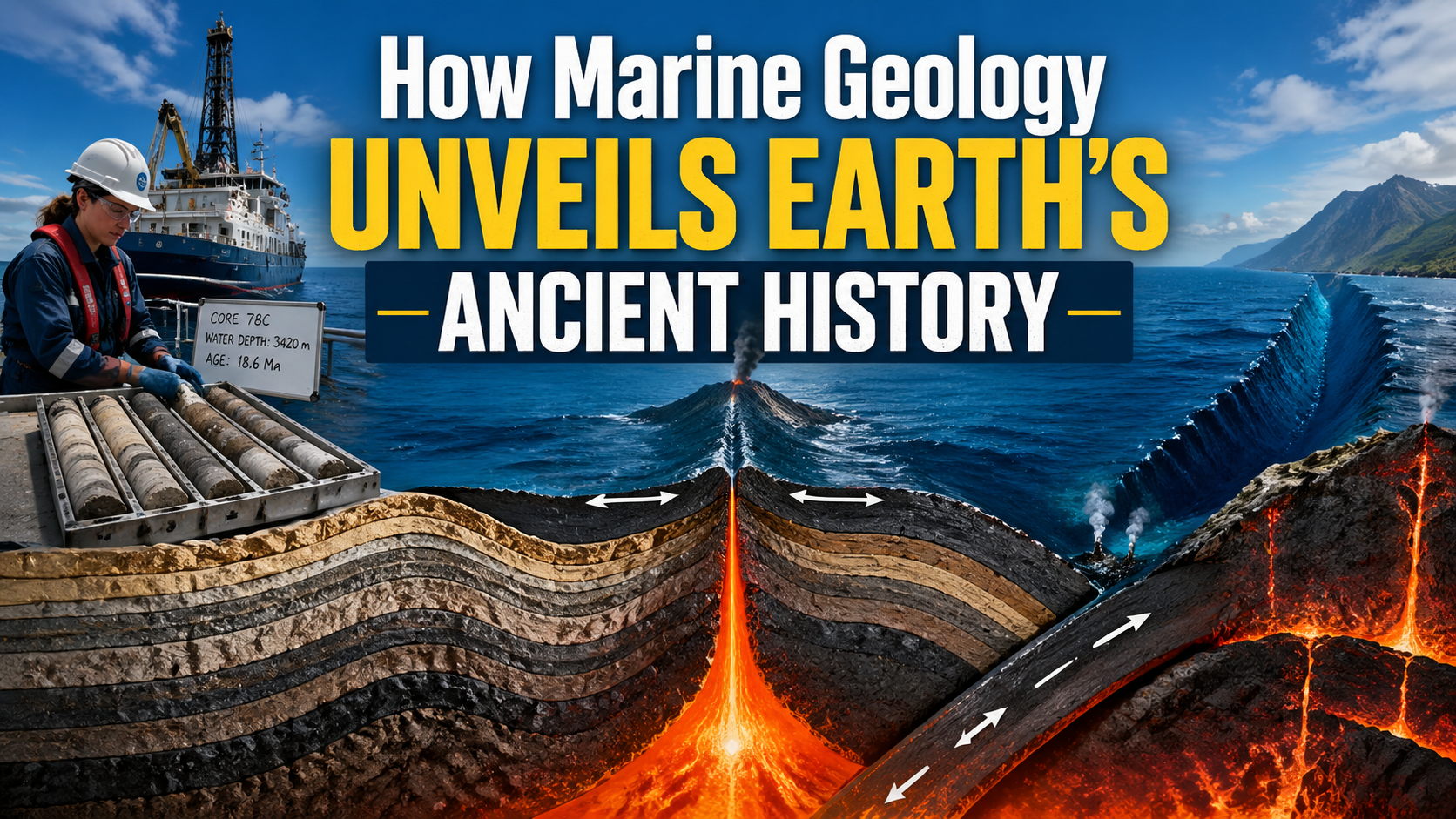
How Marine Geology Unveils Earth’s Ancient History
Table of Contents
- Introduction to Marine Geology
- The Role of the Ocean Floor in Earth’s History
- Key Techniques in Marine Geology
- Marine Geology’s Contribution to Understanding Earth’s Climate History
- The Impact of Marine Geology on Tectonic Theory
- The Future of Marine Geology in Understanding Earth’s Past
- Conclusion: Marine Geology as a Key to Earth’s Ancient History
- FAQ
Introduction to Marine Geology
What is Marine Geology?
Marine geology is the study of the Earth’s ocean floor and the processes that shape it. It combines elements of both geology and oceanography, aiming to understand the structure, composition, and dynamics of the oceanic crust. Marine geologists analyze various features of the ocean, from its vast sediment layers to the tectonic plates beneath the surface. The data gathered from these studies provide critical insights into how the Earth’s surface has evolved over millions of years.
It’s incredible how much we can learn about Earth’s past by studying the ocean floor. Everything from ancient volcanic activity to past climate shifts is recorded in the layers of sediment and rock. Marine geology helps us to reconstruct the history of the planet, revealing how the oceans, landmasses, and atmosphere have interacted throughout history.
Why Marine Geology is Crucial for Understanding Earth’s History
Without marine geology, we’d miss out on a huge part of understanding Earth’s geological past. The ocean holds many secrets that are impossible to unlock through land-based exploration alone. In fact, about 70% of our planet’s surface is covered by oceans, and the ocean floor contains vital records about plate tectonics, climate change, and evolutionary processes.
Marine geology provides a unique window into Earth's deep history, offering a clearer understanding of how our planet has evolved over time. It helps us understand the movements of tectonic plates, the formation of continents, and how natural events like volcanic eruptions and earthquakes have shaped Earth’s surface.
The Role of the Ocean Floor in Earth’s History
Tectonic Plates and Their Role in Shaping Earth’s Past
Tectonic plates are huge sections of the Earth’s outer shell that move slowly across the planet’s surface. Their movement is driven by forces in the Earth’s mantle, and as they shift, they shape the ocean floor and landmasses. Oceanic plate movements are responsible for creating deep ocean trenches, mountain ranges, and mid-ocean ridges. Marine geology studies the way these plates interact and how their shifts have influenced the formation of continents and ocean basins.
The discovery of seafloor spreading and the theory of plate tectonics revolutionized our understanding of Earth’s geology. It showed us how continents move, drift apart, and collide, creating new geological features. The interaction of oceanic plates has also contributed to volcanic activity, which shapes the ocean floor.
Sediment Layers as a Window into Earth’s Geological Past
Sediment layers found on the ocean floor are key to unlocking Earth’s history. These layers are formed by tiny particles, organic materials, and minerals that settle over time. By studying these sediments, marine geologists can learn about the environmental conditions at different points in Earth’s history. For example, changes in sediment composition can tell us about past climate shifts, volcanic eruptions, or even periods of glaciation.
Sediment cores drilled from the ocean floor provide valuable data on past ocean conditions, atmospheric composition, and even life forms. This helps us understand how the Earth’s climate has evolved and the long-term impacts of climate change.
Key Techniques in Marine Geology
Seafloor Mapping and Subsurface Exploration
One of the most significant advancements in marine geology has been the development of seafloor mapping technologies. Using techniques like sonar, scientists can map the ocean floor in high detail. These maps help identify features like mid-ocean ridges, deep-sea trenches, and underwater mountains. Subsurface exploration allows geologists to study the layers beneath the ocean floor, providing information on the Earth’s internal structure and past geological events.
These technologies have enabled the study of previously unreachable areas, expanding our understanding of the processes that have shaped the planet.
Marine Core Sampling and Paleoclimate Data
Marine core sampling involves taking samples of sediment and rock from the ocean floor to study their composition and structure. These cores are used to gather paleoclimate data, offering insights into past climate conditions and how they affected marine life and Earth’s ecosystems. Core samples are particularly important in studying long-term climate shifts and how ocean temperatures have changed over time.
By analyzing marine core samples, scientists can reconstruct past climates and understand how factors like greenhouse gas concentrations and ocean circulation have influenced global weather patterns.
Marine Geology’s Contribution to Understanding Earth’s Climate History
Oceanic Conditions and Past Climate Shifts
Ocean conditions, such as sea surface temperatures and ocean acidity, are vital for understanding climate history. Marine geology reveals how changes in ocean temperatures have influenced global climate shifts. The study of sediment layers helps us understand past periods of global warming, cooling, and even ice ages.
By analyzing these conditions, marine geologists can track how Earth’s climate has responded to natural and human-induced factors over millions of years.
How Marine Geology Reveals Changes in Earth’s Atmosphere
The ocean and atmosphere are closely linked. Changes in ocean conditions often lead to changes in the atmosphere. For instance, oceanic temperatures can influence atmospheric circulation patterns, impacting global weather systems. Marine geology helps scientists understand how the ocean has played a role in regulating carbon dioxide levels and other greenhouse gases in the atmosphere.
This research is crucial for predicting how future climate shifts might unfold and understanding the long-term effects of human activity on the Earth’s atmosphere.
The Impact of Marine Geology on Tectonic Theory
Plate Movements and Continental Drift
Marine geology supports the theory of continental drift, which suggests that continents have moved over geological time. By studying the movements of tectonic plates, marine geologists can trace the history of continental separation and collision. This helps us understand how oceans and landmasses were formed and how the Earth’s crust has evolved.
Evidence from Marine Geology Supporting Plate Tectonics
The evidence provided by marine geology including the discovery of mid-ocean ridges, seafloor spreading, and magnetic striping on the ocean floor has been instrumental in proving plate tectonics theory. This research has expanded our understanding of the Earth’s dynamic nature and how oceanic crust continuously forms and subducts.
The Future of Marine Geology in Understanding Earth’s Past
Advancements in Technology and Techniques
The future of marine geology lies in continued advancements in technology. New satellite technologies, seafloor mapping techniques, and underwater drones will allow for more detailed studies of the ocean floor. These tools will enhance our ability to explore the Earth’s deep history and understand how oceanic processes have influenced global climate and tectonic activity.
The Role of Marine Geology in Environmental Studies
As climate change accelerates, marine geology will play an increasingly important role in understanding the Earth’s past and future. By studying ocean conditions, marine sediments, and tectonic movements, we can better predict the impact of rising sea levels, ocean acidification, and other environmental challenges.
Conclusion: Marine Geology as a Key to Earth’s Ancient History
Marine geology offers an unparalleled view into the Earth’s deep past, helping us understand the formation of continents, changes in global climate, and the movement of tectonic plates. Through advances in technology, marine geologists are uncovering critical data about how the Earth has evolved and how it will continue to change in the future. As we face the challenges of climate change, marine geology provides invaluable insights into maintaining a sustainable future for both our oceans and the planet as a whole.
Explore More About Marine Geology and Earth’s History
FAQs
1. What is marine geology?
Marine geology is the study of the Earth’s ocean floor, its composition, and the processes that shape it, providing insights into Earth’s geological past.
2. How does marine geology help us understand climate history?
By studying ocean sediments and conditions, marine geologists reconstruct past climates, helping us understand how the Earth’s climate has changed over time.
3. What is the role of tectonic plates in marine geology?
Tectonic plates are responsible for shaping the ocean floor and landmasses. Their movements create geological features such as mountains, valleys, and ocean ridges.
4. How does marine geology help in understanding climate change?
Marine geology tracks changes in ocean conditions and how they influence global weather patterns, offering valuable insights into the causes and effects of climate change.
5. What is the importance of marine core sampling?
Marine core sampling involves extracting sediment from the ocean floor to study past climates, helping scientists track climate shifts over millions of years.
6. How does the ocean’s role in the carbon cycle relate to marine geology?
Marine geology helps us understand how oceans absorb and release carbon, which plays a significant role in regulating global climate.
7. What advancements are being made in marine geology research?
New technologies like satellite imaging, underwater drones, and advanced mapping techniques are making it easier to study the ocean floor and improve our understanding of Earth’s history.
8. What is seafloor spreading?
Seafloor spreading occurs when new oceanic crust forms at mid-ocean ridges, pushing older crust away. This process is a key part of the theory of plate tectonics.
9. How does marine geology help understand the Earth’s tectonic theory?
By studying oceanic plate movements and sediment layers, marine geology provides evidence supporting plate tectonics and the movement of continents over time.
10. What is the future of marine geology in understanding environmental changes?
As climate change accelerates, marine geology will continue to provide vital insights into ocean conditions, sea level rise, and the overall health of the Earth’s ecosystems.
