
1Apr
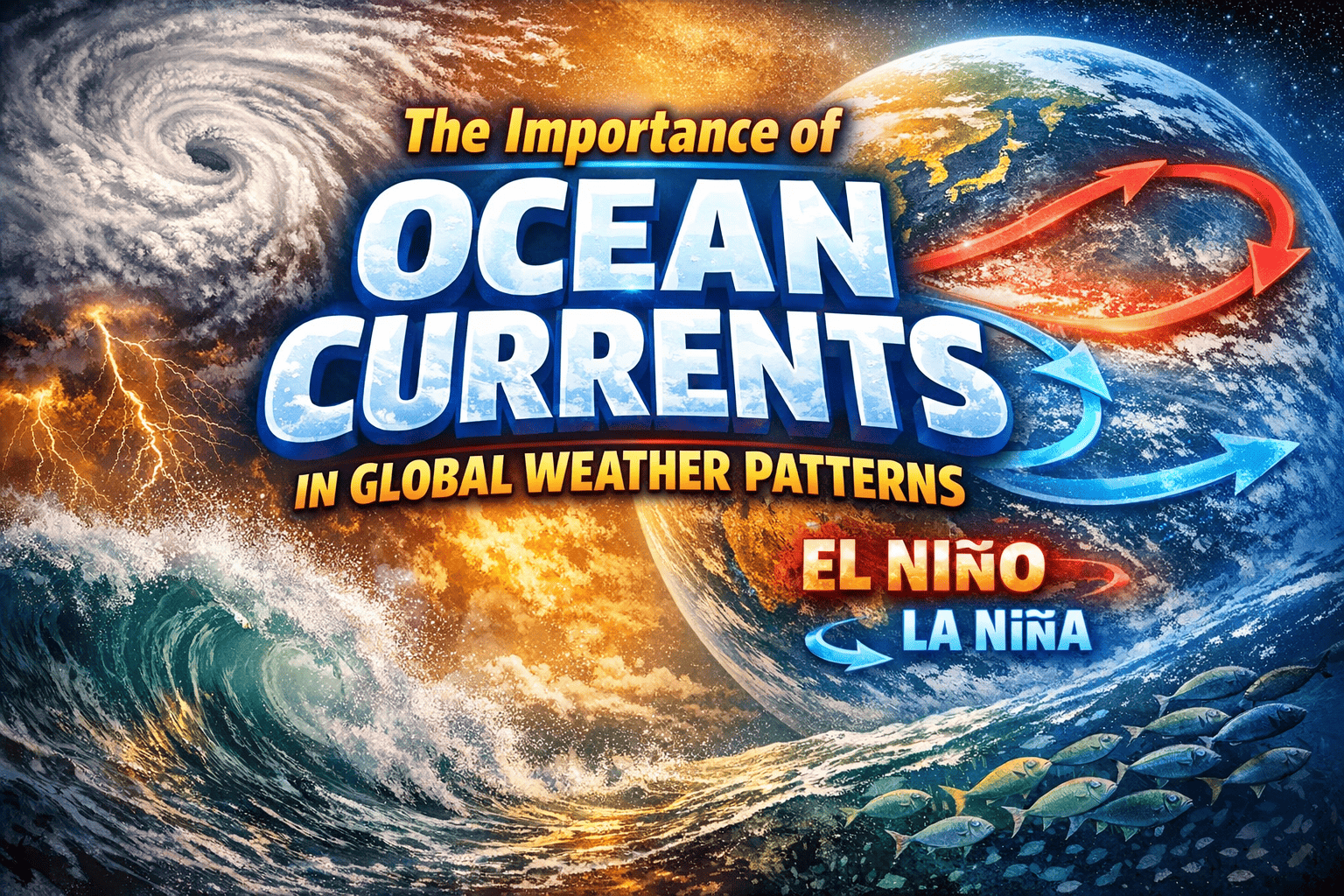
The Importance of Ocean Currents in Global Weather
The Importance of Ocean Currents in Global Weather Patterns
Table of Contents
- Introduction to Ocean Currents and Their Role in Weather
- What Are Ocean Currents?
- Why Ocean Currents Matter for Weather
- How Ocean Currents Influence Global Climate
- Ocean Currents and Climate Regulation
- The Role of Ocean Currents in Heat Distribution
- The Connection Between Ocean Currents and Weather Patterns
- Ocean Currents and Storm Development
- Ocean Currents’ Role in El Niño and La Niña Events
- The Impact of Ocean Currents on Marine Ecosystems
- How Ocean Currents Affect Marine Life
- Currents and Marine Biodiversity
- Human Influence on Ocean Currents
- The Impact of Climate Change on Ocean Currents
- How Human Activities Alter Ocean Currents
- Future Trends in Ocean Currents and Global Weather
- Advancements in Ocean Current Research
- The Importance of Monitoring Ocean Currents
- Conclusion: The Critical Role of Ocean Currents in Global Weather
Introduction to Ocean Currents and Their Role in Weather
What Are Ocean Currents?
Ocean currents are large-scale flows of water within the world’s oceans that are driven by various factors, including wind, salinity differences, and temperature gradients. These currents can be surface currents, which are driven by wind patterns, or deep-water currents, which are influenced by density differences in seawater. Together, ocean currents create a vast, interconnected system that plays a critical role in maintaining global weather patterns and climate regulation.
These currents are essential in moving heat, nutrients, and gases throughout the ocean, influencing both marine ecosystems and the atmosphere. Without ocean currents, our planet would experience drastically different weather patterns, and the regulation of temperature would become far more erratic.
Why Ocean Currents Matter for Weather
Ocean currents are not just important for marine life; they are crucial in shaping global weather systems. By transporting warm water from the equator to the poles and cold water from the poles to the equator, ocean currents help regulate the Earth’s temperature. This process is vital in determining the temperature of coastal areas, the strength of storms, and the overall climate of various regions.
In addition, the heat absorbed and transported by ocean currents plays a significant role in creating the conditions for extreme weather patterns, such as hurricanes, typhoons, and storms. The interaction between ocean temperatures and atmospheric pressure patterns ultimately dictates the intensity of these storms.
How Ocean Currents Influence Global Climate
Ocean Currents and Climate Regulation
Ocean currents act as a thermostat for the planet. They distribute heat from the warm equator to the cooler polar regions, moderating the Earth’s climate and preventing extreme temperature variations. For example, the Gulf Stream, one of the strongest ocean currents in the Atlantic Ocean, transports warm water from the Gulf of Mexico to Western Europe, making areas like the United Kingdom warmer than they would otherwise be at that latitude.
Without these currents, many parts of the Earth would be too cold or too hot to support life. Ocean currents help maintain the delicate balance needed for a stable climate, and disruptions in this system could have widespread impacts on global weather patterns.
The Role of Ocean Currents in Heat Distribution
Ocean currents play a vital role in heat distribution, ensuring that energy from the sun is spread across the globe. Warm water from the equator is carried by surface currents toward the poles, while cold water from the polar regions is carried back to the equator by deep-water currents. This movement helps regulate global temperatures and creates the climate zones we see on Earth.
When ocean currents change, such as when they slow down or shift their course due to climate change, it can lead to significant disruptions in weather patterns. For example, when warm water accumulates in the Pacific Ocean, it can cause shifts in rainfall patterns, leading to droughts or floods in other parts of the world.
The Connection Between Ocean Currents and Weather Patterns
Ocean Currents and Storm Development
Ocean currents are also deeply connected to the development of storms. Warm water, which is transported by ocean currents, provides the energy necessary for storm formation. Hurricanes and typhoons, for instance, develop over warm ocean waters, where they draw heat and moisture to fuel their growth. The intensity of these storms is directly linked to the temperature of the water they form over.
When ocean currents carry warm water into different regions, it can cause a dramatic increase in storm activity. This explains why certain areas, such as the Caribbean or the Gulf of Mexico, are prone to more frequent and intense hurricanes during the warm summer months.
Ocean Currents’ Role in El Niño and La Niña Events
One of the most well-known weather phenomena influenced by ocean currents is El Niño and La Niña, both of which have a significant impact on global weather patterns. El Niño occurs when warm ocean waters in the Pacific Ocean shift eastward, altering atmospheric pressure and disrupting normal weather patterns. Conversely, La Niña is the opposite effect, where cooler-than-average waters in the Pacific lead to changes in precipitation and storm patterns.
Both of these events are directly tied to changes in ocean currents and have far-reaching effects on global weather, including droughts, floods, and more frequent storms. By studying these patterns, scientists can better predict and prepare for extreme weather events.
The Impact of Ocean Currents on Marine Ecosystems
How Ocean Currents Affect Marine Life
Ocean currents are essential for maintaining healthy marine ecosystems. They transport nutrients from deep waters to the surface, where they provide food for marine plants and plankton. These nutrients are then passed along the food chain, supporting diverse marine life. Without ocean currents, many marine species would struggle to survive due to a lack of nutrients.
Currents also help distribute marine larvae, allowing species to spread and maintain their populations across vast distances. In fact, ocean currents are crucial for the migration of certain species, including whales, sea turtles, and fish. Disruptions in ocean currents, due to climate shifts or human activity, can therefore have detrimental effects on marine biodiversity.
Currents and Marine Biodiversity
The strength and direction of ocean currents play a key role in shaping marine biodiversity. Areas where currents are strong, such as upwelling zones, often have higher levels of productivity and biodiversity. For example, the upwelling off the coast of Peru brings nutrient-rich water to the surface, supporting one of the most productive marine ecosystems on Earth.
When ocean currents change or slow down, it can lead to a decrease in marine biodiversity. Areas that once supported thriving ecosystems may no longer be able to sustain the same variety of species, leading to population declines and ecosystem imbalances.
Human Influence on Ocean Currents
The Impact of Climate Change on Ocean Currents
Climate change is having a profound impact on ocean currents. As global temperatures rise, the amount of heat absorbed by the ocean increases, causing shifts in the movement of currents. Warmer waters cause the surface layer of the ocean to expand, which can slow down or even reverse the flow of certain currents.
Changes in ocean currents can disrupt climate patterns, increase storm intensity, and even affect the global carbon cycle. With the continued acceleration of climate change, these disruptions are expected to become more severe, leading to even more unpredictable weather.
How Human Activities Alter Ocean Currents
Human activities, particularly those that increase greenhouse gas emissions, are also affecting ocean currents. The increase in carbon dioxide (CO2) and other gases has warmed the planet, causing changes in ocean temperatures and altering the natural flow of currents. Additionally, human activities like deforestation and pollution contribute to the warming of oceans and disruption of normal current patterns.
Future Trends in Ocean Currents and Global Weather
Advancements in Ocean Current Research
Scientists are making great strides in studying ocean currents and understanding their role in weather patterns. Advances in satellite technology, oceanographic research, and climate modeling are helping scientists predict how ocean currents will evolve in response to global warming. This research is essential for improving weather predictions and climate change mitigation strategies.
The Importance of Monitoring Ocean Currents
As ocean currents continue to play a vital role in shaping global weather, it’s crucial to monitor their movements more closely. Long-term data collection and research will allow us to better understand how ocean temperature rise and climate shifts affect these currents. With improved monitoring, we can make more informed decisions about coastal management, marine conservation, and disaster preparedness.
Conclusion: The Critical Role of Ocean Currents in Global Weather
Ocean currents are an integral part of the Earth’s climate system, influencing everything from storm formation to marine ecosystems. As climate shifts continue to affect our planet, it’s crucial to understand the role of ocean currents in shaping weather patterns and global climate. By studying and monitoring these currents, we can better prepare for the impacts of climate change and work toward protecting both our planet and its oceans.
FAQs
1. How do ocean currents influence weather patterns?
Ocean currents transport heat across the globe, impacting weather systems by regulating temperature and moisture in the atmosphere, which affects storm formation and climate patterns.
2. What is the role of ocean currents in climate regulation?
Ocean currents help distribute heat and nutrients across the Earth, maintaining global climate stability by preventing extreme temperature fluctuations.
3. How do changes in ocean currents affect storm development?
Changes in ocean currents, such as the warming of sea surface temperatures, provide more energy for storms, leading to stronger hurricanes and tropical cyclones.
4. What is El Niño and how does it relate to ocean currents?
El Niño is a climate phenomenon driven by shifts in ocean currents, where warm water accumulates in the Pacific Ocean, disrupting global weather patterns and leading to extreme weather events.
5. How does climate change affect ocean currents?
Climate change leads to warmer oceans, which can slow or change the direction of ocean currents, causing disruptions in weather patterns and marine ecosystems.
6. What is the importance of studying ocean currents?
Studying ocean currents is crucial for understanding global weather systems, improving climate models, and developing coastal resilience strategies.
7. How do ocean currents impact marine life?
Ocean currents help distribute nutrients and marine larvae, supporting marine biodiversity and sustaining ecosystems.
8. What are the effects of slowing ocean currents on marine ecosystems?
Slowing ocean currents can reduce nutrient distribution, leading to decreased productivity and marine biodiversity loss.
9. Can human activities affect ocean currents?
Yes, human activities, such as carbon emissions and pollution, contribute to global warming, which disrupts ocean currents and affects global weather patterns.
10. How can we monitor ocean currents in the future?
New technologies like satellite monitoring and ocean sensors will help improve ocean current forecasting and provide valuable data for climate adaptation strategies.
Explore More on Ocean Currents and Their Impact on Weather
