
12Feb
Ocean Science Lesson Plans for High School & University
Table of Contents
- Introduction to Ocean Science Education
- Why Ocean Science is Important for Students
- Overview of Ocean Science Topics
- Key Elements of Effective Ocean Science Lesson Plans
- Clear Learning Objectives
- Hands-on and Interactive Activities
- Integrating Technology and Multimedia
- Ocean Science Lesson Plans for High School
- Marine Biology for Beginners
- Oceanography Basics and Earth’s Oceans
- Protecting Marine Ecosystems
- Ocean Science Lesson Plans for University
- Advanced Oceanography and Climate Change
- The Role of Oceans in Global Systems
- Research Projects and Data Collection
- Evaluating Student Learning in Ocean Science
- Quizzes and Exams
- Group Projects and Presentations
- Conclusion: Enhancing Ocean Science Education
Introduction to Ocean Science Education
Why Ocean Science is Important for Students
Ocean science offers an exciting and vital subject for both high school and university students. As the Earth's oceans cover over 70% of the planet’s surface and are critical to global processes like weather patterns, climate regulation, and supporting marine ecosystems, studying ocean science provides students with a comprehensive understanding of how the world works. It also introduces them to the complex and interconnected relationships between the ocean, atmosphere, and land.
Understanding marine science can lead to an appreciation of the vital importance of ocean health and conservation, giving students the tools to participate in the protection of the planet’s most vital resources. It also opens up a wide array of career opportunities, from marine biology to oceanography and environmental science. By learning ocean science, students also gain the knowledge and skills necessary to address pressing global issues like climate change, pollution, and biodiversity loss.
Overview of Ocean Science Topics
Ocean science covers a broad range of topics that are fascinating and educational. Some key areas of focus include marine biology, oceanography, marine chemistry, and climate science. Marine biology lessons dive into the life forms that inhabit the oceans, from the smallest plankton to the largest whales. Oceanography, on the other hand, delves into the physical characteristics of the oceans, such as currents, waves, and ocean floor structures. Other topics in ocean science explore marine ecosystems, pollution, and the effects of climate change on the oceans.
By incorporating these diverse topics into lesson plans, educators can provide students with a well-rounded understanding of the oceans' role in sustaining life on Earth. Whether at the high school or university level, ocean science is an exciting field that can inspire the next generation of scientists, environmentalists, and policymakers.
Key Elements of Effective Ocean Science Lesson Plans
Clear Learning Objectives
A successful ocean science lesson plan begins with clear learning objectives. Students should understand what they are expected to learn by the end of the lesson and how these lessons contribute to the broader understanding of the oceans and their significance. These objectives should be specific, measurable, achievable, relevant, and time-bound (SMART). For instance, a lesson on marine ecosystems might have an objective like: "Students will be able to describe the components of a coral reef ecosystem and understand its role in marine biodiversity."
By clearly outlining the goals and expected outcomes, teachers can help students stay focused and engaged, ensuring that lessons are both informative and relevant. Clear learning objectives also help in assessing student progress and understanding throughout the course.
Hands-on and Interactive Activities
Ocean science is a subject that greatly benefits from hands-on activities. Whether it's collecting water samples, observing marine life in aquariums, or experimenting with ocean currents in a controlled lab setting, interactive learning can bring complex scientific concepts to life. Hands-on oceanography projects allow students to apply theory to real-world scenarios, making the learning experience more engaging and impactful.
For example, high school students could study the impact of pollution on marine ecosystems by conducting water quality tests, while university students might participate in field research to measure ocean salinity or temperature. Incorporating marine science experiments into lesson plans ensures that students are actively participating in their learning and makes the subject matter more tangible and relevant.
Integrating Technology and Multimedia
In today’s digital age, technology and multimedia play an essential role in ocean science education. From virtual field trips to interactive oceanography simulations, the use of technology can enhance students' understanding of complex marine systems. For instance, virtual reality (VR) can take students on a dive beneath the ocean's surface, giving them a first-hand view of coral reefs or deep-sea environments without leaving the classroom.
Additionally, multimedia resources such as documentaries, podcasts, and online data sets can provide valuable context and deepen students' understanding. For example, teachers can use video clips of ocean exploration or climate change documentaries to emphasize the importance of ocean conservation. These technological tools not only make learning more interactive but also help students stay engaged and motivated.
Ocean Science Lesson Plans for High School
Marine Biology for Beginners
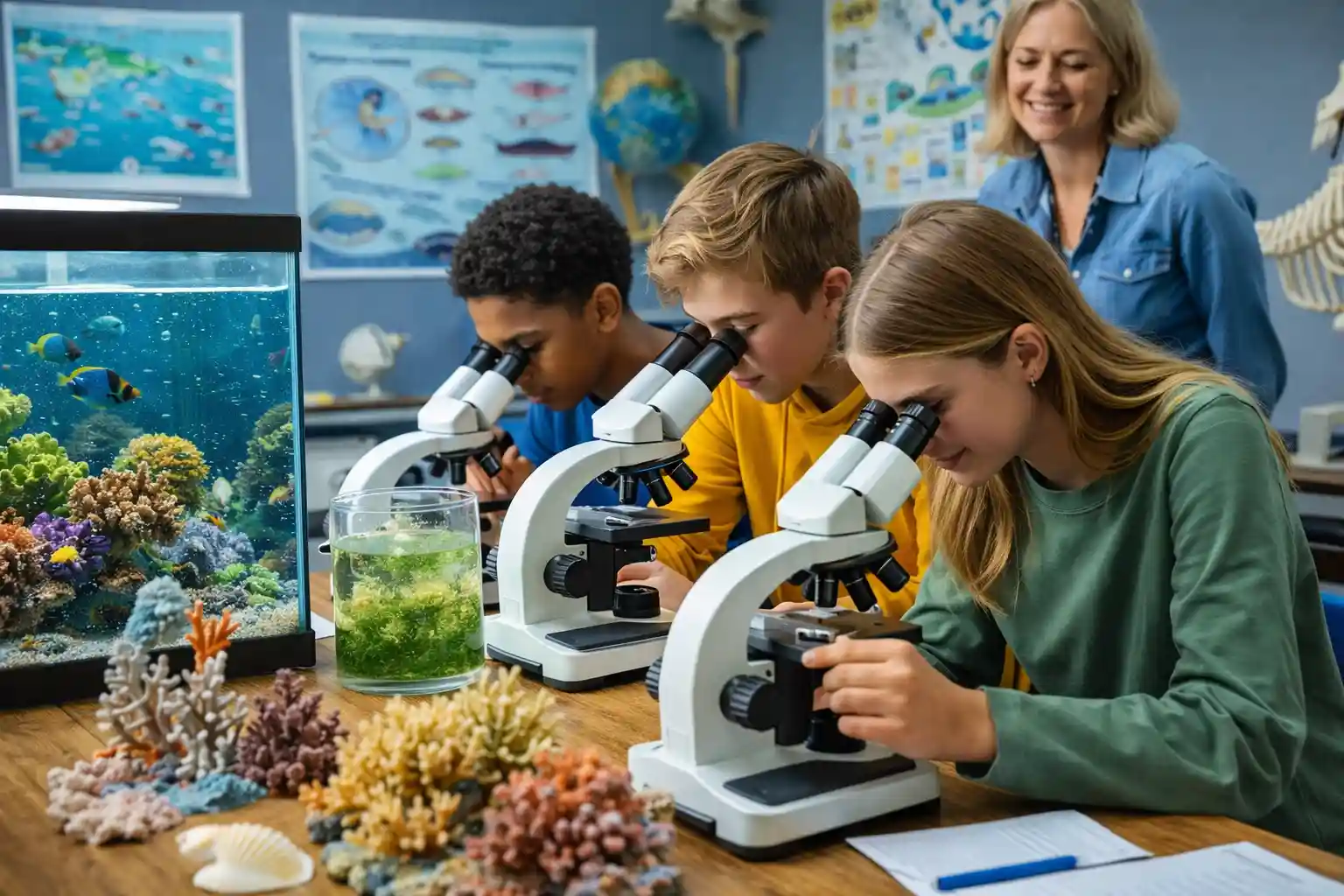
For high school students, marine biology lessons are an excellent way to introduce them to the fascinating world of ocean life. These lessons cover everything from the smallest microorganisms to the largest marine animals. Students learn about the different types of marine ecosystems, including coral reefs, deep-sea habitats, and open ocean environments.
An effective marine biology lesson might involve students identifying various marine species, understanding their roles within ecosystems, and discussing the challenges they face due to human activity, such as overfishing and habitat destruction. Students can also explore how marine organisms adapt to different environmental conditions and the role of marine life in maintaining ocean health.
Oceanography Basics and Earth’s Oceans
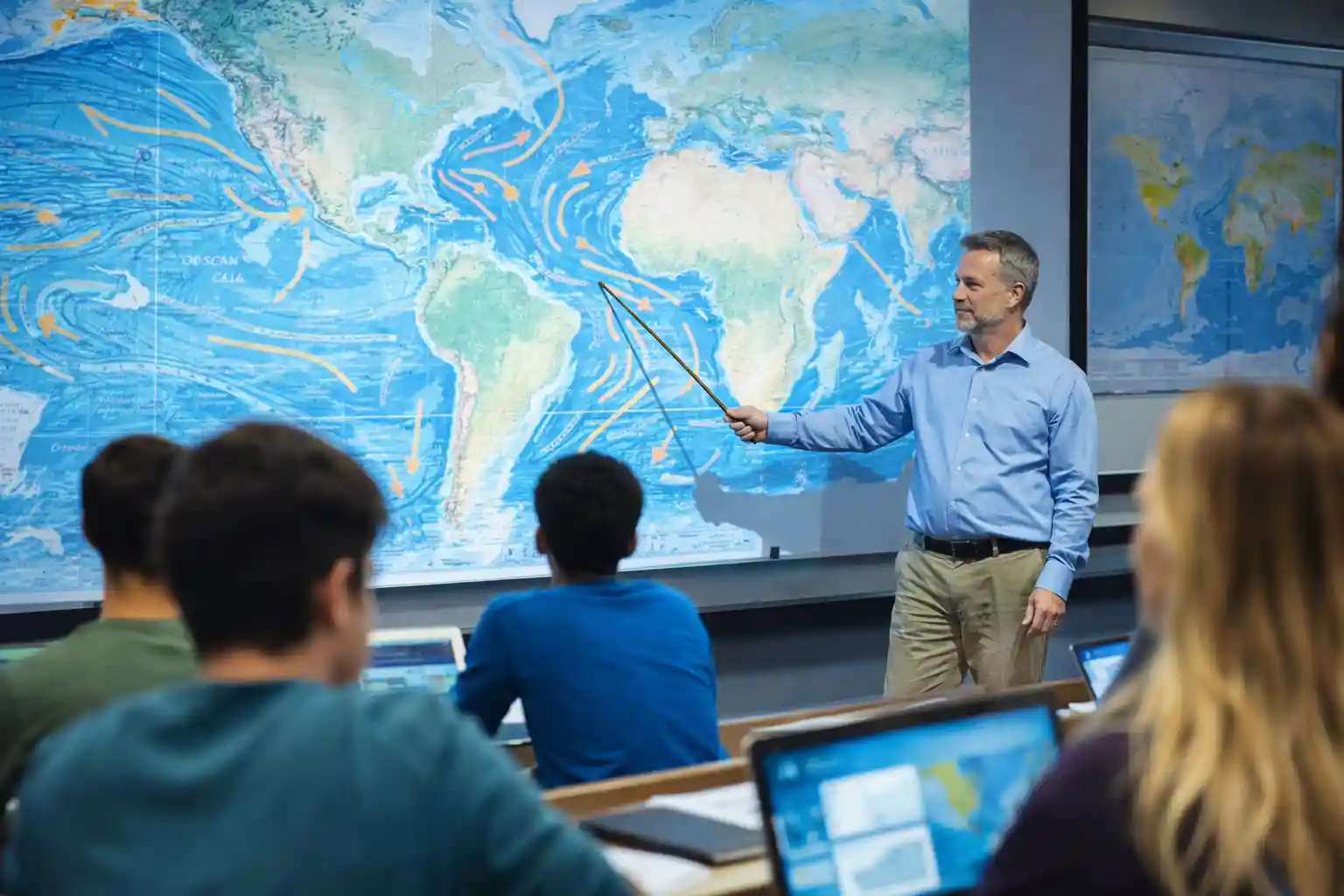
An introduction to oceanography at the high school level should cover the basics of ocean structure and dynamics. Students will learn about the different ocean layers, ocean currents, tides, and waves. This foundational knowledge sets the stage for more advanced studies in oceanography later on.
A practical activity could involve students measuring the temperature and salinity of water samples to understand how these factors influence ocean currents. They can also explore how currents affect weather patterns, such as the Gulf Stream’s warming influence on Western Europe. Understanding these fundamental concepts helps students connect the science of the oceans to real-world issues like climate change and sea level rise.
Protecting Marine Ecosystems
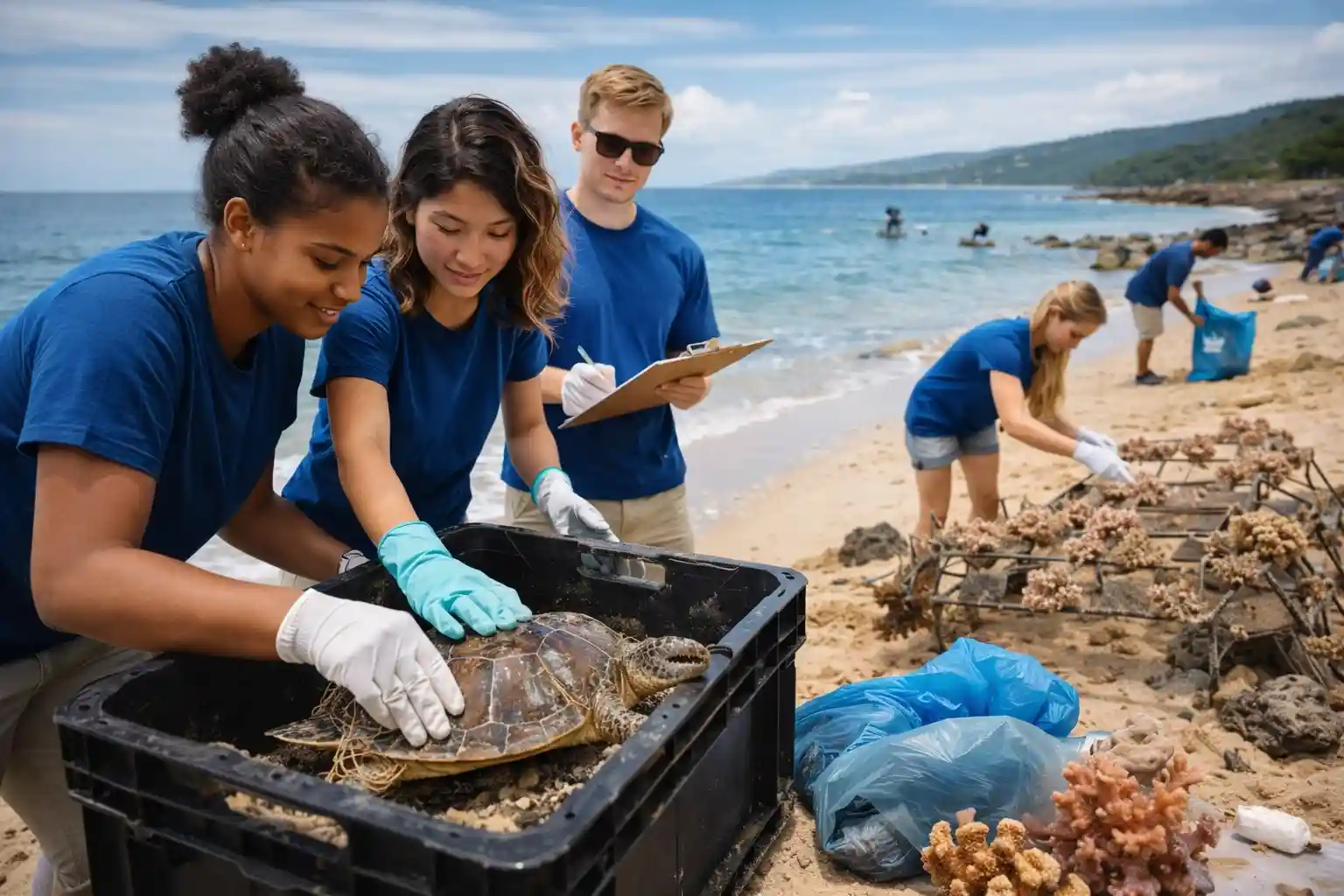
High school students should also learn about the importance of protecting marine ecosystems. Lessons can focus on the threats to marine environments, including pollution, climate change, and unsustainable fishing practices. Students can engage in discussions about the impacts of human activity on marine ecosystems and explore solutions for protecting vulnerable species and habitats.
Interactive activities might include creating awareness campaigns on ocean pollution, conducting research on marine protected areas, or discussing international conservation efforts like the UN’s Sustainable Development Goal 14 (Life Below Water).
Ocean Science Lesson Plans for University
Advanced Oceanography and Climate Change
At the university level, students can dive deeper into advanced oceanography topics, particularly the relationship between oceans and climate change. In these lessons, students learn how the oceans regulate Earth's climate, absorb carbon dioxide, and influence weather patterns.
These lessons might include detailed studies of ocean circulation, the role of the oceans in the carbon cycle, and how climate change is affecting ocean temperature and salinity. Students can also analyze data from oceanic research vessels or satellites to understand the current state of the oceans and their contribution to global climate systems.
The Role of Oceans in Global Systems
University students should understand the role of oceans in global systems, including the water cycle, nutrient cycling, and their influence on weather and climate. They will explore how ocean systems interact with atmospheric processes and how these interactions affect global temperatures, precipitation patterns, and storm development.
Lectures and group discussions can delve into specific topics like El Niño and La Niña, which are driven by changes in ocean temperatures and currents. Students can also conduct experiments and use models to study these phenomena and predict their potential impacts on global climates.
Research Projects and Data Collection
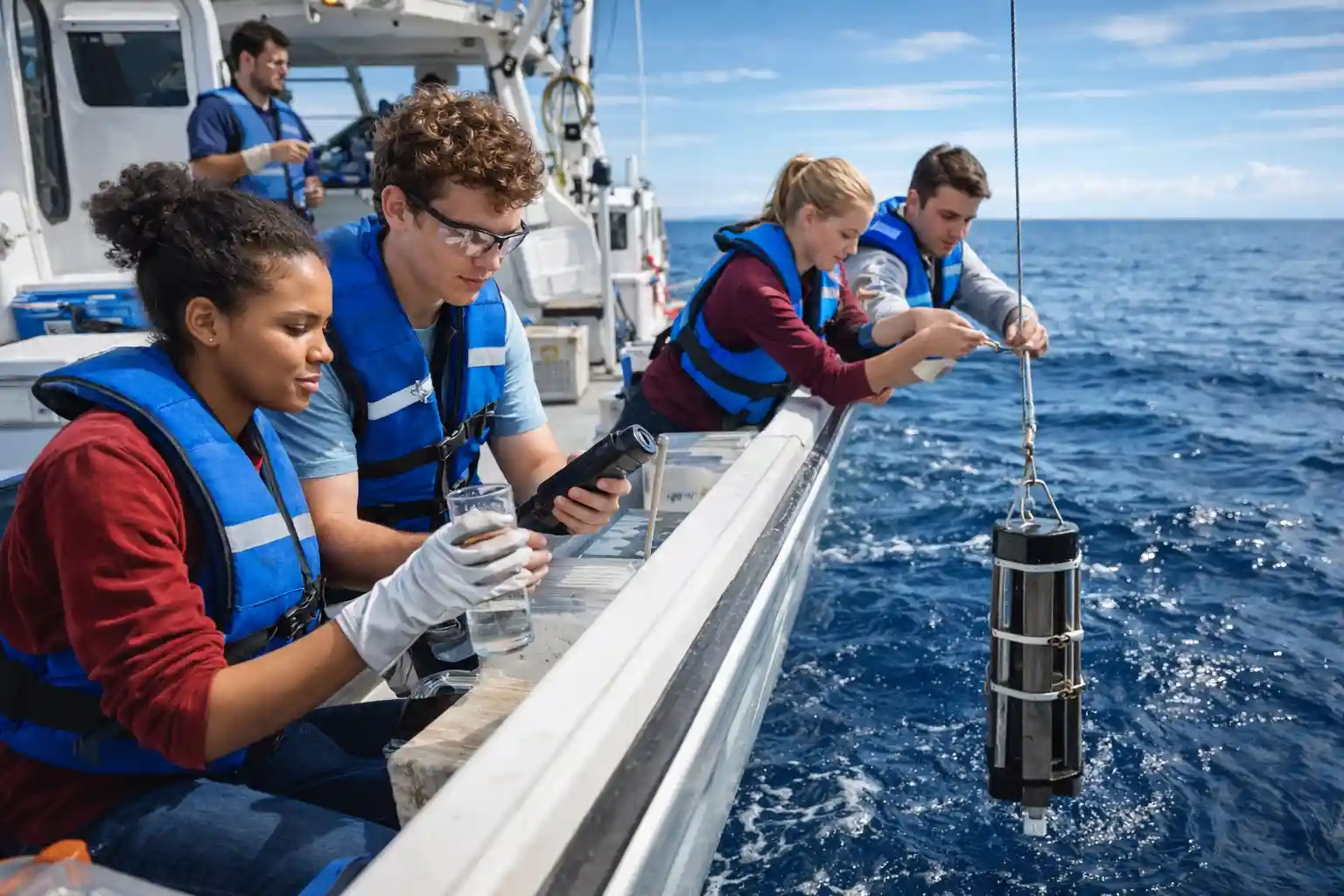
University students are expected to conduct their own research projects and data collection, often involving fieldwork or lab experiments. These projects might focus on studying marine life, ocean chemistry, or the impact of human activity on ocean ecosystems. Students can use a variety of tools and methodologies, such as GIS (Geographic Information Systems), environmental sensors, and data analysis software, to gather and analyze oceanic data.
These hands-on projects not only enhance their understanding of ocean science but also prepare them for careers in marine research, conservation, and policy development.
Evaluating Student Learning in Ocean Science
Quizzes and Exams
Assessing student learning in ocean science can be done through traditional methods like quizzes and exams. These assessments can test students' knowledge of ocean science concepts, from the fundamentals of marine ecosystems to advanced oceanographic principles.
Questions could include multiple-choice, true/false, or short-answer questions that focus on key topics like ocean currents, marine biology, and ocean conservation strategies.
Group Projects and Presentations
In addition to written assessments, group projects and presentations are an excellent way to evaluate student learning. These projects encourage teamwork, research, and the presentation of findings in a clear and professional manner.
For example, students could collaborate on a project to design a marine conservation plan or present their research on a specific oceanic phenomenon. These assignments help students apply their knowledge and develop skills in research, analysis, and communication.
Conclusion: Enhancing Ocean Science Education
In conclusion, ocean science lesson plans play a crucial role in educating students about the oceans’ importance in regulating climate, supporting biodiversity, and providing resources. From high school through to university, ocean science offers fascinating opportunities to learn about marine life, environmental science, and global systems. By incorporating clear learning objectives, hands-on activities, and interactive technologies into lesson plans, educators can inspire the next generation of marine scientists and environmental advocates.
Explore Ocean Science Lesson Plans and Resources Here
FAQs
1. What topics are covered in ocean science lessons?
Ocean science lessons cover a wide range of topics, including marine biology, oceanography, ocean ecosystems, and climate change.
2. Why is ocean science important for students?
Ocean science helps students understand the vital role oceans play in regulating climate, providing food, and supporting marine biodiversity.
3. What are the best teaching resources for ocean science?
Resources include textbooks, documentaries, online platforms, hands-on projects, and interactive tools like oceanography simulations.
4. How can high school students study marine biology?
High school students can study marine biology through interactive lessons, field trips, lab experiments, and research projects.
5. What is the role of ocean currents in climate?
Ocean currents regulate global temperatures, influence weather patterns, and impact climate systems like El Niño and La Niña.
6. How can technology be used in ocean science education?
Technology like virtual field trips, interactive simulations, and online research tools enhances learning and provides real-world experiences.
7. What career opportunities are available in ocean science?
Careers include marine biology, oceanography, marine conservation, and policy-making related to environmental protection.
8. What skills do students need for marine science?
Key skills include analytical thinking, problem-solving, data collection, and effective communication.
9. How do universities incorporate ocean science into their curriculum?
Universities offer advanced courses in oceanography, marine ecosystems, climate change, and ocean conservation, often involving fieldwork and research projects.
10. What are the benefits of learning about marine ecosystems?
Learning about marine ecosystems helps students understand the complex relationships between marine life and their environment, fostering an appreciation for conservation and sustainability.
