
3Feb
How Oceans Regulate the Earth’s Climate
Introduction to Oceans and Climate Regulation
Oceans are often referred to as the "lungs of the Earth," playing a vital role in maintaining the balance of our planet's climate system. Oceans are immense bodies of water that cover more than 70% of Earth's surface, and their importance in regulating the climate cannot be overstated. They influence global temperatures, weather patterns, and even atmospheric conditions. But how exactly do oceans regulate the Earth’s climate? Let’s dive in and explore the intricacies of this relationship.
Key Takeaways
- Oceans cover over 70% of Earth's surface and play a crucial role in regulating climate.
- They influence weather, temperature, and atmospheric conditions.
- Ocean currents and heat absorption contribute to global temperature stability.
Importance of Oceans in Earth's Climate System
Oceans are integral to Earth's climate system, acting as massive heat sinks, carbon reservoirs, and key players in the global water cycle. Without the oceans, our planet would experience extreme fluctuations in temperature, making life unsustainable. The oceans’ ability to absorb, store, and release heat helps stabilize the global climate. They also regulate the movement of heat and moisture, affecting both land and air conditions.
Key ways oceans influence the climate include:
- Heat Regulation: Oceans store heat and help distribute it evenly across the globe, reducing temperature extremes.
- Carbon Storage: Oceans absorb carbon dioxide (CO2), mitigating the effects of greenhouse gases.
- Weather Patterns: Oceanic processes influence precipitation and global weather systems.
- Climate Moderation: Oceans provide a buffer against drastic temperature fluctuations, helping to moderate Earth's climate.
The Role of Ocean Currents in Climate Regulation
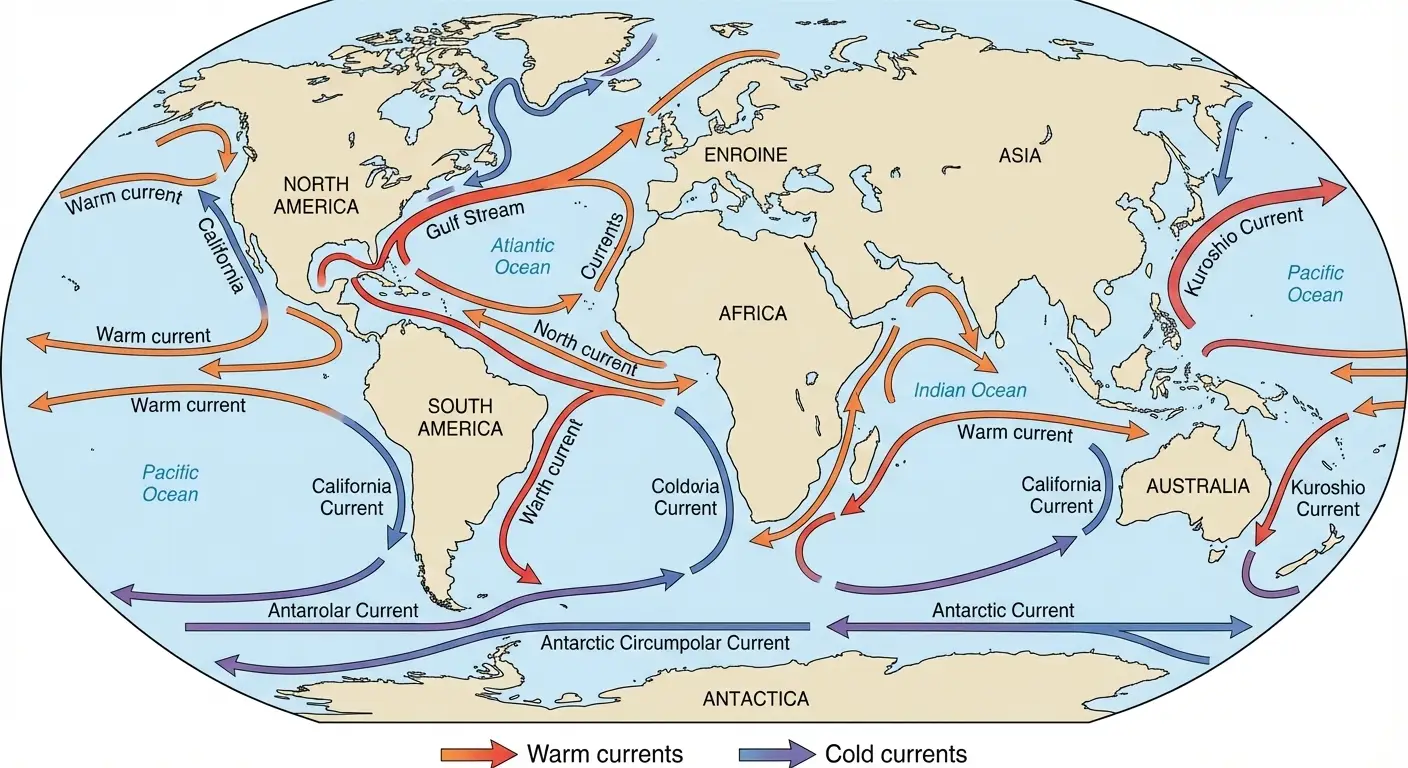
Ocean currents are a fundamental part of the Earth's climate system. These currents are driven by wind, the Earth’s rotation, salinity gradients, and temperature differences. Ocean currents circulate vast amounts of heat across the globe, playing a pivotal role in distributing warmth from the equator to higher latitudes.
Surface Currents and Global Climate Patterns
Surface currents, such as the Gulf Stream and the Kuroshio Current, are responsible for transferring warm water from the tropics to cooler regions. These currents help maintain moderate temperatures along coastal areas and contribute to the regulation of global climate patterns. For instance, the Gulf Stream warms parts of Western Europe, making them far warmer than other regions at similar latitudes.
Deep Ocean Circulation and Heat Distribution
Deep ocean currents, also known as thermohaline circulation, play a crucial role in the global heat distribution process. These currents transport cold water from the polar regions to the equator and vice versa. This movement of water helps redistribute heat, affecting climate stability on a global scale. The deep ocean circulation is sometimes referred to as the "global conveyor belt" due to its role in transporting heat and nutrients around the globe.
Oceans as a Carbon Sink
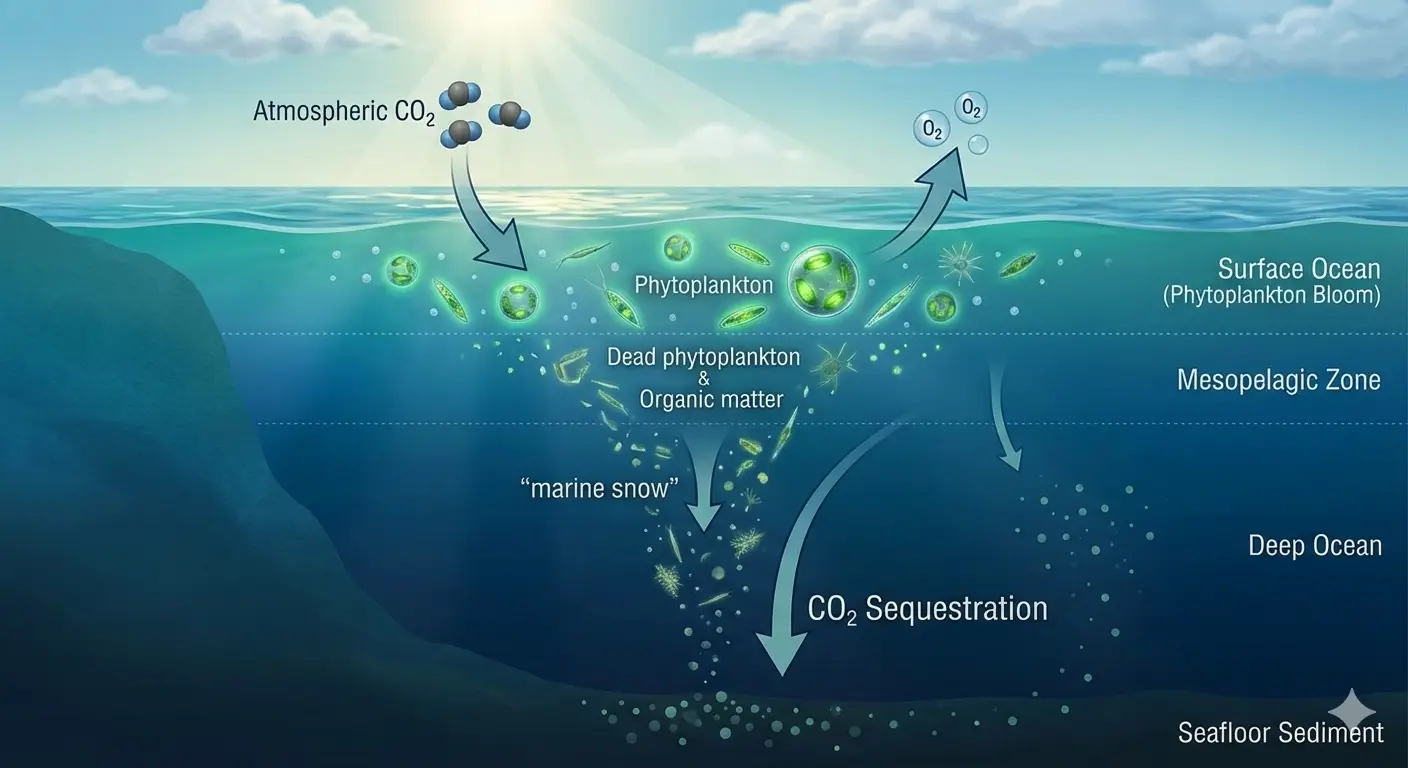
One of the oceans’ most important functions in climate regulation is their role as a carbon sink. Oceans absorb a significant amount of carbon dioxide from the atmosphere, which helps mitigate the effects of global warming. This process plays a key role in regulating the amount of CO2 in the air, which would otherwise contribute to the greenhouse effect and raise global temperatures.
Absorption of CO2 and its Impact on Global Warming
The absorption of CO2 by oceans helps to reduce the greenhouse effect, which is the primary driver of global warming. Phytoplankton, the tiny plants in the ocean, absorb carbon dioxide during photosynthesis. This carbon is then stored in the ocean's surface layer, where it can remain for hundreds or even thousands of years. However, the ability of oceans to absorb carbon is not unlimited, and increasing levels of CO2 could eventually overwhelm the oceans' capacity.
The Carbon Cycle and Oceanic Processes
The carbon cycle is a crucial part of how oceans regulate the Earth's climate. In this cycle, carbon is exchanged between the atmosphere, land, and oceans. Oceans help remove CO2 from the atmosphere through a process called the "biological pump," where phytoplankton absorb CO2 and convert it into organic carbon. When these organisms die, the carbon is transported to deeper ocean layers, where it remains stored for long periods.
How Oceans Influence Weather Patterns
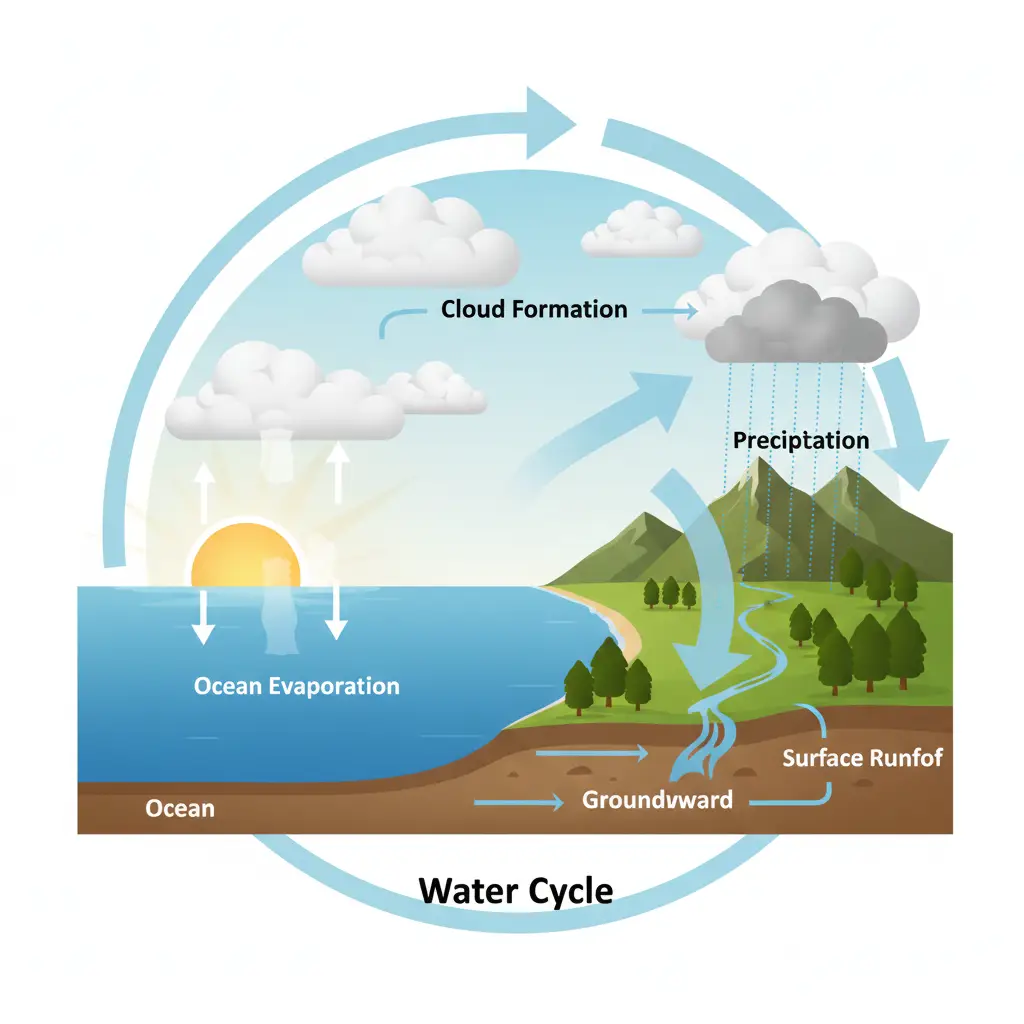
Oceans also play a critical role in shaping the Earth’s weather patterns. From regulating rainfall to fueling powerful storms, oceans have a significant impact on both short-term weather and long-term climate systems.
The Water Cycle and Precipitation
The ocean's role in the water cycle is essential for precipitation and the distribution of freshwater across the globe. As water evaporates from the surface of the ocean, it forms clouds that eventually bring rain to the land. This process helps regulate the Earth's water supply and supports the growth of ecosystems both on land and in water.
Oceans and Tropical Storms
Tropical storms, such as hurricanes and typhoons, are fueled by the heat from warm ocean waters. These storms draw their energy from the ocean's surface temperature, which is why they are more intense when sea surface temperatures are high. Warm oceans can intensify storms and influence weather patterns around the world.
Oceans and Global Temperature Regulation
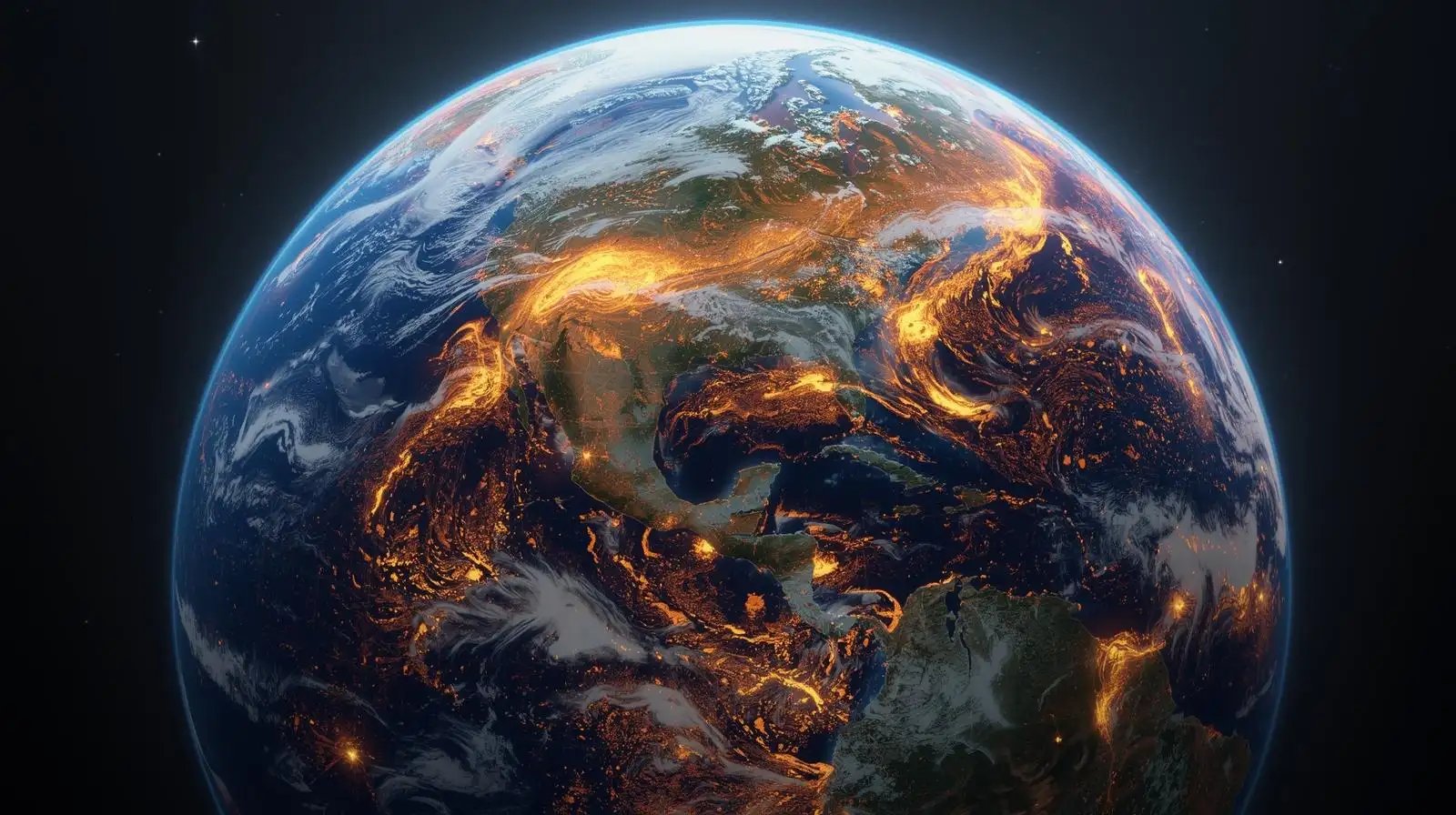
Oceans are often referred to as the planet’s thermostat due to their role in regulating global temperatures. They act as a massive heat sink, absorbing solar radiation and slowly releasing it over time, ensuring a relatively stable temperature.
Heat Absorption and Storage in the Oceans
The vast size and depth of the oceans allow them to absorb large amounts of heat without experiencing dramatic temperature changes. This ability to store and release heat helps to moderate the Earth's temperature, preventing rapid temperature fluctuations that could disrupt ecosystems and human life.
The Role of Ocean Heat in Climate Stability
Ocean heat plays a crucial role in maintaining climate stability. By absorbing excess heat, oceans prevent overheating in the atmosphere, helping to keep the Earth’s temperature within a range that is conducive to life. This heat absorption also contributes to long-term climate stability by moderating fluctuations in temperature over time.
Impact of Oceanic Changes on Climate Change
The health of the oceans is closely linked to climate change. As the climate warms, oceans are experiencing changes that can have significant consequences for global climate patterns.
Effects of Ocean Warming on Climate
Ocean warming is one of the most concerning impacts of climate change. As the oceans absorb more heat from the atmosphere, sea surface temperatures rise, leading to the melting of polar ice caps and the disruption of weather patterns. This warming also leads to the loss of marine biodiversity and the weakening of oceanic currents, which could further destabilize the climate system.
Conclusion: The Crucial Role of Oceans in Climate Regulation
In conclusion, the oceans are indispensable in regulating the Earth’s climate. From controlling temperatures to influencing weather patterns, oceans play a crucial role in maintaining the balance of our climate system. As climate change accelerates, it is essential to recognize and protect the oceans, as their health directly affects the stability of our planet's climate. The oceans are not just vast bodies of water; they are powerful regulators of life on Earth.
Click here to learn more about how oceans regulate Earth's climate!
FAQs
1. How do oceans regulate Earth's climate?
Oceans regulate Earth's climate by absorbing and storing heat, distributing it around the globe through ocean currents, and absorbing carbon dioxide, which helps reduce global warming.
2. What is the role of ocean currents in climate regulation?
Ocean currents distribute heat across the globe, affecting global climate patterns and moderating temperature extremes in coastal areas.
3. Why are oceans considered carbon sinks?
Oceans absorb large amounts of carbon dioxide from the atmosphere, helping to mitigate the effects of global warming by reducing the concentration of greenhouse gases.
4. How does ocean temperature affect weather patterns?
Warmer oceans can intensify tropical storms and hurricanes, while the evaporation of ocean water contributes to precipitation patterns and the global water cycle.
5. What is thermohaline circulation?
Thermohaline circulation is the deep ocean current that moves cold water from the polar regions to the equator and warm water from the equator to higher latitudes, helping to regulate Earth's climate.
6. How does the carbon cycle impact the oceans?
The carbon cycle involves the movement of carbon between the ocean, atmosphere, and land. Oceans act as a major storage location for carbon, helping to regulate atmospheric CO2 levels.
7. How do oceans influence tropical storms?
Oceans provide the heat and moisture needed to fuel tropical storms. Warmer ocean temperatures lead to more intense and frequent storms, impacting coastal regions.
8. What happens if the oceans continue to warm?
If ocean temperatures continue to rise, it can lead to the loss of marine ecosystems, rising sea levels, and disruptions in oceanic currents, all of which affect global climate stability.
9. Why are oceans considered the Earth’s thermostat?
Oceans act as a "thermostat" by absorbing and releasing heat slowly, helping to maintain a stable global temperature and preventing drastic fluctuations in climate.
10. What is the biological pump?
The biological pump is a process by which marine life, such as phytoplankton, absorbs carbon dioxide from the atmosphere and transports it to the ocean's depths, helping to regulate carbon levels in the atmosphere.
