
24Mar
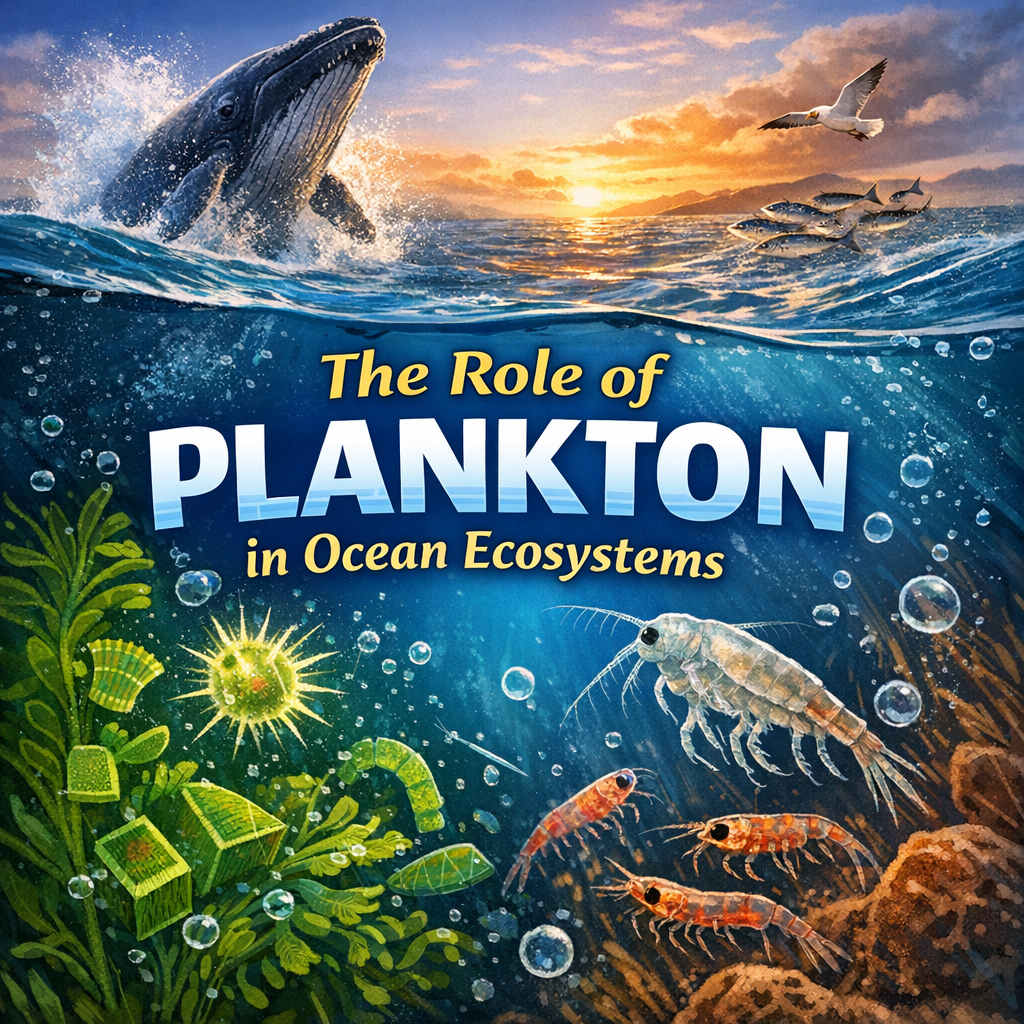
Exploring the Role of Plankton in Ocean Ecosystems Table of Contents Title
Introduction to Plankton and Ocean Ecosystems
What Are Plankton?
The Types of Plankton: Phytoplankton vs. Zooplankton
The Role of Plankton in the Ocean Food Web
Plankton as the Foundation of the Marine Food Web
How Phytoplankton Supports the Ocean’s Productivity
Plankton’s Influence on Ocean Biodiversity
Plankton as a Food Source for Marine Life
The Role of Plankton in Supporting Marine Food Chains
Plankton and Climate Regulation
Plankton’s Role in the Carbon Cycle
How Plankton Affects Global Climate and Ocean Chemistry
Plankton Population Dynamics and Their Impact on Ecosystems
What Causes Plankton Blooms?
The Impact of Climate Change on Plankton Populations
The Challenges Plankton Face in a Changing Ocean
Ocean Acidification and Its Effects on Plankton
Overfishing and Its Impact on Plankton and Marine Life
Future Trends in Plankton Research and Ocean Ecosystem Health
Technological Advancements in Studying Plankton
Monitoring Plankton to Understand Ocean Ecosystems
Conclusion: Plankton as Vital to the Future of Ocean Health
Introduction to Plankton and Ocean Ecosystems
What Are Plankton?
Plankton are tiny organisms that drift with ocean currents, and they form the foundation of the oceanic food web. They come in various forms, including phytoplankton (plant like organisms) and zooplankton (animal like organisms). Despite their small size, plankton play a monumental role in the functioning of marine ecosystems. Phytoplankton are the ocean’s primary producers, performing photosynthesis to create food, while zooplankton feed on them, transferring energy up the food chain.
Plankton are not just important for marine ecosystems they are critical for life on Earth. They produce a large portion of the oxygen we breathe and regulate the Earth’s carbon cycle. Although they are small, they are responsible for much of the ocean’s productivity and the health of the ecosystems that depend on them.
The Types of Plankton: Phytoplankton vs. Zooplankton
Plankton can be broadly categorized into two groups: phytoplankton and zooplankton.
- Phytoplankton: These are tiny plants that float near the ocean’s surface, capturing sunlight and using it to produce energy through photosynthesis. Examples include diatoms and dinoflagellates.
- Zooplankton: These are the animal counterparts to phytoplankton. They feed on phytoplankton and serve as food for larger marine animals. Examples include krill and copepods.
Both types of plankton play an integral role in the marine food web, with phytoplankton being the primary producers and zooplankton being crucial consumers in the lower levels of the food chain.
The Role of Plankton in the Ocean Food Web
Plankton as the Foundation of the Marine Food Web
Plankton are the base of the marine food web and support nearly all ocean life. Phytoplankton, by converting sunlight into organic material, provide the foundation for all oceanic food chains. They serve as the main food source for zooplankton, which in turn become food for larger animals, such as small fish, squid, and even whales.
Because of their pivotal role in the food web, plankton populations determine the health and productivity of marine ecosystems. If plankton populations were to decrease, it would result in a domino effect, disrupting the entire ecosystem. This makes plankton essential not only for the ocean’s food chain but for the biodiversity that thrives within it.
How Phytoplankton Supports the Ocean’s Productivity
Phytoplankton are the ocean’s primary producers, generating energy through photosynthesis. They form the base of the ocean’s food chain and contribute to the ocean’s overall productivity. Without phytoplankton, the marine food web would collapse. In addition to providing food for zooplankton, they support entire ecosystems, including fish, marine mammals, and seabirds.
Furthermore, phytoplankton help regulate the Earth’s climate by absorbing carbon dioxide during photosynthesis, acting as a carbon sink. They play a crucial role in the global carbon cycle, which helps stabilize atmospheric carbon levels.
Plankton’s Influence on Ocean Biodiversity
Plankton as a Food Source for Marine Life
Plankton are the primary food source for a vast range of marine life, from tiny fish to whales. As primary producers, phytoplankton are consumed by zooplankton, which are in turn eaten by small fish. Larger fish and marine mammals, such as sharks, seals, and whales, feed on these smaller organisms. The diversity of plankton species directly influences the abundance of marine life across the ocean.
Without plankton, entire marine ecosystems would collapse, leading to a significant reduction in biodiversity. The health of plankton populations is therefore directly linked to the survival and productivity of marine ecosystems.
The Role of Plankton in Supporting Marine Food Chains
Plankton are the foundation of the marine food chain, and without them, larger animals would have no food source. Zooplankton, which feed on phytoplankton, are an essential link in the food chain that connects the smallest organisms to the largest predators. From krill feeding on phytoplankton to baleen whales feeding on krill, the entire marine food chain relies on plankton.
As plankton populations are impacted by environmental factors such as ocean acidification and rising sea temperatures, the entire food web becomes vulnerable. This highlights how critical plankton are to maintaining the stability of ocean ecosystems.
Plankton and Climate Regulation
Plankton’s Role in the Carbon Cycle
Plankton, particularly phytoplankton, play a significant role in the carbon cycle. During photosynthesis, they absorb large amounts of carbon dioxide from the atmosphere. This carbon is either stored in the ocean or transferred up the food chain to other marine life. Some of it eventually sinks to the ocean floor, where it is sequestered, helping regulate global carbon levels and mitigating the effects of climate change.
By absorbing and storing carbon, plankton contribute significantly to climate regulation, helping to balance the amount of CO2 in the atmosphere and reduce global warming. Their role in the carbon cycle is one of the key reasons why maintaining healthy plankton populations is crucial in the fight against climate change.
How Plankton Affects Global Climate and Ocean Chemistry
The interaction between plankton and the ocean’s chemistry is essential for maintaining a balanced global climate. Phytoplankton’s absorption of carbon dioxide helps reduce the greenhouse gas concentration in the atmosphere, preventing extreme temperature increases. Additionally, plankton influence ocean chemistry by affecting the ocean’s pH levels, which can impact the growth of coral reefs and other marine organisms.
As climate shifts continue, changes in plankton populations can exacerbate climate change and disrupt ocean chemistry. This further underscores the importance of monitoring plankton to understand their role in climate regulation.
Plankton Population Dynamics and Their Impact on Ecosystems
What Causes Plankton Blooms?
Plankton blooms occur when there is an excess of nutrients in the water, often from human activities like agriculture or pollution. These blooms can be both beneficial and harmful. On one hand, they provide a temporary boost in food availability for marine life. On the other hand, harmful algal blooms (HABs) can release toxins that are dangerous to marine animals and humans.
Understanding the factors that cause plankton blooms is vital for managing marine ecosystems and protecting marine biodiversity. Climate change, which can cause shifts in nutrient distribution and ocean temperatures, also affects the frequency and severity of these blooms.
The Impact of Climate Change on Plankton Populations
Climate change has a significant impact on plankton populations. Rising sea temperatures and ocean acidification can lead to shifts in the distribution of plankton species, potentially harming marine life that depends on them. Additionally, extreme weather events may alter the nutrient availability and growth conditions for plankton, further disrupting marine ecosystems.
As ocean temperatures rise, phytoplankton may move towards cooler waters, potentially causing imbalances in the food chain. It is essential to monitor these changes to predict their effects on marine life and global weather systems.
The Challenges Plankton Face in a Changing Ocean
Ocean Acidification and Its Effects on Plankton
Ocean acidification, caused by increased CO2 absorption, has harmful effects on plankton, particularly calcium carbonate based species like foraminifera and coccolithophores. Acidification weakens their shells, making it difficult for them to survive and reproduce. This not only threatens plankton species but also the marine life that depends on them.
Overfishing and Its Impact on Plankton and Marine Life
Overfishing also impacts plankton populations indirectly. When large fish populations are depleted, it disrupts the balance of the food web, making it harder for plankton to survive. Moreover, the destruction of marine habitats, such as coral reefs, further reduces the food sources for plankton, causing a ripple effect throughout marine ecosystems.
Future Trends in Plankton Research and Ocean Ecosystem Health
Technological Advancements in Studying Plankton
Scientists are continuously developing new technologies to better study plankton populations. Autonomous underwater vehicles (AUVs), satellite imagery, and remote sensing technologies help researchers track plankton distributions in real time. These advancements are crucial for understanding how plankton populations are affected by climate change and other environmental stressors.
Monitoring Plankton to Understand Ocean Ecosystems
Ongoing research on plankton and their role in ocean ecosystems is vital for climate change mitigation. By monitoring plankton populations, scientists can gain insights into the health of marine ecosystems and predict future changes in the ocean’s biodiversity. This research will help create effective conservation strategies and protect the oceans from the impacts of climate change.
Conclusion: Plankton as Vital to the Future of Ocean Health
Plankton are the unsung heroes of the ocean. These tiny organisms support marine food webs, regulate climate, and play a key role in the global carbon cycle. As climate change continues to impact the oceans, it is more important than ever to understand the role of plankton in maintaining the health of marine ecosystems. With continued research and monitoring, we can ensure that plankton populations remain stable, helping to protect our oceans for generations to come.
FAQs
What are plankton?
Plankton are tiny organisms that float in the ocean and serve as the foundation of the marine food web. They include phytoplankton (plant like) and zooplankton (animal like).
Why are plankton important for marine life?
Plankton provide the primary food source for most marine organisms, from small fish to whales, supporting marine ecosystems and biodiversity.
How do plankton help regulate climate?
Phytoplankton absorb carbon dioxide from the atmosphere and contribute to the ocean’s ability to regulate global climate by acting as a carbon sink.
What causes plankton blooms?
Plankton blooms occur when there is an abundance of nutrients, often from agricultural runoff or pollution. While some blooms are harmless, others can produce toxins harmful to marine life.
How does climate change affect plankton populations?
Climate change causes rising ocean temperatures and ocean acidification, which can alter plankton distributions and affect marine ecosystems that depend on them.
What is the role of plankton in ocean biodiversity?
Plankton are crucial for supporting the food chains in marine ecosystems. They provide food for many marine species, directly impacting marine biodiversity.
How does overfishing impact plankton populations?
Overfishing disrupts the food web, which affects plankton populations. It also destroys habitats necessary for plankton survival, further reducing their numbers.
How does ocean acidification impact plankton?
Ocean acidification weakens calcium based plankton species, making it harder for them to survive and reproduce. This impacts marine food webs and biodiversity.
How are scientists studying plankton?
Scientists use technologies like AUVs, satellite imaging, and remote sensing to study plankton populations and understand their role in the ocean ecosystem.
10. How can we protect plankton populations?
To protect plankton populations, we need to reduce pollution, mitigate climate change, and promote sustainable fishing practices to ensure healthy marine ecosystems.
Explore More on Plankton’s Vital Role in Ocean Ecosystems
