
30Dec
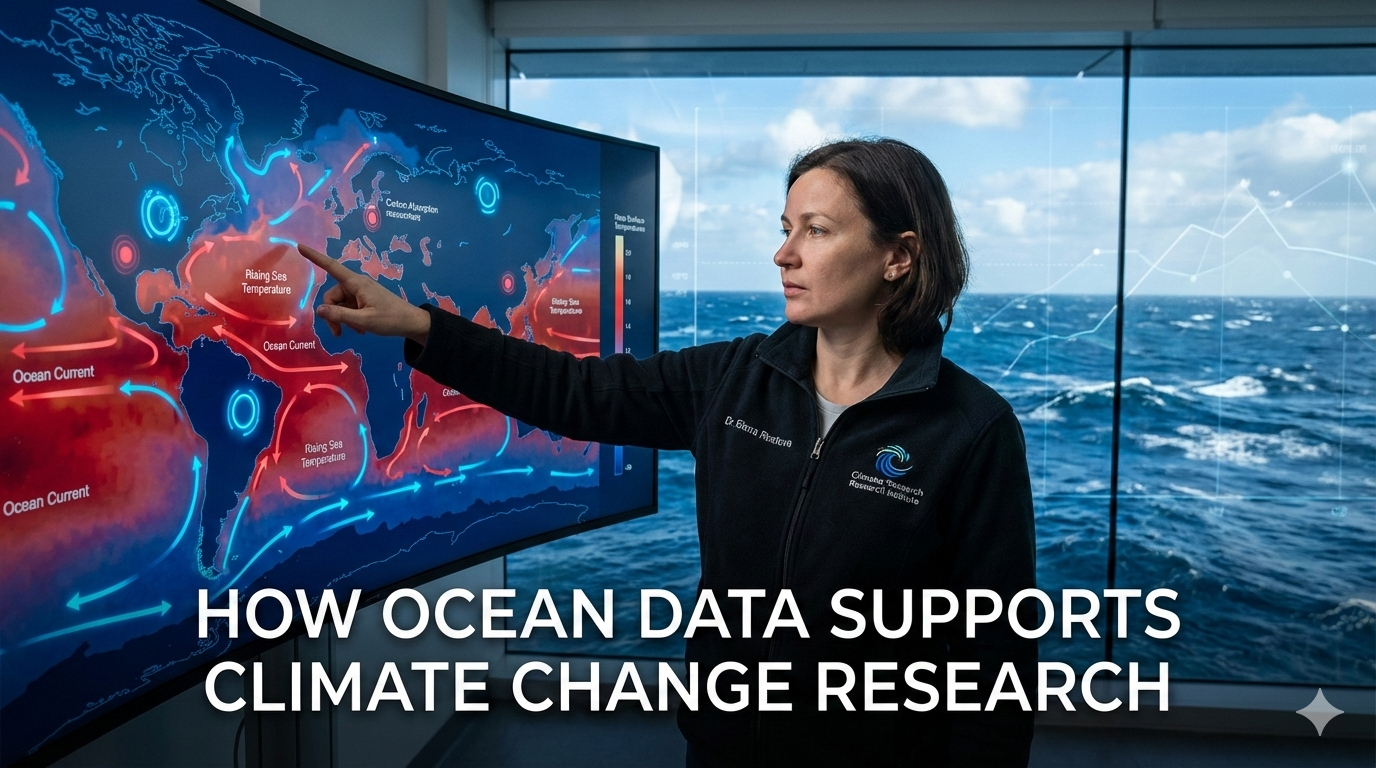
How Ocean Data Supports Climate Change Research
Introduction: Why Ocean Data is Crucial for Climate Research
The oceans cover more than 70% of the Earth’s surface and are an integral part of our planet’s climate system. They regulate weather patterns, support biodiversity, and play a pivotal role in the carbon cycle. With climate change accelerating, understanding the ocean's response to global warming has become essential. Ocean data serves as a critical tool in climate change research, providing insights into how the oceans influence and are affected by environmental shifts. From tracking sea-level rise to monitoring ocean acidification, real-time ocean data offers invaluable information to help predict future climate scenarios.
The Relationship Between Ocean and Climate Change
The relationship between the oceans and climate change is both complex and significant. The oceans absorb much of the heat generated by greenhouse gases, regulating the Earth's temperature. They also serve as major carbon sinks, helping mitigate the impact of carbon emissions. However, rising global temperatures, ocean acidification, and changes in ocean circulation are signs that the oceans themselves are feeling the effects of climate change. By tracking ocean data, scientists can better understand these interactions and predict future trends in climate and environmental change.
Key Takeaways
- Ocean data is essential for understanding how oceans influence and respond to climate change.
- The oceans play a critical role in regulating temperature, storing carbon, and maintaining weather systems.
- Real-time ocean data enables researchers to track and predict changes in sea level, temperature, and ocean health.
What is Ocean Data and How Does It Help Climate Research?
Ocean data refers to the various physical, chemical, and biological measurements taken from the ocean to help researchers understand its behavior, health, and impact on global systems. By analyzing this data, scientists can monitor the ocean’s temperature, salinity, currents, and the distribution of marine life, all of which are crucial for understanding climate change and its effects on the planet.
Definition of Ocean Data
Ocean data includes a wide range of information collected through different methods, such as satellites, ocean buoys, sensors, and underwater vehicles. This data provides real-time insights into how the ocean is responding to environmental changes, helping researchers track ocean temperature variations, carbon absorption, salinity levels, and more.
Key Ocean Data Parameters for Climate Research
Ocean data is vast and multifaceted. However, for climate research, some key parameters are especially important. These include:
- Ocean Temperature Data: Monitoring ocean temperature is vital as it directly influences weather patterns, sea levels, and marine ecosystems.
- Ocean Salinity and Currents: Changes in salinity impact the density of seawater and can affect ocean circulation. Ocean currents, in turn, play a major role in heat distribution around the planet.
- Carbon Sequestration and Ocean Data: The ocean absorbs large amounts of CO2 from the atmosphere, which is essential for mitigating the effects of climate change.
Ocean Temperature Data
Tracking changes in ocean temperature is one of the primary methods for assessing the impacts of global warming. The warming of the oceans contributes to rising sea levels, more intense storms, and shifts in marine ecosystems.
Ocean Salinity and Currents
Salinity, along with temperature, affects ocean density, which influences ocean currents. These currents regulate global weather patterns, and changes in salinity caused by melting ice caps or freshwater influxes can disrupt this balance, leading to shifts in climate and sea levels.
Carbon Sequestration and Ocean Data
Oceans play a critical role in carbon sequestration, absorbing large quantities of carbon dioxide (CO2) from the atmosphere. By monitoring how much carbon the ocean is absorbing, researchers can predict future emissions and determine how much of the ocean’s carbon storage capacity remains.
Key Oceanographic Data Tools and Technologies
Modern technology has revolutionized how we collect and analyze ocean data. There are numerous instruments and tools used by scientists to monitor ocean conditions and track climate change.
Satellites and Remote Sensing for Ocean Data Collection
Satellites are essential for capturing large-scale ocean data. They can measure sea surface temperature, monitor ocean currents, and track changes in salinity. Remote sensing technologies like radar altimetry and thermal infrared imaging allow scientists to monitor oceans from space, providing data on sea levels, ocean circulation, and the health of marine ecosystems.
Ocean Buoys and Autonomous Underwater Vehicles (AUVs)
Ocean buoys and AUVs are deployed to gather data from specific locations in the ocean. Ocean buoys float on the surface and collect information on temperature, salinity, and wave height, while AUVs dive to great depths, collecting data on ocean floor topography, carbon levels, and marine life. These technologies offer real-time insights into ocean behavior, which are crucial for climate research.
How Ocean Data Impacts Climate Models and Predictions
Ocean data is integral to developing climate models and making predictions about future environmental changes. These models use real-time data to simulate the relationship between ocean temperature, currents, and global climate patterns.
Ocean Heat Content and Global Warming
The ocean absorbs a significant portion of excess heat from global warming, contributing to ocean heat content. By studying this data, scientists can predict the rate at which the ocean will continue to warm, which has direct implications for global temperatures and weather systems.
Ocean Circulation and Weather Systems
Ocean currents, driven by temperature and salinity changes, are responsible for redistributing heat across the globe. Disruptions in these currents can have far-reaching effects on weather systems, contributing to phenomena like El Niño and La Niña. Tracking these currents using real-time ocean data helps scientists understand how climate change is altering global weather patterns.
The Role of the Atlantic Meridional Overturning Circulation (AMOC)
The AMOC is a key ocean current that regulates climate by moving warm water from the tropics to the North Atlantic. A weakening of the AMOC could have significant consequences for weather patterns in Europe and North America. Real-time ocean data helps scientists monitor this critical current and predict potential climate disruptions.
Modeling Climate Scenarios with Ocean Data
Ocean data is a critical component of climate modeling. By integrating real-time ocean data into climate models, researchers can simulate different climate scenarios and predict how oceans, sea levels, and ecosystems will evolve in response to climate change.
Ocean Data and Carbon Absorption: Implications for Climate Change
One of the ocean's most significant roles in the fight against climate change is its ability to absorb carbon. Understanding how the ocean captures and stores carbon is crucial for predicting future emissions and their impacts on the planet.
The Ocean’s Role in Carbon Sequestration
Oceans act as a carbon sink, absorbing approximately a quarter of human-produced CO2. The process of carbon sequestration involves the ocean absorbing CO2 from the atmosphere and storing it in deep water. This process helps mitigate the effects of climate change by reducing the amount of carbon in the atmosphere.
Monitoring Ocean Carbon to Predict Future Emissions
By monitoring ocean carbon levels, scientists can better understand the ocean’s capacity to absorb CO2 and predict how much carbon will remain in the atmosphere. This data is essential for future climate change forecasts, as it allows researchers to estimate the ocean’s long-term role in mitigating climate impacts.
Ocean Data’s Role in Monitoring Climate Change Effects
Ocean data is essential not only for understanding climate change but also for monitoring its ongoing effects. From tracking sea-level rise to studying ocean acidification, real-time data helps scientists assess the impact of climate change on ocean systems.
Tracking Sea-Level Rise Using Ocean Data
Sea-level rise is one of the most significant consequences of climate change. Real-time ocean data, such as satellite altimetry and tide gauge measurements, helps scientists track the rate of sea-level rise and its potential impact on coastal communities.
The Effect of Ocean Acidification on Climate and Ecosystems
Increased CO2 levels in the atmosphere are leading to ocean acidification, which harms marine life, particularly coral reefs and shellfish. Real-time data on ocean pH levels helps scientists monitor the impact of acidification on marine ecosystems and forecast future environmental changes.
Practical Applications of Ocean Data in Climate Change Research
Ocean data plays a vital role in climate change predictions and the development of environmental policies. By providing real-time insights into ocean conditions, researchers can create more accurate models and make informed decisions about mitigating climate change.
Climate Change Predictions and the Role of Ocean Data
Ocean data helps scientists predict how climate change will affect the environment, from temperature and precipitation patterns to sea-level rise. Real-time data allows for more accurate climate modeling, improving our ability to predict future environmental conditions.
Case Studies: Real-World Applications of Ocean Data
Several real-world case studies demonstrate how ocean data is used in climate change research. For example, the study of ocean currents and temperature anomalies has been critical in understanding the role of the ocean in extreme weather events like hurricanes and El Niño.
Challenges in Using Ocean Data for Climate Research
Despite its importance, ocean data collection comes with several challenges, including data accuracy, availability, and technological limitations. Overcoming these barriers is essential for advancing climate change research.
Data Accuracy and Availability Issues
One of the biggest challenges in ocean data collection is ensuring the accuracy of the data. Sensors and instruments can sometimes malfunction, leading to incorrect readings. Additionally, data availability can be an issue, especially in remote ocean regions where data collection infrastructure is sparse.
Technological and Logistical Barriers in Ocean Data Collection
Ocean data collection requires expensive technology and infrastructure, such as autonomous underwater vehicles (AUVs) and satellite systems. The logistical challenges of collecting data from deep-sea regions and remote locations make it difficult to obtain comprehensive, real-time information.
Future of Ocean Data and Climate Change Research
The future of ocean data collection is promising, with new technologies and methods that will improve data accuracy and accessibility. Big data and artificial intelligence are set to play a significant role in shaping the future of oceanographic research.
Advancements in Ocean Data Collection and Analysis
New technologies, including AI, robotics, and deep-sea sensors, will allow for more precise and widespread ocean data collection. These advancements will improve our ability to track climate change effects and predict future environmental shifts.
The Role of AI and Big Data in Oceanographic Research
AI and big data are revolutionizing oceanographic research. By processing large volumes of ocean data, AI algorithms can identify patterns and anomalies that would otherwise be difficult to detect, improving climate models and climate change predictions.
Conclusion: The Vital Role of Ocean Data in Combating Climate Change
Ocean data plays a critical role in climate change research by providing real-time insights into the health of the oceans, climate patterns, and the impact of human activities. By continuing to monitor and analyze ocean data, scientists can predict future environmental changes and develop strategies to mitigate the effects of global warming and ocean acidification.
Key Takeaways for Researchers
- Ocean data is essential for understanding and addressing climate change.
- Real-time ocean data helps track sea-level rise, temperature fluctuations, and ocean carbon absorption.
- New technologies, including AI and big data, are revolutionizing oceanographic research, improving climate predictions and environmental models.
Explore More Ocean Data for Climate Research Access Real-Time Ocean Data at Oceanography.com
Frequently Asked Questions (FAQs)
1. How does ocean data contribute to climate change research?
Ocean data helps monitor key climate indicators such as temperature, carbon absorption, and sea-level rise, allowing researchers to predict climate change impacts.
2. What types of ocean data are used for climate change research?
Ocean data includes temperature, salinity, currents, carbon absorption, and sea-level measurements, all critical for studying climate change.
3. How do ocean currents impact climate change?
Ocean currents redistribute heat across the planet, influencing global weather patterns and helping regulate temperature.
4. What role does the ocean play in carbon sequestration?
The ocean absorbs significant amounts of carbon dioxide from the atmosphere, helping mitigate the effects of climate change.
5. How is real-time ocean data collected?
Real-time ocean data is collected using satellites, buoys, AUVs, and remote sensing technologies.
6. What challenges exist in using ocean data for climate research?
Challenges include data accuracy, limited availability, and the high cost of ocean data collection technology.
7. How does ocean temperature affect climate change?
Warmer ocean waters contribute to global warming, leading to rising sea levels and more frequent extreme weather events.
8. What is the Atlantic Meridional Overturning Circulation (AMOC)?
The AMOC is a key ocean current that helps regulate global temperatures and weather patterns, and its weakening could have significant climate implications.
9. How does ocean acidification affect marine life?
Ocean acidification, caused by rising CO2 levels, harms marine organisms such as coral reefs and shellfish, impacting marine biodiversity.
10. How does ocean data support sea-level rise predictions?
Ocean data helps scientists track sea-level rise by providing real-time measurements of ocean temperature, salinity, and tide gauges.
